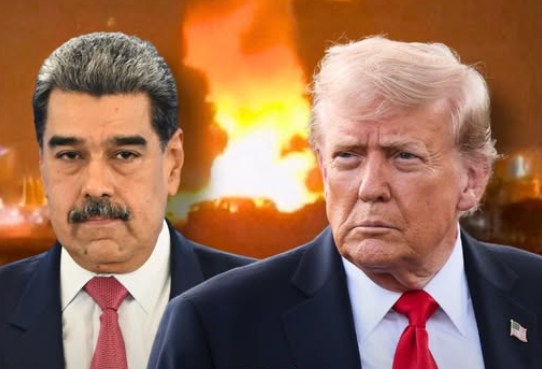
Early Saturday morning, former President Donald Trump announced that Venezuelan President Nicolás Maduro and his wife, Cilia Flores, had been captured and removed from Venezuela following a large-scale U.S. military operation. The announcement confirmed reports of coordinated strikes targeting key Venezuelan infrastructure and military positions.
According to official statements, the operation was executed by Delta Force, an elite unit of the U.S. Army known for high-risk special missions. The capture of Maduro represents a significant escalation in U.S.–Venezuela relations, drawing attention from policymakers, analysts, and international observers.
This article provides a detailed, factual overview of the strikes, the legal context, historical background, and potential implications for both the region and the international community. The goal is to provide a balanced account that helps readers understand the complex dynamics at play.
Background on U.S.–Venezuela Relations
The relationship between the United States and Venezuela has long been marked by tension and competing interests. Venezuela, a nation rich in natural resources, especially oil, has played a strategic role in the region. Relations became particularly strained during Nicolás Maduro’s presidency, which began in 2013 after the death of Hugo Chávez.
The Trump administration frequently cited concerns about corruption, human rights violations, and international criminal activity linked to Maduro’s government. U.S. authorities have alleged that Maduro maintained relationships with organized crime networks and narcotics trafficking groups. These concerns prompted a range of actions, including sanctions, diplomatic pressure, and intelligence monitoring.
The recent military operation marks a shift from primarily economic and diplomatic measures to direct action. While previous U.S. policies focused on sanctions and international pressure, the capture of Maduro indicates a willingness to pursue high-profile leaders involved in alleged criminal activities.
Details of the Military Operation
According to official sources, Delta Force conducted the operation to apprehend Maduro and his wife. Delta Force is a highly trained special operations unit specializing in counterterrorism, hostage rescue, and high-value target capture. Operations of this scale require careful coordination, extensive intelligence gathering, and logistical planning.
The military strikes reportedly targeted multiple Venezuelan facilities, including ports, airbases, and military installations. The goal was to minimize resistance and secure key locations while ensuring the safety of the personnel involved. Eyewitness accounts mentioned U.S. helicopters flying over Caracas and temporary disruptions to power and communications, suggesting coordinated tactical maneuvers.The operation also involved U.S. law enforcement agencies providing planning and logistical support. This joint effort underscores the complexity of combining military and legal objectives, especially when the mission involves a sitting head of state.
Allegations Against Nicolás Maduro
The U.S. government has long accused Maduro of involvement in international drug trafficking and collaboration with organized criminal networks. Attorney General Pam Bondi emphasized that Maduro and Flores would face justice in U.S. courts. According to public statements, Maduro has been indicted in the Southern District of New York on multiple charges, including narco-terrorism and possession of weapons against the United States.
The indictment, originally filed in 2020, alleges that Maduro coordinated with criminal organizations such as the Tren de Aragua, the Sinaloa cartel, and the Cartel of the Suns. These networks are said to have been involved in drug production and trafficking operations reaching the United States and other countries. While specific evidence from the indictment has not been publicly disclosed in full, U.S. officials maintain that the allegations are substantial.