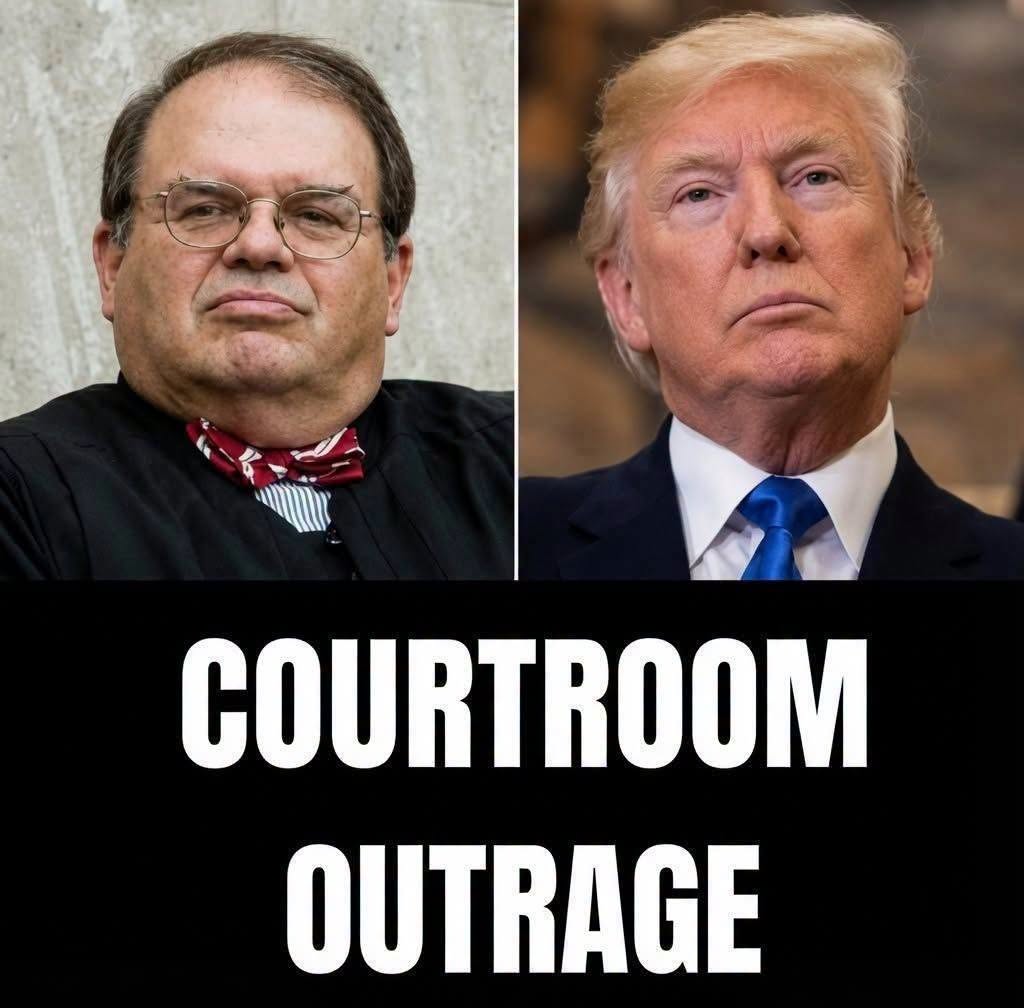
The gavel fell, and in an instant, a legal battle that had been simmering for months erupted into a national debate touching on military readiness, constitutional rights, executive authority, and the future of military service in the United States.
A federal court’s decision to block a key military policy associated with former President Donald Trump reignited one of the most contentious questions in modern American politics: Who ultimately gets to decide who is qualified to serve in the armed forces?
The ruling centered on restrictions affecting transgender individuals seeking to serve in the military. While the legal arguments focused on constitutional principles and administrative procedures, the broader implications reached far beyond the courtroom. The decision sparked fierce reactions from political leaders, military veterans, civil rights advocates, and ordinary Americans who viewed the case through vastly different lenses.
Supporters of the court’s ruling celebrated it as a victory for equal treatment under the law. They argued that military service should be based on an individual’s abilities, performance, and commitment rather than gender identity. To them, the court acted as an essential safeguard against discrimination and ensured that constitutional protections remain in force even within highly structured institutions like the military.
Critics, however, viewed the ruling very differently. They argued that judges were intruding into areas traditionally reserved for military leaders and elected officials. In their view, decisions involving personnel standards, readiness, deployment requirements, and force management belong to military experts and civilian leaders responsible for national defense—not federal courts.
At the heart of the controversy was language contained in the court’s opinion suggesting that the challenged restrictions may have been motivated by “animus.” That term carries significant legal and political weight. In constitutional cases, allegations of animus imply that a policy may be driven by prejudice or hostility toward a particular group rather than by legitimate governmental objectives.
For opponents of the restrictions, the court’s use of the term reflected concerns that the policy unfairly targeted transgender Americans regardless of their ability to perform military duties. They argued that the government failed to provide sufficient evidence that transgender service members posed a threat to military effectiveness or readiness.
For supporters of the policy, however, the court’s reasoning represented something far more troubling. They viewed it as an accusation directed at policymakers, military advisers, and elected officials who supported the restrictions. Many argued that the policy was based on concerns about medical standards, deployment requirements, and military cohesion—not prejudice.
The disagreement highlights a deeper constitutional tension that has existed throughout American history.
The President serves as Commander in Chief and possesses broad authority over military affairs. Congress also plays a major role in establishing military rules and regulations. Courts traditionally grant significant deference to military judgments, recognizing that judges lack the expertise to make operational decisions involving national security.
Yet courts also have a responsibility to enforce constitutional protections. When policies are alleged to discriminate against certain groups, judges are often asked to determine whether the government has crossed constitutional boundaries.
This clash between deference and oversight lies at the center of the transgender military service debate.
Over the past decade, policies regarding transgender service members have changed multiple times as administrations shifted. One administration expanded opportunities for transgender individuals to serve openly. Another introduced restrictions. Subsequent administrations revisited those policies again, creating uncertainty for service members and military planners alike.
As a result, thousands of individuals have found themselves caught in the middle of a political and legal tug-of-war.
Military personnel who built careers under one set of rules often faced new uncertainty when leadership changed. Recruiters, commanders, and military administrators were forced to adapt repeatedly to evolving guidance. Legal challenges followed nearly every major policy shift, turning federal courtrooms into key battlegrounds in a debate that many believed should be resolved through political or military channels.
The latest ruling once again raises questions about the proper balance of power in American government.
Should military policy be determined primarily by elected leaders who are accountable to voters? Or should courts intervene when constitutional concerns arise, even if doing so affects military operations and personnel decisions?
There are no easy answers.
Those who favor greater judicial oversight argue that constitutional rights do not disappear when someone puts on a uniform. They maintain that courts must remain willing to review military policies that may discriminate against protected groups. From this perspective, judicial intervention serves as a crucial check on governmental power.
Others counter that military effectiveness requires unique standards that may not apply in civilian life. They argue that commanders need flexibility to establish policies they believe support readiness, discipline, and mission success. Excessive judicial involvement, they warn, could undermine the military’s ability to make difficult personnel decisions.
As appeals move forward, the legal battle is far from over. Higher courts may affirm, modify, or reverse the decision. Additional challenges could emerge depending on future policy changes and political developments.
What is already clear, however, is that the controversy extends far beyond one policy or one administration.
The case has become a symbol of broader debates about equality, executive power, judicial authority, and the role of the military in a democratic society. It reflects competing visions of how constitutional rights should interact with national defense priorities and who should have the final authority to make those judgments.
For some Americans, the ruling represents a reaffirmation that individual dignity and equal protection remain fundamental constitutional principles. For others, it raises concerns about courts overriding decisions made by elected leaders and military professionals.
The outcome of future appeals may shape military policy for years to come. Yet regardless of how the legal process unfolds, the larger question remains unresolved: In a nation committed both to individual rights and national security, who ultimately decides who is fit to serve?
That question continues to divide lawmakers, judges, military leaders, and citizens alike—and its answer may influence not only military policy, but the evolving relationship between constitutional freedoms and government authority in modern America.