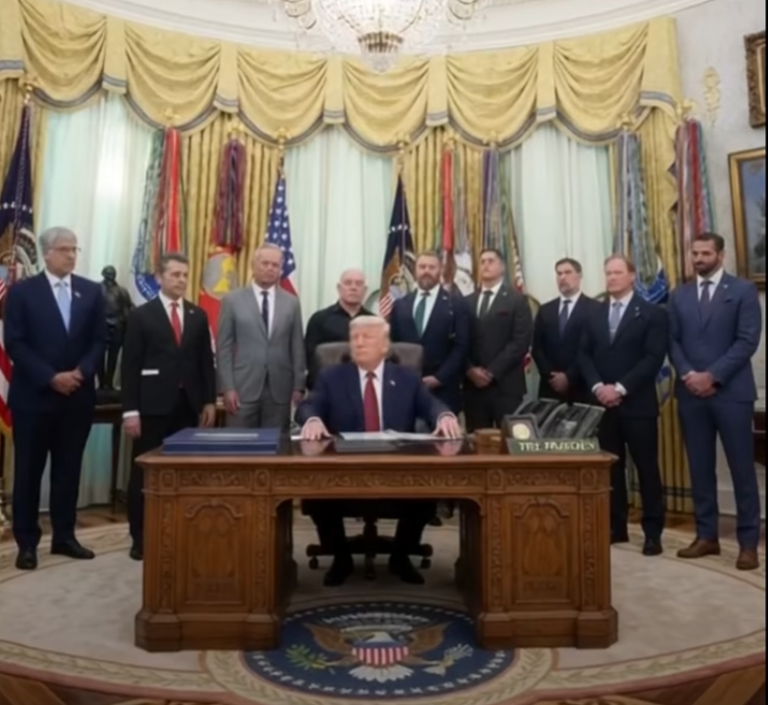
The hammer has dropped in Washington, and the effects could ripple through boardrooms, college campuses, athletic programs, and government agencies across the United States. In a matter of days, President Donald Trump has launched two major initiatives that supporters describe as long-overdue corrections and critics warn could create widespread disruption. One targets diversity, equity, and inclusion programs in federal contracting. The other threatens to reshape the rapidly growing world of college sports compensation.
Together, the moves represent one of the clearest examples yet of a presidency willing to use executive power aggressively to reshape institutions that have become central battlegrounds in America’s cultural and political debates.
The first initiative focuses on federal contracting. Under Trump’s latest executive order, federal agencies are being directed to review, suspend, or eliminate policies and requirements tied to diversity, equity, and inclusion programs, commonly known as DEI. The administration argues that certain DEI frameworks have evolved beyond promoting equal opportunity and now encourage forms of decision-making that may discriminate based on race, ethnicity, or other protected characteristics.
Supporters of the order say federal contracts should be awarded based solely on merit, qualifications, and performance. They argue that government contractors should not receive favorable treatment based on demographic goals and that taxpayer-funded projects should remain focused on efficiency and measurable results.
Critics, however, see the move very differently. They argue that DEI programs were created to address historical barriers and improve opportunities for groups that have traditionally faced disadvantages in hiring, promotion, and business participation. Opponents fear that dismantling these programs could reverse years of progress and reduce representation within major industries that rely heavily on federal funding.
The practical implications could be enormous. Thousands of companies do business with the federal government, and many have spent years developing internal compliance systems related to diversity initiatives. Human resources departments, training programs, supplier diversity efforts, recruiting strategies, and reporting systems may all be affected by the administration’s new approach.
Legal experts predict that the executive order will trigger immediate challenges in court. Companies will face difficult decisions as they attempt to balance compliance with federal requirements against commitments they have already made to employees, shareholders, customers, and advocacy groups. Some businesses may choose to modify existing programs. Others may attempt to defend them while navigating a changing regulatory environment.
For federal agencies, the task could be equally complicated. Procurement rules may need to be rewritten, contract language revised, and compliance procedures updated. Agencies could also face a wave of complaints and legal disputes as stakeholders seek clarification on what practices remain permissible under the new guidelines.
The financial stakes are substantial. Federal contracts account for hundreds of billions of dollars in annual spending. For many companies, access to government business represents a significant portion of revenue. Any uncertainty surrounding eligibility requirements could have immediate consequences for budgeting, hiring, and long-term planning.
At the same time, the administration is turning its attention to a very different arena: college athletics.
Trump has signaled that he is preparing an expansive executive order aimed at addressing the rapidly evolving landscape of name, image, and likeness payments, commonly referred to as NIL. These arrangements allow college athletes to earn compensation through endorsements, sponsorships, appearances, and other commercial opportunities.
Since courts and state legislatures opened the door to NIL compensation, the college sports industry has experienced dramatic change. Athletes in major sports such as football and basketball can now secure deals worth hundreds of thousands or even millions of dollars. Collectives backed by donors have emerged to support recruiting efforts, while schools have adapted to a marketplace that looks increasingly similar to professional sports.
Supporters of NIL argue that athletes deserve the opportunity to profit from their talents and public visibility. They point out that universities, broadcasters, sponsors, and athletic departments have generated enormous revenue from college sports for decades. In their view, allowing athletes to participate financially is both fair and overdue.
Critics argue that the current system has created instability. Some believe NIL has transformed recruiting into a bidding war and weakened the traditional model of amateur competition. Others worry that smaller schools cannot compete financially with wealthier programs, creating larger gaps between institutions.
Trump’s proposed action appears designed to challenge aspects of the existing NIL framework while encouraging Congress to become more involved in establishing national standards. The administration has expressed concerns that the current environment may threaten not only college athletics but also developmental pipelines that support Olympic sports and other non-revenue programs.
Universities are watching closely because the financial implications could be enormous. Athletic departments have spent years adjusting to the new reality of athlete compensation. Recruiting strategies, scholarship planning, donor fundraising, and budget forecasting increasingly depend on assumptions about NIL opportunities.
If federal intervention alters the legal landscape, schools may once again find themselves navigating uncertainty. Athletic conferences, universities, athletes, sponsors, and legal organizations could all become involved in new court battles over the limits of executive authority and the future structure of college sports.
The two initiatives may appear unrelated at first glance, but they reflect a broader governing philosophy. Both actions seek to challenge systems that critics of the administration believe have drifted too far from their original purposes. Whether addressing corporate diversity programs or athlete compensation, the administration is framing its efforts as a return to principles of merit, fairness, and institutional integrity.
Supporters see decisive leadership willing to confront powerful interests and long-standing practices. They argue that many Americans have grown frustrated with systems they view as overly bureaucratic, politically driven, or disconnected from their original missions.
Opponents view the moves as attempts to impose sweeping changes through executive action rather than through legislative consensus. They warn that rapid policy shifts could generate confusion, legal uncertainty, and unintended consequences across multiple sectors of society.
As lawsuits, regulatory reviews, and political battles begin to unfold, one thing is already clear: the administration is not pursuing small adjustments. These are large-scale efforts aimed at reshaping two influential parts of American life. Whether the result is reform, disruption, or a combination of both will likely be determined not only by executive orders but also by courts, lawmakers, businesses, universities, and the millions of people affected by the outcomes.
The coming months could prove decisive. Billions of dollars, institutional priorities, and competing visions of fairness are now at stake. Washington has set the stage for a confrontation that may redefine federal contracting and college athletics for years to come.