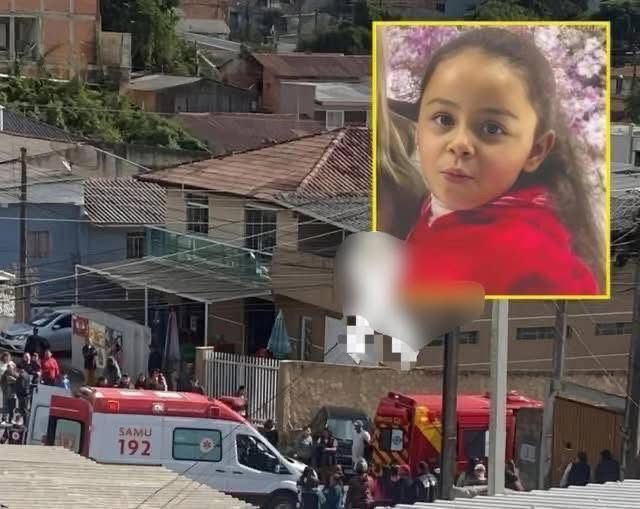
The disappearance of ten-year-old Perla Alison initially began as a mundane errand, the kind of small-scale independence that defines a child’s growing years. On a Friday that should have been unremarkable, she stepped out of her family’s residence in the Santa Martha Acatitla neighborhood of Mexico City with a simple goal: to purchase candy at a local store just a short distance away. In the densely populated and vibrant streets of the capital, such a trip is a rite of passage for many children. However, for Perla, that short walk transformed into a four-day nightmare that would leave a community shaken and searching for answers.
When Perla failed to return home, concern quickly turned into panic. Her family retraced her expected route, knocking on doors and asking neighbors if anyone had seen her. As hours passed without any sign of the young girl, local authorities were alerted, and a search effort began. Missing child alerts circulated across social media platforms, accompanied by her photo and description. Volunteers from the neighborhood joined in, combing nearby streets, alleyways, and vacant lots. The sense of urgency grew with each passing hour, as fears mounted over what might have happened during such a routine outing.
The search intensified over the following days. Police units expanded their efforts beyond the immediate area, canvassing nearby districts and reviewing surveillance footage from shops and traffic cameras. Reports indicated that investigators were trying to piece together Perla’s last known movements, hoping to identify any unusual activity or individuals who may have crossed her path. Meanwhile, her family endured an agonizing wait, caught between hope and dread.
Four days after she vanished, a breakthrough came—but it was not the kind anyone had hoped for. Perla was found in a wooded area on the outskirts of the city. The discovery brought an immediate end to the search but opened a far more painful chapter. Authorities confirmed that the young girl had died, turning the missing persons case into a full-scale criminal investigation. The news rippled through the community, leaving neighbors and volunteers devastated by the tragic outcome.
As investigators began to examine the circumstances surrounding her death, attention reportedly turned toward individuals within her circle. In cases like this, authorities often look closely at family members and acquaintances to determine whether there were any prior conflicts, suspicious behavior, or inconsistencies in statements. According to early reports circulating in local media, one of the most shocking developments involved scrutiny of someone the family—and the public—would have least expected: her grandfather.
While officials were careful not to release premature conclusions, sources suggested that investigators were examining whether the grandfather’s account aligned with the available evidence. Such developments, though not uncommon in complex investigations, often send waves of disbelief through a community. The idea that harm could come from within a family structure is particularly difficult to process, as it challenges deeply held assumptions about trust and safety.
Authorities emphasized that the investigation was ongoing and that all individuals were presumed innocent until proven otherwise. Forensic teams continued to analyze evidence from the scene where Perla was found, while detectives conducted interviews in an effort to reconstruct a clear timeline of events. The goal remained to establish exactly what had happened during the critical hours after she left home.
The tragedy has sparked broader conversations about child safety, community vigilance, and the vulnerabilities that can exist even in familiar environments. Residents of Santa Martha Acatitla have expressed both grief and anger, calling for justice and stronger protective measures to prevent similar incidents in the future. Community leaders have also urged parents to exercise caution and to maintain open communication with their children about safety.
For Perla’s family, however, the public discussions and investigative developments offer little comfort. They are left mourning the loss of a young life cut tragically short, grappling with a reality that no family ever expects to face. The image of a simple trip to buy candy turning into a fatal ordeal serves as a haunting reminder of how quickly ordinary moments can be shattered.
As the investigation continues, many questions remain unanswered. What exactly happened in those four days? Who bears responsibility? And how can such a tragedy be prevented in the future? While authorities work toward clarity and accountability, the memory of Perla Alison endures as both a source of sorrow and a call for vigilance—an enduring reminder that even the smallest journeys can carry unforeseen risks.