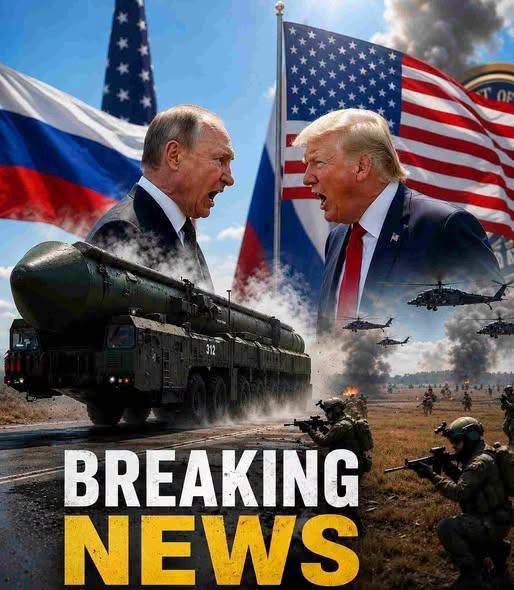
Is Europe Ready for War? Why Brussels Is Racing Against Time
After Russia’s full-scale invasion of Ukraine, rising pressure from the United States, and increasingly direct warnings from military officials, the European Union is confronting a question that would have seemed unimaginable only a decade ago: Is Europe prepared to defend itself in a major conflict?
For generations, European security rested on a combination of economic cooperation, diplomacy, and transatlantic alliances. The end of the Cold War encouraged many governments to reduce military spending, prioritize social programs, and assume that large-scale warfare on the continent had become a relic of the past.
Today, that assumption has been shattered.
The war in Ukraine has transformed how European leaders think about security. What once appeared to be distant geopolitical concerns have become immediate strategic challenges. The conflict has demonstrated how quickly stability can erode and how costly military unpreparedness can become.
As a result, Brussels is moving with a sense of urgency rarely seen in recent decades.
The mood across European institutions has changed dramatically. Security discussions that once focused on diplomacy and economic policy now increasingly center on ammunition production, military mobility, defense spending, cybersecurity, and industrial resilience.
European leaders are not necessarily preparing for war tomorrow. Rather, they are attempting to ensure that Europe would be capable of responding if future threats emerge.
At the center of this effort is a growing realization that Europe cannot indefinitely depend on others for its security.
For decades, the United States served as the cornerstone of European defense through NATO. American military power, intelligence capabilities, logistics networks, and nuclear deterrence provided reassurance across the continent.
However, recent political debates in Washington have created uncertainty about the future shape of that relationship.
Successive American administrations have encouraged European allies to increase defense spending and assume greater responsibility for their own security. While support for NATO remains significant, many European policymakers recognize that relying too heavily on external guarantees carries risks.
This realization has accelerated efforts to strengthen Europe’s own defense capabilities.
European Commission President Ursula von der Leyen has repeatedly emphasized the need for greater strategic preparedness. New initiatives focus on expanding defense production, improving coordination between member states, and reducing vulnerabilities in critical supply chains.
The objective extends beyond military readiness alone.
Modern conflicts are fought not only with tanks and aircraft but also through cyberattacks, information warfare, energy pressure, and economic disruption. Consequently, European planning increasingly includes protection of infrastructure, digital networks, transportation systems, and industrial production.
The war in Ukraine has provided numerous lessons.
One of the most important involves industrial capacity.
Military experts note that modern warfare consumes enormous quantities of ammunition, equipment, and resources. Many European countries discovered that decades of reduced military spending left them with limited stockpiles and insufficient production capabilities.
As a result, defense manufacturing has become a major priority.
Factories are increasing production of artillery shells, missiles, armored vehicles, and other military equipment. Governments are investing billions of euros into defense industries in hopes of ensuring that Europe can sustain itself during prolonged crises.
At the same time, questions remain about whether these efforts are happening quickly enough.
Some analysts argue that Europe faces a race against time.
They point to continuing instability along NATO’s eastern flank, uncertainty surrounding future geopolitical developments, and the possibility that adversaries may seek to exploit perceived weaknesses before European capabilities fully mature.
Others caution against alarmism.
They emphasize that Europe collectively possesses significant economic resources, advanced technology, highly trained military forces, and strong alliances. While improvements are needed, they argue that Europe is far from defenseless.
The truth likely lies somewhere between those positions.
Europe is neither unprepared nor fully prepared.
Instead, it is in the middle of a major strategic transition.
This transition presents political challenges as well.
Defense spending often competes with domestic priorities such as healthcare, education, housing, and social welfare programs. Convincing voters to support increased military investment can be difficult, especially in countries where memories of past conflicts remain strong.
European leaders must therefore balance security concerns with economic realities.
Maintaining unity among the EU’s member states adds another layer of complexity.
Different countries face different threat perceptions. Nations closer to Russia generally advocate stronger military measures and faster investment. Others emphasize diplomacy and caution against actions that could increase tensions.
Despite these differences, the overall direction appears clear.
Defense is moving higher on the European agenda than at any time since the end of the Cold War.
Public opinion has evolved as well.
Images from Ukraine have made security concerns more tangible for many citizens. Discussions about military readiness, once largely confined to defense experts, have entered mainstream political debate.
People increasingly ask questions that were rarely heard a few years ago.
Could Europe defend itself independently?
Are defense industries capable of meeting future demands?
How vulnerable are critical infrastructure networks?
What would happen if a broader crisis emerged?
These questions do not necessarily imply that war is imminent.
Rather, they reflect growing awareness that peace and security require ongoing investment and preparation.
As Brussels accelerates its defense initiatives, the goal is not simply to build larger armies or purchase more equipment. The broader objective is deterrence—the ability to prevent conflict by demonstrating sufficient strength and resilience.
History suggests that preparedness can influence strategic calculations.
Leaders hope that a stronger, more coordinated Europe will reduce the likelihood of future aggression while reinforcing stability across the continent.
Whether these efforts ultimately succeed remains uncertain.
What is clear is that Europe has entered a new era of security thinking.
The assumptions that shaped policy for decades are being reassessed. Defense, once viewed as a secondary concern in many capitals, is now considered a central component of long-term stability.
The race underway in Brussels is therefore about more than military hardware.
It is about adapting to a world that has become less predictable, more competitive, and potentially more dangerous.
For European leaders, the challenge is not merely preparing for the possibility of conflict. It is ensuring that Europe remains strong enough that such a conflict never occurs at all.