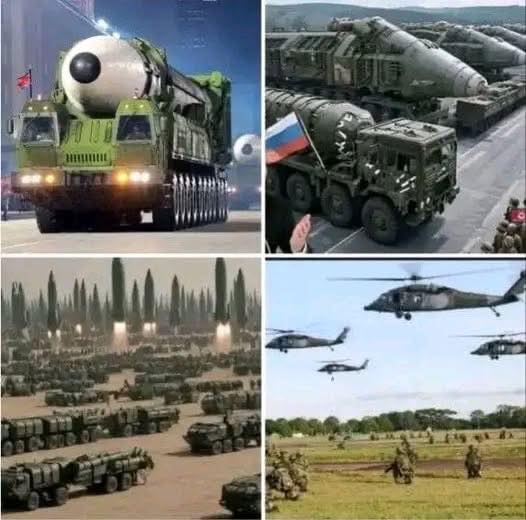
Is Europe Ready for War? Why Brussels Is Racing Against Time
After Russia’s full-scale invasion of Ukraine, rising pressure from the United States, and increasingly blunt warnings from military leaders, the European Union is being forced to confront a reality that once seemed unthinkable: its own defence readiness.
For decades, Europe built its identity around peace. The European project itself was born from the ashes of two world wars, designed to bind former enemies together through economic integration and political cooperation. War between major powers on European soil was widely considered a relic of the past. NATO, underpinned by American military power, provided a security umbrella that allowed many European nations to scale back defence spending and focus on welfare systems, infrastructure, and economic growth.
Today, that confidence is fading.
Russia’s invasion of Ukraine in 2022 shattered long-standing assumptions about stability on the continent. What many initially feared would be a short conflict has turned into a grinding war of attrition with enormous human and economic costs. European capitals have watched closely as missiles strike cities, energy supplies are weaponized, and conventional warfare returns in full force. The conflict has served as a wake-up call: large-scale war in Europe is no longer unthinkable.
At the same time, political signals from Washington have grown increasingly clear. Successive American administrations have urged Europe to shoulder a greater share of the defence burden. The United States remains committed to NATO, but domestic debates in America about foreign commitments have introduced a new layer of uncertainty. European leaders understand that reliance on U.S. military dominance can no longer be taken for granted in perpetuity.
A Continent Under Pressure
Brussels feels like a city preparing for a storm.
The sense of urgency did not emerge overnight, but it has intensified dramatically. Military leaders across Europe have issued stark warnings: defence stockpiles are insufficient, industrial production capacity is too slow, and recruitment struggles are widespread. Years of underinvestment left many armed forces with limited ammunition reserves and aging equipment. The war in Ukraine exposed these vulnerabilities, as European countries scrambled to supply Kyiv while also trying to maintain their own readiness.
In response, the European Union has begun accelerating defence initiatives that once moved at a cautious pace. Member states are increasing military budgets, with many pledging to meet or exceed NATO’s target of spending 2 percent of GDP on defence. Germany, long hesitant about military expansion, announced a historic “Zeitenwende” — a turning point — committing billions of euros to modernize its armed forces. Poland and the Baltic states have moved even faster, dramatically boosting their military capabilities in light of their proximity to Russia.
But money alone is not enough. Europe faces structural challenges. Defence procurement remains fragmented, with different countries buying different systems, often duplicating efforts and reducing interoperability. Efforts are underway in Brussels to coordinate joint purchases, streamline supply chains, and strengthen the European defence industry. The goal is not only to prepare for potential conflict but also to ensure that Europe can sustain its own military operations if necessary.
Strategic Autonomy or Strategic Reality?
The phrase “strategic autonomy” has become a central theme in European debates. It reflects a desire for the EU to act independently when needed, without overreliance on external powers. Yet achieving true autonomy is complex. Europe remains deeply intertwined with NATO structures, and the United States still provides critical capabilities, from intelligence and logistics to advanced weapons systems.
Some member states, particularly in Eastern Europe, remain cautious about any move that could weaken NATO’s central role. For them, American presence is not optional — it is essential. Others argue that strengthening European capabilities ultimately reinforces NATO by making the alliance more balanced and resilient.
Meanwhile, the broader geopolitical landscape adds urgency. Tensions with Russia remain high, and hybrid threats — cyberattacks, disinformation campaigns, energy coercion — have become part of the strategic environment. The EU must prepare not only for conventional warfare but also for complex, multi-domain challenges that blur the line between peace and conflict.
Racing Against Time
The fundamental question remains: Is Europe ready?
In truth, readiness is not a binary state but a process. Europe is moving faster than it has in decades to rebuild its defence posture. Military exercises have intensified, cross-border coordination has improved, and political rhetoric has shifted from complacency to vigilance. Yet transforming decades of strategic culture takes time — time that may be in short supply if tensions escalate further.
Brussels is not declaring war, nor is it predicting one. But it is acting on a sobering assumption: preparedness is the only credible deterrent. The European Union now finds itself balancing its founding ideals of peace and cooperation with the harsh realities of a more dangerous world.
Whether Europe can adapt quickly enough will shape not only its own future but the stability of the continent as a whole. In this new era, the race is not toward conflict — it is toward readiness, resilience, and the hope that strength itself may be the key to preserving peace.