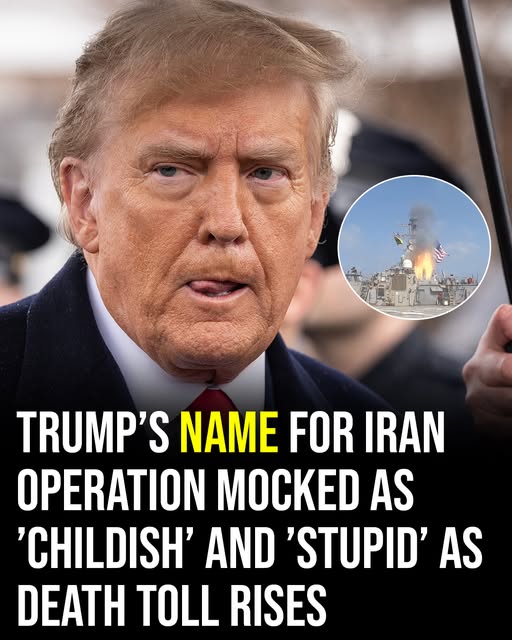
The name lands with a thud that feels grotesquely out of sync with the moment. “Operation Epic Fury.” It sounds less like a military campaign unfolding across one of the most volatile regions on Earth and more like the title of a summer action blockbuster or a late-night video game release. Yet as missiles streak across Middle Eastern skies and families sift through pulverized concrete in search of loved ones, that is the label the Trump administration has attached to its latest assault on Iranian targets. In a war already thick with tension, propaganda, and grief, the branding itself has become a lightning rod.
The backlash was immediate. Within minutes of the announcement, social media platforms flooded with disbelief. Critics called the name tone-deaf, juvenile, and dangerously unserious. Allies reportedly reacted with visible discomfort. Diplomats, who prefer the sterile language of “stability operations” and “defensive strikes,” found themselves fielding questions not just about strategy, but about optics. Even some figures within Trump’s own political orbit—voices normally quick to defend his confrontational style—publicly winced at the theatrical framing.
The optics matter because the context is anything but theatrical. According to regional reports, the strikes targeted a combination of military installations, suspected weapons facilities, and command infrastructure. Iranian state media claims significant civilian casualties, a charge Washington disputes, insisting precision munitions were used to minimize collateral damage. Independent verification remains difficult as communications infrastructure in several affected areas has been disrupted. What is not disputed is the escalation: drones have struck strategic positions near the Mediterranean, rocket fire has intensified along contested borders, and international airspace advisories have been updated amid fears of wider spillover.
Against that backdrop, the branding feels surreal. War names have always carried symbolic weight—Desert Storm, Enduring Freedom, Inherent Resolve. They are crafted to project strength, clarity, and moral purpose. “Epic Fury,” however, seems to revel in spectacle. It evokes rage, scale, and dominance, but not necessarily restraint or strategic calibration. For critics, it reinforces a longstanding concern that foreign policy under Trump leans heavily on dramatic messaging, sometimes at the expense of careful diplomacy.
Supporters argue the name reflects unapologetic resolve. They contend that deterrence requires projecting overwhelming force and confidence, and that bold language underscores seriousness of intent. In their view, Iran’s regional posture—its support for proxy militias, ballistic missile development, and confrontations in key waterways—demanded a decisive response. To them, “Epic Fury” is not frivolous but declarative: a warning that further aggression will meet uncompromising retaliation.
Yet even among hawks, there is unease about the broader consequences. Iran has vowed “proportionate and painful” retaliation. Already, cyberattacks targeting financial networks and energy infrastructure have been reported in multiple countries, though attribution remains contested. Oil markets have reacted sharply, with prices surging amid fears of disruption to key shipping lanes. European governments are scrambling to prevent escalation, urging both sides to exercise restraint while quietly preparing contingency plans for evacuation and economic fallout.
The communications strategy has also complicated alliance management. NATO partners, some of whom were briefed only hours before the strikes, have expressed frustration over the lack of coordinated messaging. In times of crisis, unity can be as critical as firepower. A campaign name that trends for the wrong reasons risks diluting the gravity of the situation, turning strategic decisions into meme fodder and partisan ammunition.
Meanwhile, on the ground, none of the rhetoric alters the human toll. Hospitals in affected areas report being stretched beyond capacity. Families wait outside emergency wards, clutching photographs and phones, hoping for updates. In border regions, civilians brace for the possibility of wider confrontation. The language of “epic” and “fury” feels distant from the quieter, more intimate reality of loss.
Political analysts note that branding in modern warfare is not trivial. In the digital age, perception travels faster than missiles. A name can frame public understanding, shape media coverage, and influence international opinion. It can signal measured intent—or inflame narratives of recklessness. Whether intentionally or not, “Operation Epic Fury” has become part of the story, overshadowing policy briefings and military objectives.
As the situation unfolds, the focus will inevitably return to strategy: objectives achieved or missed, retaliatory cycles contained or expanded, diplomatic off-ramps seized or squandered. But the controversy over the name underscores a deeper tension in contemporary politics—the collision between spectacle and statecraft. In an era where messaging is often treated as power, words themselves can escalate, provoke, or undermine.
For now, missiles continue to fly, drones continue to buzz overhead, and leaders trade warnings across podiums and encrypted lines. History will judge the wisdom of the strikes and the decisions that led to them. It may also remember the moment when, amid one of the region’s most volatile escalations, the chosen banner read less like a solemn military operation and more like a headline engineered for impact. In war, symbolism is never neutral. And sometimes, even the name can echo as loudly as the explosions themselves.