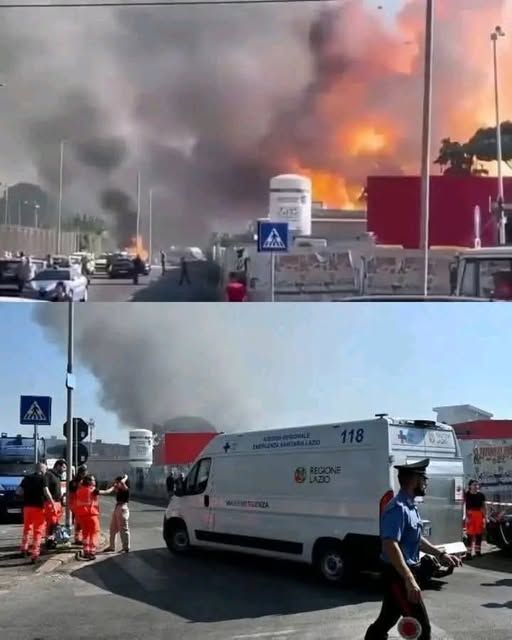
Mexico City has been left reeling after a catastrophic road disaster that unfolded on September 10, 2025, along the busy Iztapalapa–Chalco highway. What began as an ordinary weekday commute turned into a nightmare when an LPG tanker carrying more than 13,000 gallons of liquefied petroleum gas overturned and exploded. Within seconds of the rollover, the highly flammable cargo ignited, unleashing a towering fireball that lit up the morning sky and sent thick plumes of black smoke spiraling above the densely populated neighborhoods nearby.
Witnesses described a deafening blast that shook windows miles away, followed by a wave of intense heat that forced drivers to abandon their vehicles and run for their lives. Commuters trapped in gridlocked traffic watched in horror as flames swallowed cars and motorcycles in rapid succession. Some attempted to pull others from their vehicles, while others fled on foot, covering their faces against the suffocating smoke. The highway, usually clogged with the rhythm of daily life, transformed instantly into a corridor of chaos and devastation.
Emergency responders arrived within minutes, but the scale of the inferno posed immense challenges. Firefighters battled the blaze for hours, carefully cooling the tanker and surrounding wreckage to prevent secondary explosions. Specialized hazardous materials teams were deployed to assess the risk of further gas leaks, while police cordoned off a wide perimeter to keep onlookers at a safe distance. Paramedics triaged victims along the roadside, treating severe burns, smoke inhalation, and traumatic injuries before transporting the most critical cases to hospitals across the capital.
The human toll has been staggering. At least 15 people have been confirmed dead, though officials caution that the number may rise as some victims remain in critical condition. More than 70 others were injured, many suffering life-threatening burns that require intensive care and multiple surgeries. Hospitals in eastern Mexico City were quickly overwhelmed, forcing medical staff into emergency protocols. Burn units reached capacity within hours, and additional resources were mobilized from other parts of the city to cope with the influx of patients. Families gathered outside emergency rooms, desperate for news of loved ones caught in the blast.
The physical destruction is equally sobering. More than 30 vehicles were reduced to twisted metal shells, their frames charred beyond recognition. Nearby homes and businesses sustained structural damage from the shockwave, with shattered windows and cracked walls bearing silent testimony to the explosion’s force. Residents reported feeling their houses tremble as if struck by an earthquake. For many living along the highway, the trauma extends beyond physical damage; the psychological scars of witnessing such devastation may linger for years.
Authorities have launched a full investigation into the cause of the accident. Preliminary findings point to several possible factors, including driver error, excessive speed, or mechanical failure. Early reports also suggest that the tanker may not have been operating with proper permits or adequate insurance coverage, raising serious concerns about regulatory oversight. Transportation officials are examining whether routine inspections were conducted and if safety protocols were followed in accordance with federal guidelines governing hazardous materials transport.
Public outrage has been swift and vocal. Residents of Iztapalapa and Chalco have long complained about the constant flow of fuel tankers through densely populated areas, arguing that the risks far outweigh the convenience. Safety experts are now echoing those concerns, calling for sweeping reforms. Proposals include stricter inspection regimes, enhanced driver training and certification requirements, mandatory rerouting of hazardous cargo away from residential corridors, and improved emergency response coordination to minimize casualties in future incidents.
For many, this tragedy is not an isolated event but part of a troubling pattern. Mexico has experienced several fuel transport disasters over the years, often attributed to lax enforcement of safety standards and inadequate infrastructure planning. The explosion on the Iztapalapa–Chalco highway has reignited debate over whether economic priorities have overshadowed public safety. Advocates argue that without systemic change, similar catastrophes are likely to recur.
As investigators work to piece together the sequence of events that led to the explosion, the city mourns. Candlelight vigils have sprung up near the blast site, where grieving families and neighbors leave flowers and photos in memory of those lost. The blackened stretch of highway stands as a stark reminder of how quickly routine can turn to ruin—and how urgently reforms are needed to ensure that such a tragedy never happens again.