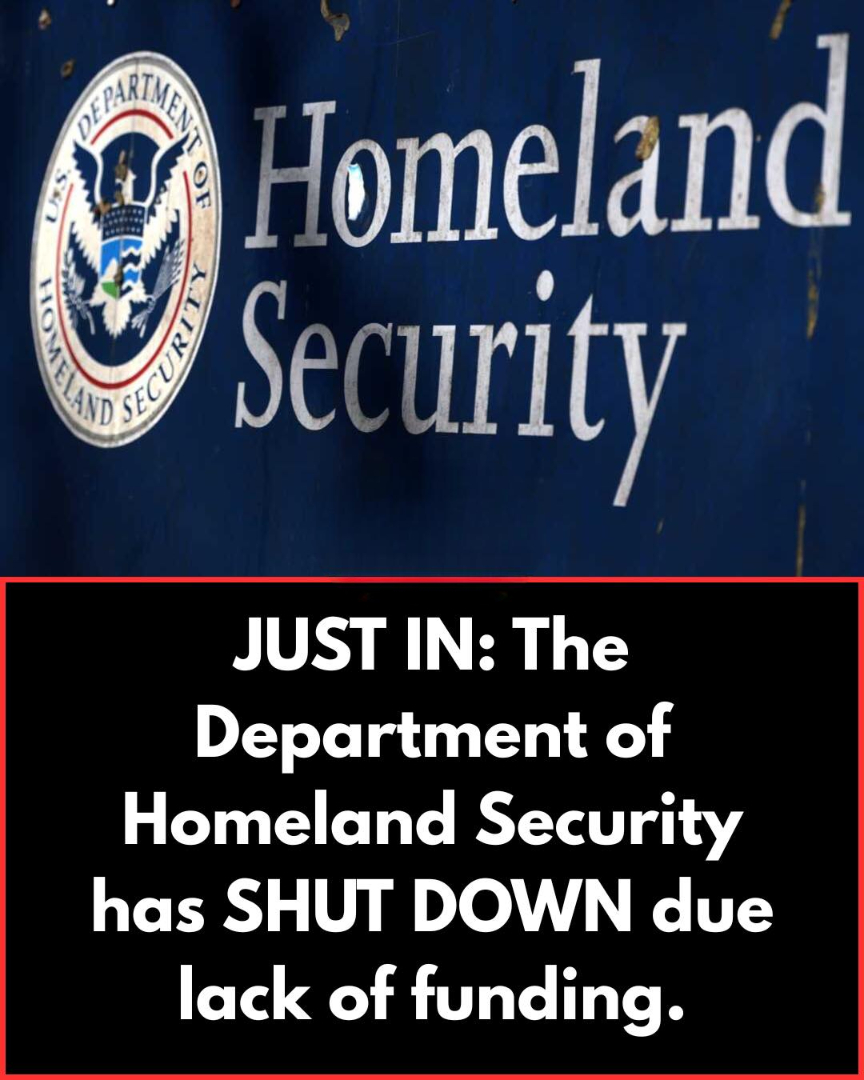
The Department of Homeland Security (DHS) has reportedly shut down following a lapse in federal funding, raising immediate concerns about the stability of several critical national security and public safety operations. If confirmed, the shutdown could disrupt a wide range of essential services that millions of Americans rely on daily, including border enforcement, disaster response coordination, cybersecurity protections, and airport security oversight.
Funding lapses in Washington are not new, but their impact is often felt far beyond political negotiations on Capitol Hill. When federal agencies like DHS lose authorized funding, many employees are either furloughed or required to work without immediate pay, depending on whether their roles are classified as essential to national security or public safety. This creates operational strain, lowers morale among federal workers, and can slow response times during emergencies.
DHS is one of the largest and most complex federal departments, overseeing agencies such as Customs and Border Protection (CBP), Immigration and Customs Enforcement (ICE), the Transportation Security Administration (TSA), the Federal Emergency Management Agency (FEMA), the U.S. Coast Guard, and the Cybersecurity and Infrastructure Security Agency (CISA). Each of these agencies plays a distinct but interconnected role in protecting the country.
One of the most immediate concerns involves border security operations. While frontline border agents are typically required to continue working during shutdowns because their roles are deemed essential, administrative and logistical support often suffers. Reduced staffing in processing centers, training programs, and infrastructure maintenance could slow enforcement efforts and create operational bottlenecks along the nation’s borders.
Airport security is another area where Americans may notice disruptions. TSA officers usually remain on duty during government shutdowns, but past funding lapses have shown that financial uncertainty can lead to increased absenteeism and longer wait times at airport security checkpoints. Travelers could face delays, especially during busy travel seasons, as staffing levels fluctuate and morale challenges emerge among unpaid or delayed-pay federal workers.
Disaster response readiness also faces potential setbacks. FEMA is responsible for coordinating federal relief efforts during hurricanes, wildfires, floods, and other natural disasters. Although emergency response teams remain active during shutdowns, planning operations, grant distribution, preparedness programs, and long-term recovery efforts can be delayed. This may leave vulnerable communities waiting longer for assistance or resources needed to rebuild after major disasters.
Cybersecurity protection presents another critical area of concern. Agencies under DHS, particularly CISA, are tasked with defending federal networks, infrastructure systems, and election security from cyber threats. While core cybersecurity monitoring usually continues during funding lapses, reduced staffing and delayed updates to security programs could create vulnerabilities that adversaries might attempt to exploit. In an era where cyberattacks are increasingly sophisticated and frequent, even minor operational disruptions carry significant risks.
Beyond operational challenges, shutdowns also carry economic and social consequences. Federal employees and contractors often experience financial hardship during funding lapses, as paychecks are delayed and contract work may halt entirely. This ripple effect can spread into local economies, especially in regions heavily reliant on federal employment or DHS-related industries.
Politically, funding standoffs often reflect deeper disagreements in Congress over budget priorities, immigration policies, national security strategies, or domestic spending levels. While negotiations continue behind closed doors, agencies like DHS must navigate uncertainty while maintaining core safety responsibilities. Historically, most shutdowns have ended through temporary funding agreements or broader budget compromises, but the duration of each shutdown determines how severe its consequences become.
For now, officials and the public alike are watching closely for confirmation and updates. The longer a funding lapse continues, the more pressure builds on federal operations, employees, and the communities they serve. The situation underscores how closely national security, emergency preparedness, and daily public safety are tied to political decisions made in Washington.
As negotiations unfold, the potential shutdown of DHS serves as a stark reminder that government funding debates are not simply political battles — they have immediate and tangible effects on national security infrastructure, public safety systems, and the everyday lives of Americans.