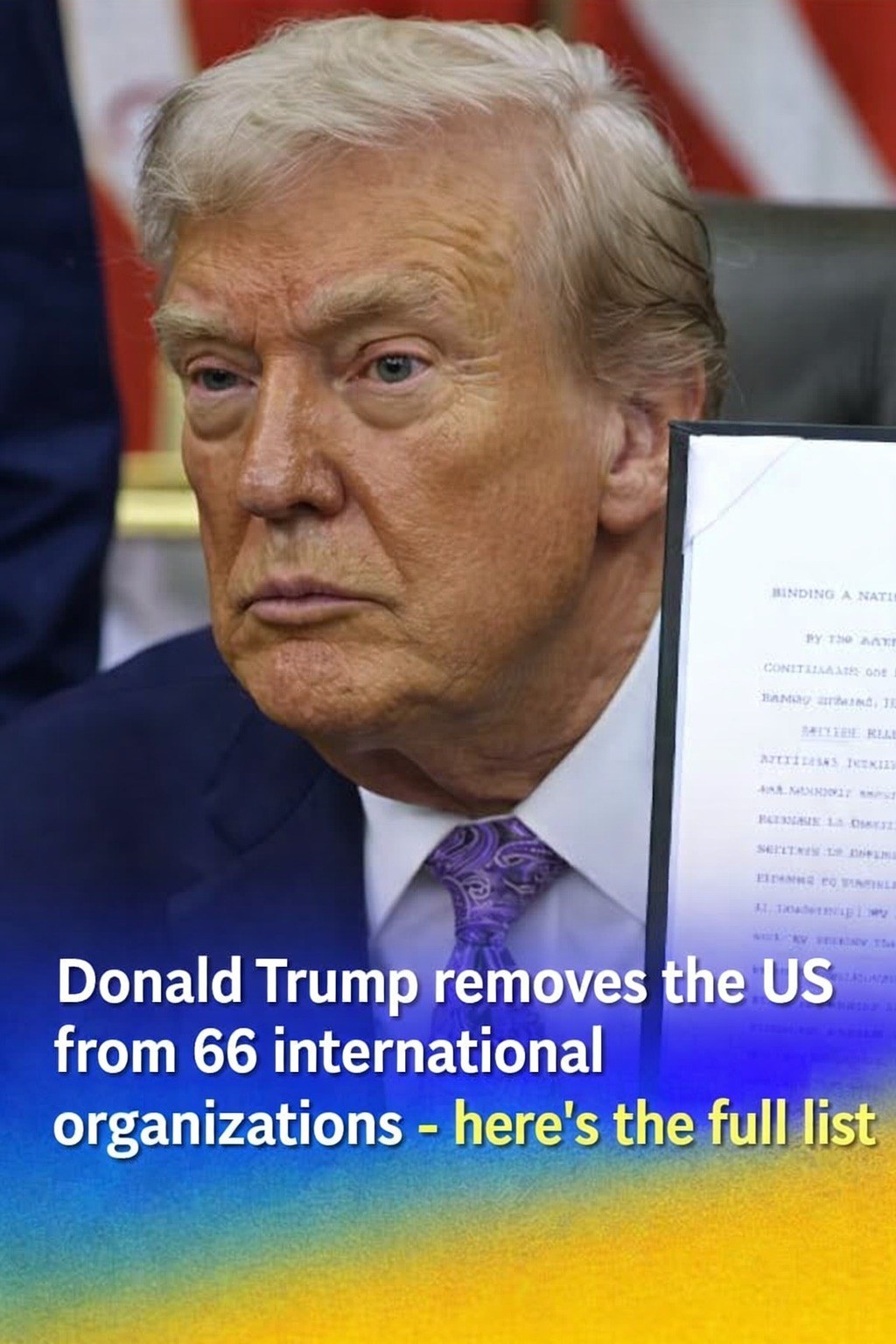
In a sweeping and unprecedented move, U.S. President Donald Trump announced that the United States would withdraw from dozens of international and United Nations-affiliated organizations
Signaling a profound shift in American engagement with the global community. According to an official memo issued by the White House.
The administration intends to sever ties with 35 non-UN international organizations and 31 UN entities. This step is part of a broader series of policy changes that have defined the current administration’s “America First” approach, which emphasizes national sovereignty, domestic priorities, and a selective engagement in global governance frameworks.
The memo outlines the rationale behind the withdrawals, citing a perceived misalignment between U.S. strategic interests and the agendas pursued by these international bodies.
Officials have characterized several organizations as promoting “globalist agendas, radical climate policies, and ideological programs” that conflict with what they describe as the sovereign interests of the United States.
By redirecting resources and attention away from these entities, the administration argues, taxpayer funds can be better allocated to domestic initiatives, including infrastructure development, healthcare improvements, and economic support programs.
Among the notable organizations impacted are UN Women, the United Nations Population Fund (UNFPA), and multiple climate-focused institutions and agreements.
UN Women, established to promote gender equality and empower women globally, has long received U.S. funding as part of America’s international development aid commitments.
Similarly, the UNFPA supports reproductive health and family planning programs around the world. The decision to withdraw from these organizations signals a major policy recalibration, with the administration explicitly linking funding cuts to concerns over ideological alignment and perceived global overreach.
This announcement follows a year marked by substantial foreign policy shifts. In addition to withdrawing from select UN bodies, the administration has implemented significant changes in areas such as immigration policy, international health cooperation, climate policy, and environmental regulation.
Last year, the United States notably abstained from the UN climate summit, an event it had participated in for nearly three decades, underscoring a deliberate strategy to disengage from international climate negotiations.
The White House justified this absence as a measure to protect U.S. economic interests and maintain sovereignty over national environmental policies, arguing that prior global agreements imposed obligations without sufficient accountability or tangible benefit for American citizens.
The memo emphasizes that the withdrawals involve ending participation or funding “to the extent permitted by law.”
This distinction is important, as certain U.S. commitments to international organizations are governed by treaties or congressional appropriations, which cannot be terminated unilaterally by executive action.
Nevertheless, administration officials maintain that these changes are legally permissible and consistent with the broader executive mandate to safeguard national interests.
While the announcement represents a significant reduction in U.S. involvement, it is not without historical precedent. During his first term, President Trump orchestrated major pullbacks from international institutions, including his administration’s decision to leave the Paris Climate Agreement and the announcement of plans to exit the World Health Organization (WHO).