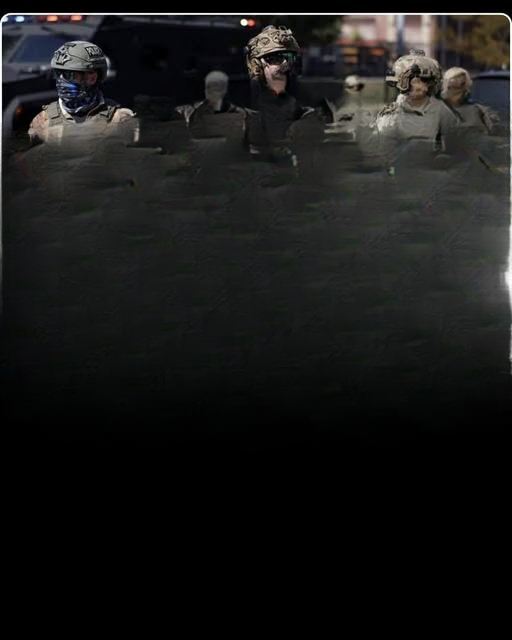
In the early hours of a federal law enforcement operation in Portland, an encounter occurred that would quickly become the subject of intense national attention. Before official statements were issued or investigative findings confirmed, the event had already entered the public consciousness through fragmented reports, online commentary, and emotionally charged interpretations. What followed was not just debate about a single incident, but a broader demonstration of how quickly narratives can solidify in the modern information environment—often long before facts are fully known.
The situation involved federal officers discharging their weapons during an operation, a serious development that naturally raises questions about justification, safety, and oversight. Historically, such incidents prompted measured responses from public officials and cautious reporting from news outlets while investigations unfolded. Today, however, the pace of information flow has dramatically altered that process. Within hours, conclusions were drawn, responsibility assigned, and motives inferred, creating a storyline that proved difficult to recalibrate even as new details emerged.
Portland and the Sanctuary City Context
Portland’s political and cultural landscape played a significant role in shaping how the incident was interpreted. As a city that has formally adopted sanctuary policies, Portland has long emphasized limited cooperation between local authorities and federal immigration enforcement agencies. These policies are grounded in the belief that minimizing local involvement in immigration enforcement encourages community trust and public safety.
However, sanctuary policies also create an environment in which federal law enforcement presence is often viewed with skepticism. Any federal activity related to immigration or border enforcement is likely to be scrutinized through a political lens, particularly in communities where opposition to federal immigration policy runs deep.
In this context, early reports identifying the federal agents involved as belonging to U.S. Immigration and Customs Enforcement (ICE) had an outsized impact. The designation immediately triggered strong reactions from activists, local officials, and commentators who associated ICE with broader national immigration controversies.
The Consequences of Early Misidentification
As subsequent investigation clarified, the agents involved were members of U.S. Customs and Border Protection (CBP), not ICE. While both agencies operate under the Department of Homeland Security, their missions, jurisdictions, and operational roles differ in meaningful ways.
CBP is primarily tasked with border security and the protection of ports of entry, while ICE focuses on interior enforcement and immigration-related investigations. The distinction is not merely bureaucratic—it shapes how operations are planned, authorized, and executed.
Yet by the time this clarification emerged, public reaction had already intensified. The initial misidentification influenced how the incident was framed across social media and broadcast commentary, reinforcing a narrative of aggressive immigration enforcement regardless of the operational reality.
This sequence illustrates a recurring challenge in crisis reporting: once an early assumption becomes widespread, subsequent corrections often struggle to receive the same level of attention.
Official Responses and Public Statements
Local officials responded swiftly, expressing concern about the presence and actions of federal officers within city limits. Statements emphasized fears of excessive force, erosion of civil liberties, and federal intrusion into local governance. These responses reflected longstanding tensions between local sanctuary policies and federal enforcement authority.
Federal agencies, meanwhile, urged patience and emphasized the need for a comprehensive review. Officials referenced established investigative processes, including analysis of body-camera footage, forensic evidence, and internal reporting. They stressed that use-of-force incidents are subject to rigorous scrutiny and are evaluated against strict standards governing threat assessment and officer safety.
The contrast between these approaches—immediate public condemnation versus calls for investigation—highlighted the difficulty of balancing transparency with due process in high-profile incidents.
The Speed of Modern Information Cycles
The Portland incident fits into a broader pattern seen in recent years, where initial reports rapidly shape public understanding before investigations are complete. In an era dominated by social media, information spreads instantaneously, often without context or verification. Emotional reactions are amplified, while nuance struggles to gain traction.
Journalists, public officials, and advocacy groups face intense pressure to respond quickly. While rapid communication can be valuable, it also increases the risk of incomplete or inaccurate information becoming embedded in public discourse.
Once a narrative gains momentum, corrections—no matter how substantiated—rarely receive equivalent engagement. This phenomenon contributes to public confusion and erodes trust in both institutions and media.
Law Enforcement Protocols and Public Perception
Federal law enforcement agencies operate under detailed legal frameworks governing when and how force may be used. Officers receive extensive training in de-escalation, threat evaluation, and procedural compliance. Use-of-force incidents are not discretionary matters but are governed by clear standards intended to protect both officers and civilians.
However, these safeguards are largely invisible to the public, particularly during unfolding events. In cities where skepticism toward federal authority is already high, lawful actions can be interpreted as inherently suspect.
In Portland, this disconnect contributed to a perception gap. While federal agencies emphasized adherence to protocol, many residents viewed the incident primarily through the lens of local political values and past conflicts with federal enforcement.
Media Amplification and Narrative Reinforcement
The media environment played a significant role in reinforcing early assumptions. Social media platforms reward immediacy and emotional engagement, favoring content that provokes strong reactions. Traditional news outlets, operating within a competitive attention economy, often echo viral narratives before full verification is possible.
This dynamic creates a feedback loop in which early interpretations are repeated, reinforced, and normalized. Over time, they can become the dominant framework through which an incident is understood—even if later evidence complicates or contradicts initial claims.