In the days following the stunning U.S. military operation in Venezuela and the capture of President Nicolás Maduro.
President Claudia Sheinbaum’s response hardened into one of the most significant critiques of U.S. foreign policy from a Latin American leader in decades.
Sheinbaum’s admonishment was not merely rhetorical. It was grounded in international law, diplomatic doctrine, and Mexico’s constitutional principles, and it immediately reshaped the diplomatic landscape in the Americas.
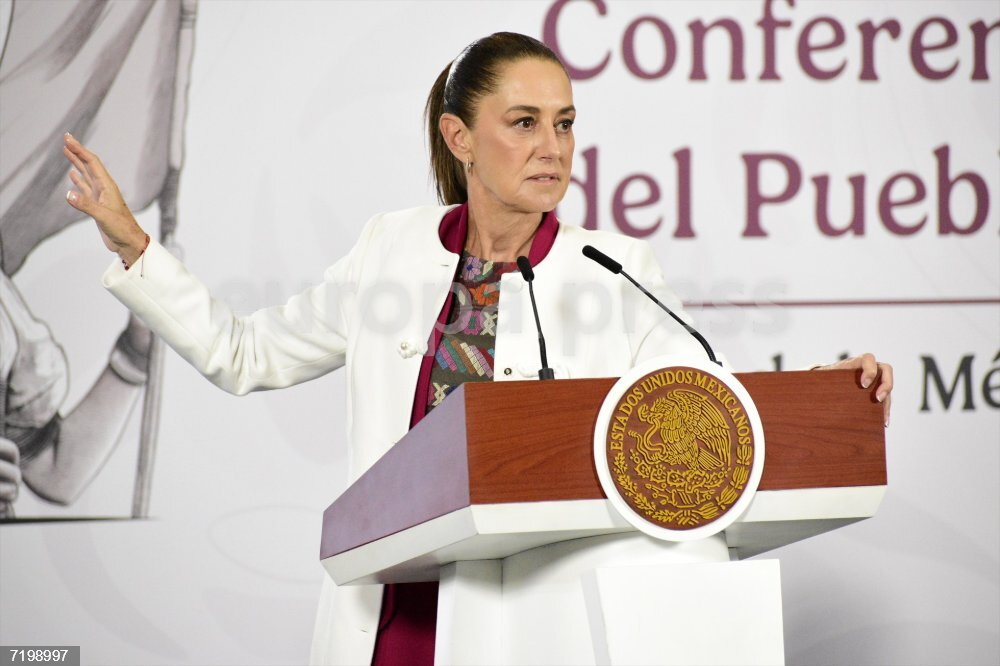
Sheinbaum’s government issued a forceful official communiqué condemning the U.S. operation as a unilateral breach of the United Nations Charter.
The statement explicitly referenced Article 2(4) of the Charter, which prohibits the threat or use of force against the territorial integrity or political independence of any state — a fundamental legal obligation binding on all U.N. member states.
This was not incidental phrasing: it was a legal framework deliberately chosen to elevate the dispute into the realm of global norms rather than bilateral contention.
In press briefings and formal addresses, Sheinbaum underscored that Latin America and the Caribbean are historically and legally designated as a “zone of peace” — a concept that has been repeatedly affirmed by the Mexican Foreign Ministry and regional institutions precisely to prevent foreign military intervention in hemispheric affairs.
In her view, the U.S. action represented more than a strategic strike; it signaled a dangerous erosion of sovereignty, self‑determination, and the rule of law.
Mexico’s president also called for immediate multilateral engagement. Sheinbaum urged both the United Nations (U.N.) and the Organization of American States (OAS) to fulfill their mandates — particularly in terms of defending national sovereignty and enabling peaceful resolution of disputes.
She stressed that these institutions must not be mere forums for rhetoric but active guarantors of international norms and mediators in crisis situations.
Her remarks implicitly criticized what she and other critics described as the relative inaction or paralysis of the U.N. Security Council in response to the U.S. operation, an outcome that exposes deeper structural challenges within global governance.
Sheinbaum invoked Mexico’s longstanding diplomatic traditions, such as the Estrada Doctrine — the principle that governments should not pass judgment on the legitimacy of other states’ internal affairs and should uphold non‑intervention and sovereign equality.
These principles have been at the core of Mexican foreign policy since the early 20th century and were explicitly reiterated in the official government response to the Venezuelan crisis.
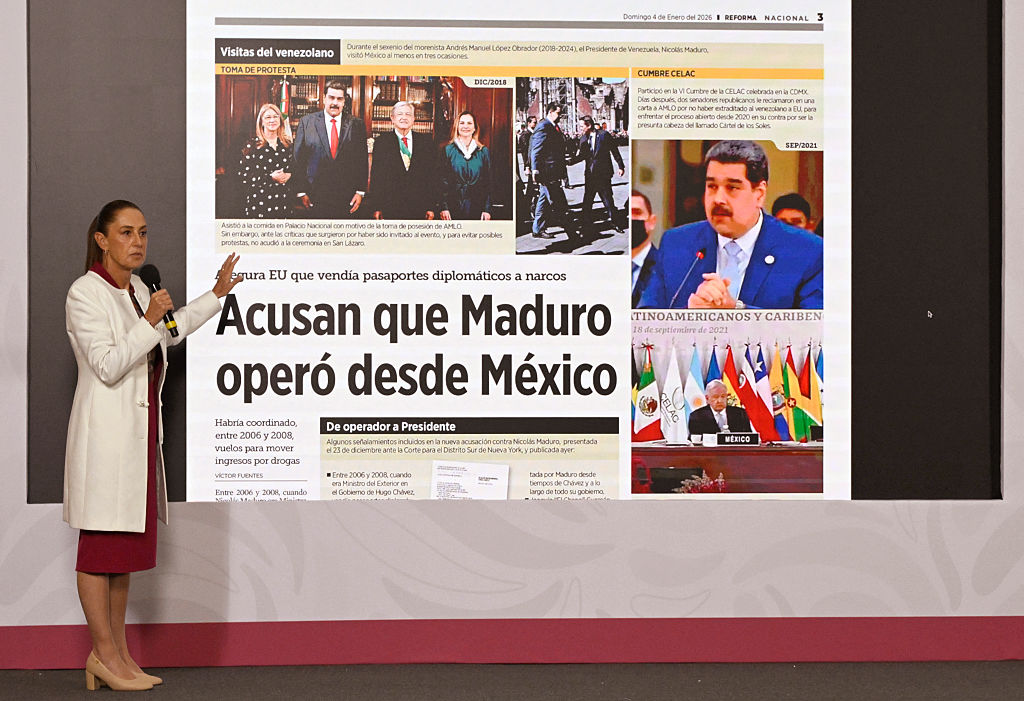
Beyond legal references, Sheinbaum appealed to historical memory. She reminded audiences that Latin America has endured a long history of foreign coups, covert interference, and externally imposed regimes — episodes that have left deep scars in regional consciousness.
By invoking these shared historical experiences, she linked the Venezuelan situation to broader regional anxieties about unequal power, external dominance, and the fragility of democratic sovereignty.
Sheinbaum further argued that foreign military interventions — regardless of their stated intentions — have never delivered genuine democracy, lasting stability, or well‑being.
This assessment was framed not as a defense of any particular regime but as a reflection on the historical track record of such actions in Latin America and beyond. She emphasized that true democratic self‑determination must be achieved internally, through the agency of a nation’s own people.
In political symbolism and substance, Mexico’s stance was unmistakable: the dispute over Venezuela had become a question of whether international relations in the Western Hemisphere would be governed by force or by law, respect, and diplomacy.
Sheinbaum’s choice to elevate legal principles over political alignment served as both a rebuke to Washington and a reinforcement of Mexico’s self‑defined global identity — one rooted in sovereign equality and peaceful cooperation.