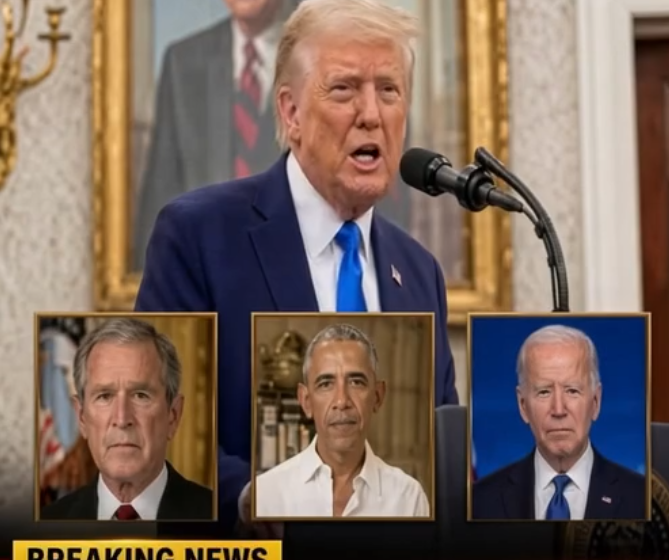
No President Ever Tried This. Trump Just Did — On Live Camera
The president’s direct threats toward journalists and broadcasters have reignited a debate that stretches to the nation’s founding. When government officials connect regulatory authority, licensing decisions, or access to journalists’ employment with disputes over news coverage, constitutional protections for the press come into question. The issue extends beyond any single reporter or network conflict.
What Happened
In August, Trump called for the Federal Communications Commission to investigate NBC journalist Kristen Welker, claiming she had mischaracterized his record on endorsements. He suggested the FCC should issue a “rebuke or punishment” against the network. NBC defended Welker and stated it stood behind her reporting. The FCC’s authority over such matters is limited by First Amendment protections, which generally prevent the agency from substituting its judgment for a broadcaster’s editorial decisions.
The situation has expanded beyond this single incident. ABC and Disney subsidiaries challenged the FCC in court, asserting that an early license review of eight Disney-owned ABC stations constitutes retaliation tied to the network’s coverage and programming decisions. FCC Chairman Brendan Carr denied the retaliation allegation, saying agency actions concern standard public-interest obligations for broadcasters.
The Reaction
On September 16, the Senate Commerce Committee advanced legislation designed to prevent federal officials from pressuring private companies to suppress protected speech. The measure passed 18-10 and would permit individuals to sue federal employees accused of coercing companies into suppressing constitutionally protected expression. The bill requires approval from the full Senate and House before becoming law. Lawmakers from both parties cited concerns about government pressure on private platforms and media organizations.

News organizations have responded by defending journalistic standards and calling for transparency. They emphasize that reporting requires verification, clear distinction between reporting and opinion, swift corrections when errors occur, and visible evidence for public review. Critics argue journalists must remain accountable for factual mistakes while government use of regulatory power raises distinct constitutional concerns.
What This Means
Presidents retain the right to criticize reporters and challenge stories. Political leaders can hold news organizations accountable for errors. But when government regulatory mechanisms become intertwined with disputes over coverage, constitutional principles governing the separation of power and press independence face scrutiny. Courts, due process, and public transparency become essential safeguards.
Competing news organizations face pressure to defend shared principles even when they disagree editorially or politically. Local newspapers, television stations, national networks, digital publishers, and independent journalists operate across different platforms, yet all depend on maintaining public access to information about government without fear of official retaliation for protected speech.
The First Amendment does not guarantee comfort between political leaders and the press. When tensions rise, citizens depend on seeing facts, evidence, legal arguments, and competing claims presented clearly without either government or media institutions claiming unquestioned authority over public discourse. Preserving that system requires courts to review government actions, citizens to hear multiple perspectives, and corrections to occur openly when mistakes happen.