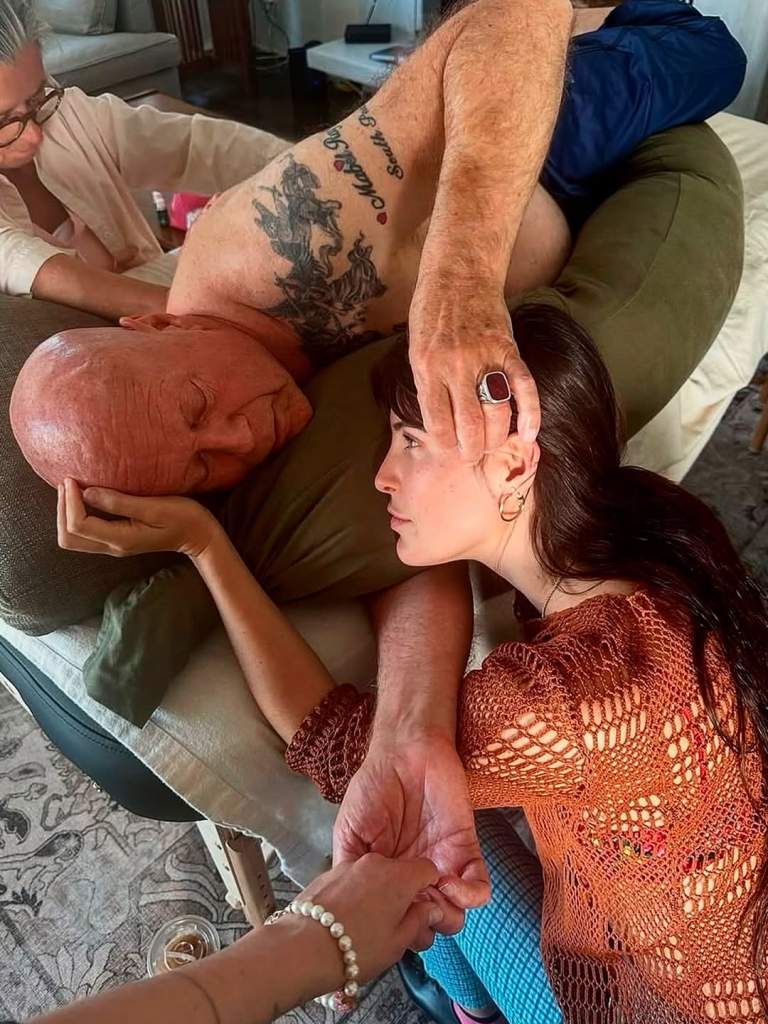
Bruce Willis is a name that has been familiar to millions of people around the world for decades. From his unforgettable role as John McClane in Die Hard to his performances in films such as Pulp Fiction, The Sixth Sense, Armageddon, and The Fifth Element, Willis became one of Hollywood’s most recognizable and beloved stars. His tough-guy image, dry humor, and distinctive personality made him an actor who could command attention whenever he appeared on screen.
That is why the news about his health has been so difficult for many fans to accept. However, the phrase “it’s time to bid farewell” should not be understood as an announcement of Bruce Willis’s death. Rather, it reflects the painful reality that his acting career has come to an end because of a serious neurological disease.
In March 2022, Bruce Willis’s family announced that he was stepping away from acting after being diagnosed with aphasia, a condition that can affect a person’s ability to communicate, including speaking and understanding language. His family later provided a more specific diagnosis. In February 2023, they announced that Willis had been diagnosed with frontotemporal dementia (FTD).
Frontotemporal dementia is a group of brain disorders associated with degeneration in the frontal and/or temporal lobes of the brain. Depending on the individual, it can affect communication, behavior, personality, movement, and other abilities. Importantly, it is not simply the same thing as the more commonly known forms of dementia associated with aging. The Association for Frontotemporal Degeneration explains that FTD can particularly affect people at younger ages and that symptoms can develop and change as the disease progresses.
For Bruce Willis and his family, the diagnosis has understandably been an extremely difficult journey. His family has asked the public to respect their privacy while also using Bruce’s situation to raise awareness about FTD. In their statement, they explained that communication difficulties were only one symptom of the disease and expressed hope that greater public attention would lead to more awareness and research.
What makes the story especially emotional is the contrast between the Bruce Willis people remember from his movies and the reality of his condition today. For years, audiences watched him portray characters who were strong, fearless, quick-thinking, and seemingly impossible to defeat. John McClane could survive almost anything, while other Willis characters faced danger with confidence and determination. These fictional heroes became part of popular culture.
But real life is different. No amount of fame, money, or success can completely protect someone from a serious neurological illness. Bruce Willis’s story reminds us that celebrities are human beings too. Behind the movie posters and red carpets is a husband, father, friend, and family member whose loved ones are facing a deeply personal challenge.
It is also important not to spread rumors or speculate about the exact symptoms Bruce may be experiencing. The Association for Frontotemporal Degeneration has specifically emphasized that the public should avoid guessing about his private medical condition. Instead, attention should be directed toward understanding FTD and supporting families affected by it.
Although his acting career has ended, Bruce Willis’s legacy has not. His films continue to entertain audiences, and his performances have influenced generations of actors and movie lovers. His work has given people laughter, excitement, suspense, and unforgettable cinematic moments.
Perhaps, therefore, saying goodbye to Bruce does not mean saying goodbye to the man himself. It means saying goodbye to the Bruce Willis we knew on the big screen—the action hero, the comedian, the dramatic actor, and the Hollywood star who spent decades entertaining the world.
His family has made it clear that Bruce has always found joy in life and brought happiness to the people around him. Their hope is to help him live as full a life as possible while facing this disease.
So rather than focusing only on sadness, perhaps fans can choose to remember Bruce Willis for everything he gave them. Remember the films. Remember the characters. Remember the humor, the confidence, and the countless moments that made audiences cheer.
Bruce Willis may no longer be able to stand in front of a camera and deliver the lines that made him famous, but his voice as an actor continues through his work. His legacy belongs not only to Hollywood but also to the millions of people who grew up watching his movies.
The most respectful farewell is therefore not one filled with rumors or premature claims. It is one filled with gratitude.
Thank you, Bruce, for the memories, the movies, the laughter, the action, and the unforgettable performances. Your career may have reached its final chapter, but the stories you helped create will continue to live on.
And perhaps that is the most important thing to remember: we are not saying goodbye to Bruce Willis the person. We are simply saying goodbye to an era of Bruce Willis on our screens. His legacy remains.