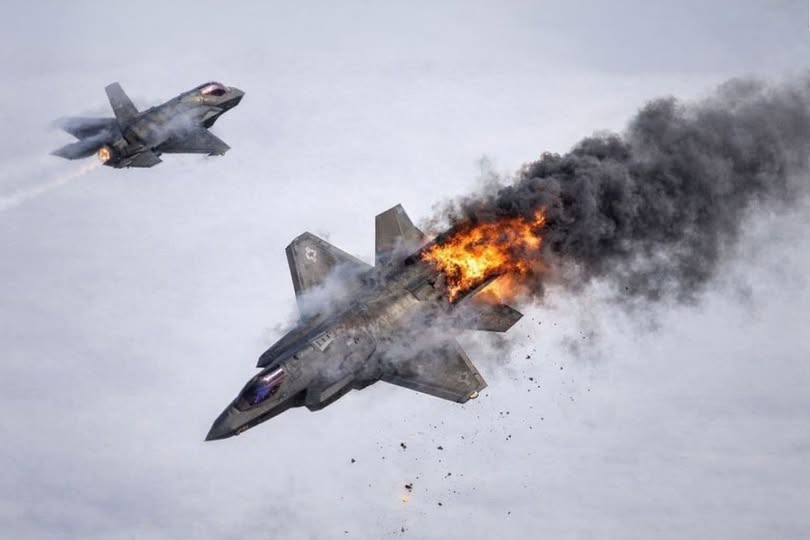
On the morning of February 28, 2026, a conflict that had been building through years of diplomatic tension, military posturing, and regional rivalry finally erupted with devastating force. Coordinated military strikes carried out by the United States and Israel against targets inside Iran marked the beginning of a confrontation that many analysts had long feared but hoped would never occur. Within hours, the Middle East found itself at the center of a rapidly escalating crisis whose consequences extended far beyond the region itself.
What initially appeared to be a limited military operation quickly evolved into a broader conflict involving multiple actors, strategic interests, and competing narratives. Governments around the world convened emergency meetings, financial markets reacted sharply, and energy traders scrambled to assess the potential impact on global oil supplies.
Now, nearly a month later, the situation remains deeply uncertain.
The conflict has transformed political calculations across the Middle East. Nations that once attempted to balance relationships between rival powers have found themselves under increasing pressure to choose sides or clarify their positions. Regional alliances are being tested in ways not seen in years, and diplomatic efforts to contain the violence have so far struggled to gain traction.
Military analysts note that the conflict has demonstrated the evolving nature of modern warfare. Advanced air power, missile systems, cyber operations, intelligence capabilities, and electronic warfare have all played significant roles. Military planners around the world are closely studying developments as they attempt to understand the strategic lessons emerging from the confrontation.
At the same time, the human consequences continue to grow.
Across affected areas, families have faced uncertainty, displacement, and fear. Communities that were already coping with economic challenges and political instability now confront the additional burden of conflict. Humanitarian organizations have repeatedly warned that prolonged fighting could create broader regional crises affecting civilians far beyond the immediate combat zones.
The economic effects have also been substantial.
Global energy markets reacted almost immediately to the outbreak of hostilities. The Middle East remains one of the world’s most important energy-producing regions, and any threat to production facilities, transportation infrastructure, or shipping routes inevitably attracts international concern. Investors, businesses, and governments have all been forced to reassess economic forecasts amid fears of prolonged instability.
Shipping companies operating in strategic waterways have increased security measures, while international markets continue to monitor developments closely. Economists warn that extended disruptions could have ripple effects reaching consumers worldwide through higher transportation costs, increased energy prices, and broader market volatility.
Diplomatic efforts remain ongoing, though progress has been difficult.
International organizations, regional governments, and major world powers have called for restraint and dialogue. Multiple proposals aimed at reducing tensions have reportedly been discussed behind closed doors. However, deep mistrust between the parties involved has complicated negotiations.
Observers point out that the roots of the conflict extend far beyond the events of February 28. The current crisis emerged from years of disagreements over regional influence, security concerns, military activities, and competing strategic objectives. These longstanding disputes make any resolution particularly challenging because the issues involved are deeply interconnected.
Meanwhile, public opinion across various countries remains sharply divided.
Supporters of different sides argue passionately about security, sovereignty, deterrence, and regional stability. Political leaders face pressure from domestic audiences while simultaneously attempting to manage complex international relationships. As a result, decisions made in capitals around the world are being influenced not only by military realities but also by political considerations at home.
Security experts continue to debate possible outcomes.
Some believe sustained international pressure could eventually push the parties toward negotiations. Others warn that further escalation remains possible if military actions continue or if additional actors become directly involved. Much depends on decisions made in the coming weeks, as leaders weigh military objectives against mounting economic, diplomatic, and humanitarian costs.
The conflict has also highlighted broader questions about global security in the twenty-first century. Events in one region can rapidly affect economies, politics, and security calculations across the globe. The interconnected nature of modern society means that even geographically distant nations may experience consequences through financial markets, energy supplies, trade networks, and international diplomacy.
For ordinary people, however, geopolitical analysis offers limited comfort.
Families living in affected areas continue to face uncertainty about what tomorrow may bring. Communities worry about safety, economic stability, and the future. Businesses attempt to adapt to rapidly changing conditions, while governments seek ways to protect national interests amid an increasingly unpredictable environment.
As the conflict enters its fourth week, the world continues to watch closely.
Military operations, diplomatic initiatives, and international responses remain fluid, with new developments emerging daily. Analysts, policymakers, and citizens alike are searching for signs that a path toward de-escalation might eventually emerge.
For now, however, one reality remains clear: a conflict that many feared could destabilize the region has already produced consequences far beyond the battlefield. Its ultimate outcome remains uncertain, but its impact on international relations, regional security, and global economic stability is likely to be felt long after the fighting eventually ends.
Whether the coming weeks bring escalation, negotiation, or a combination of both, the events set in motion on February 28 have already become one of the defining international crises of the year, reshaping discussions about security, diplomacy, and the fragile balance that governs an increasingly interconnected world.