The human body is an extraordinarily complex system made up of organs, tissues, nerves, hormones, and biological processes that work together continuously to maintain life. Every second, countless functions occur inside the body without conscious effort—breathing, circulation, digestion, healing, and communication between cells. Among these interconnected systems, the reproductive system plays a unique and essential role in human development, reproduction, hormonal balance, and overall health.
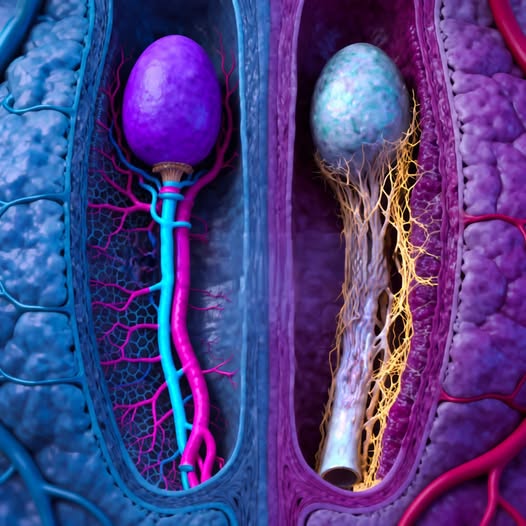
The image above appears to show a medical-style illustration of structures within the female reproductive system. Educational diagrams like these are commonly used in biology classes, medical textbooks, and healthcare settings to help people better understand anatomy and reproductive health.
Although many people feel uncomfortable discussing reproductive anatomy openly, medical experts emphasize that education about the human body is extremely important. Understanding anatomy helps individuals make informed decisions about health, recognize symptoms when something feels wrong, and reduce misinformation surrounding reproductive health topics.
The female reproductive system consists of both internal and external structures, each serving specific biological functions.
Internally, some of the primary organs include the ovaries, fallopian tubes, uterus, cervix, and vagina. These structures work together in highly coordinated ways regulated by hormones produced by the endocrine system.
The ovaries are small organs responsible for producing eggs, also known as ova. They also release important hormones such as estrogen and progesterone, which influence puberty, menstrual cycles, fertility, bone health, mood, and other bodily functions.
Each month during the reproductive years, hormonal signals stimulate the ovaries as part of the menstrual cycle. Typically, one egg matures and is released during ovulation. The egg then travels through the fallopian tube, where fertilization can potentially occur if sperm are present.
The uterus is another central organ within the reproductive system.
Often described as a muscular, pear-shaped organ, the uterus is where a fertilized egg can implant and develop during pregnancy. Its inner lining, called the endometrium, thickens each month in preparation for possible pregnancy. If pregnancy does not occur, this lining sheds during menstruation.
The menstrual cycle itself is one of the body’s most intricate hormonal processes.
Hormones originating from the brain and ovaries communicate constantly to regulate ovulation, menstruation, and reproductive timing. While menstrual cycles vary from person to person, the average cycle lasts around 28 days, though healthy variation is common.
Many people mistakenly assume reproductive health affects only fertility or pregnancy, but doctors explain that the reproductive system influences many aspects of overall wellness.
Hormonal changes can affect mood, sleep, energy levels, skin, metabolism, and emotional health. Conditions involving reproductive organs may also impact quality of life significantly.
Common reproductive health conditions include:
Endometriosis
Polycystic ovary syndrome (PCOS)
Fibroids
Ovarian cysts
Pelvic inflammatory disease
Menstrual disorders
Hormonal imbalances
Some of these conditions remain underdiagnosed because symptoms are sometimes dismissed as “normal” discomfort. Medical professionals increasingly encourage people to seek medical advice when experiencing severe pain, irregular bleeding, or other concerning symptoms rather than assuming such issues must simply be tolerated.
Education also plays a major role in preventing misinformation.
Throughout history, reproductive anatomy has often been surrounded by myths, embarrassment, and cultural stigma. In many societies, discussions about reproductive organs were treated as taboo subjects, limiting public understanding and sometimes discouraging individuals from seeking healthcare when needed.
Today, healthcare professionals stress the importance of medically accurate education grounded in science rather than fear or misinformation.
Understanding anatomy should not be viewed as inappropriate or shameful. Instead, it helps people better understand how their own bodies function and empowers them to recognize signs of illness or changes requiring medical attention.
Medical illustrations are particularly useful because they allow students, patients, and healthcare providers to visualize structures not visible externally. Diagrams simplify complicated internal systems into understandable forms, helping people learn how organs relate to one another spatially and functionally.
For example, seeing how the ovaries connect to the uterus through the fallopian tubes helps explain processes like ovulation, fertilization, and pregnancy development more clearly than words alone.
Advances in medicine have dramatically improved reproductive healthcare over the last century.
Modern diagnostic tools such as ultrasounds, MRIs, blood testing, laparoscopic procedures, and fertility treatments allow doctors to detect and treat many conditions that once went undiagnosed. Preventive care, screenings, and education have also improved outcomes for millions of people worldwide.
At the same time, researchers continue studying reproductive health extensively because many questions remain about hormonal regulation, fertility, reproductive disorders, and long-term health effects connected to the reproductive system.
Mental and emotional health are also closely linked to reproductive health.
Hormonal fluctuations can influence emotional well-being, while reproductive conditions sometimes create anxiety, stress, depression, or body-image concerns. Pregnancy, childbirth, infertility struggles, menopause, and chronic reproductive pain can all carry significant emotional dimensions alongside physical symptoms.
Healthcare experts increasingly emphasize holistic care approaches addressing both physical and psychological well-being.
The human body cannot truly be understood by separating systems entirely from one another because every organ system interacts constantly. The reproductive system affects hormones, which influence the brain, bones, cardiovascular health, metabolism, and emotional regulation.
This interconnectedness reflects the extraordinary complexity of human biology itself.
Educational discussions surrounding anatomy are ultimately not just about organs or diagrams.
They are about understanding health, reducing fear, encouraging preventive care, and helping people feel informed rather than confused about their own bodies.
And perhaps that is one of the most important lessons medical science continues teaching:
The more knowledge people have about the human body, the better equipped they become to care for themselves, recognize health concerns early, and approach medicine with confidence instead of uncertainty.