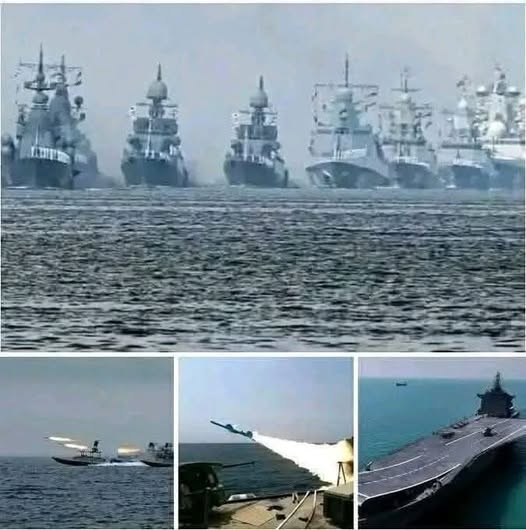
In recent months, social media platforms have been flooded with dramatic headlines claiming that the United States has “entered a new war” or that a major global conflict is imminent. Viral posts, short video clips, and emotionally charged commentary have created widespread confusion, leading many people to wonder whether the world is on the edge of a large-scale military escalation.
However, verified information from government officials, international organizations, and credible news agencies paints a far more nuanced picture.
While global tensions remain serious in several regions, the current situation does not reflect a formal declaration of war by the United States in the traditional sense. Instead, what the world is witnessing involves a complex mix of military preparedness, diplomatic negotiations, economic pressure, intelligence operations, and strategic alliances.
Understanding that distinction is essential in an age where online misinformation spreads faster than verified facts.
One of the most closely watched geopolitical situations remains the ongoing conflict involving Russia and Ukraine. Since the conflict escalated, the international community has closely monitored military developments, humanitarian concerns, sanctions, and diplomatic efforts aimed at reducing violence.
Recently, officials connected to the United States, Russia, and Ukraine reportedly participated in discussions held in the United Arab Emirates. These meetings were widely interpreted as part of broader diplomatic attempts to manage tensions and keep communication channels open despite ongoing hostilities.
Diplomatic engagement during conflict is not unusual in international relations.
In fact, history shows that negotiations often continue even while fighting occurs. Governments frequently maintain communication behind the scenes to reduce misunderstandings, negotiate prisoner exchanges, discuss humanitarian corridors, or explore possible ceasefire frameworks.
For this reason, diplomatic meetings should not automatically be interpreted as evidence that a new global war is beginning. In many cases, they represent efforts to prevent conflicts from expanding further.
Another major focus of international attention involves relations between the United States and Iran.
Over the years, tensions between the two countries have fluctuated significantly, involving sanctions, regional security concerns, military incidents, and nuclear negotiations. Recently, indirect talks hosted in Oman reportedly signaled renewed attempts to reduce tensions and avoid escalation.
Officials familiar with the discussions described them as constructive, suggesting that both sides recognize the importance of stability in the region.
This highlights a critical aspect of modern geopolitics: military readiness and diplomatic dialogue often occur simultaneously.
Countries may strengthen defenses, reposition military assets, or conduct strategic operations while still actively pursuing negotiations. Preparedness does not necessarily mean war is imminent. In many cases, visible military positioning is intended as deterrence rather than preparation for immediate combat.
The nature of modern military operations also differs significantly from the large-scale wars many people imagine when hearing the word “war.”
Traditional wars in the 20th century often involved formal declarations, massive troop deployments, and clearly defined battlefronts. Today, international conflict is frequently more fragmented and multidimensional.
Modern geopolitical tensions may involve:
Cybersecurity operations.
Economic sanctions.
Intelligence gathering.
Drone surveillance.
Regional proxy conflicts.
Naval positioning.
Counterterrorism missions.
And strategic military exercises.
Because these activities occur constantly, it can sometimes appear as though nations are permanently on the brink of war even when diplomatic systems remain active.
Social media intensifies this perception dramatically.
Platforms driven by engagement algorithms often reward emotional and alarming content because it spreads rapidly. Headlines using phrases like “World War III,” “America enters war,” or “global catastrophe” generate clicks, shares, comments, and fear-driven attention.
Unfortunately, this creates an environment where exaggerated interpretations often travel faster than accurate analysis.
Experts in media literacy warn that many viral posts intentionally remove important context. A short video of military vehicles moving through a city, for example, may be presented as evidence of imminent war even if the footage actually relates to a training exercise or previously scheduled deployment.
Similarly, diplomatic disagreements are often portrayed online as signs of unavoidable conflict when international disputes frequently involve negotiation, pressure, and strategic positioning rather than direct warfare.
Military analysts emphasize that formal declarations of war are now relatively rare in global politics. Instead, governments typically rely on limited military operations authorized through existing defense frameworks, alliances, or counterterrorism mandates.
This makes modern conflicts more difficult for the public to interpret clearly.
At the same time, it is also true that global tensions remain serious.
Conflicts involving Russia and Ukraine continue affecting international security and global economics. Instability in parts of the Middle East continues raising concerns about regional escalation. Competition among major powers—including the United States and China—also shapes international military and economic strategy.
These realities should not be ignored.
But experts caution against interpreting every military movement or diplomatic crisis as proof that worldwide war is inevitable.
International relations are often built around managing tensions before they spiral into larger conflicts. That process involves constant negotiation, intelligence analysis, alliance coordination, and strategic signaling.
Another important factor influencing public anxiety is the speed of information itself.
In previous generations, people learned about international crises primarily through newspapers or scheduled television broadcasts. Today, millions receive updates instantly through social media feeds filled with unverified claims, edited clips, rumors, and emotionally charged commentary.
This environment can create a constant sense of emergency.
Psychologists note that repeated exposure to alarming content increases stress and fear, especially when information lacks context or verification. People may begin interpreting uncertainty itself as evidence that hidden events are occurring behind the scenes.
That is why media literacy has become increasingly important.
Experts recommend several strategies for evaluating claims about war or international conflict:
Check whether information comes from verified official sources.
Compare reports across multiple reputable news organizations.
Be cautious of anonymous viral posts lacking evidence.
Distinguish between military preparedness and active warfare.
Avoid assuming that dramatic headlines reflect complete reality.
Understanding geopolitics also requires recognizing that nations often pursue multiple strategies simultaneously. Governments may strengthen defenses while also negotiating peace. They may criticize rivals publicly while continuing private diplomatic discussions behind closed doors.
This complexity rarely fits neatly into viral social media narratives.
Ultimately, current global developments reflect a world experiencing heightened geopolitical tension—not necessarily a world entering immediate large-scale war.
Diplomatic negotiations remain active.
International institutions continue functioning.
Military alliances remain focused largely on deterrence and strategic balance.
And despite sharp disagreements between global powers, communication channels largely remain open.
For ordinary citizens trying to understand world events, the most important lesson may be this: dramatic online narratives often oversimplify highly complicated realities.
Global politics is rarely black and white.
And in an era dominated by instant information, careful analysis matters more than ever.