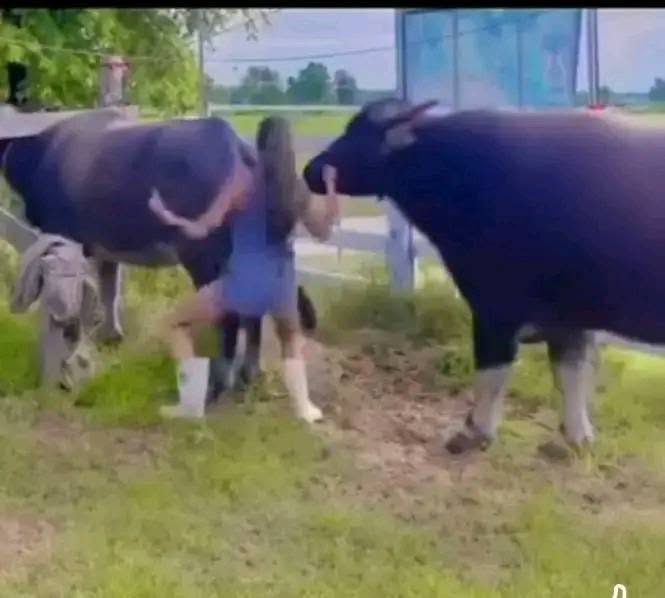
She stood by the fence, keeping a safe distance this time. She took a deep breath.
The fear was still there—but it no longer controlled her.
And for the first time since the accident, she truly believed it.
The memory hadn’t disappeared. It never would. It lived somewhere beneath the surface, quiet but present, like a shadow that followed her without warning. There were moments when it returned sharply—the sound, the impact, the confusion that came after. But those moments no longer defined her entire day. They no longer dictated every decision she made.
Elira’s life didn’t go back to what it was before.
At first, that realization had felt like another loss. She had spent weeks, even months, wishing for the version of herself that existed before everything changed—the version that moved freely, laughed easily, and never thought twice about simple things. But slowly, almost without noticing, she began to understand that going back was never really an option. Life had moved forward, and she had to learn how to move with it.
She became more patient, not because she wanted to, but because she had no other choice. Recovery demanded time, and time refused to be rushed. There were days when progress felt invisible, when frustration crept in and made everything seem harder than it should be. But then there were small victories—moments so simple they might have gone unnoticed before, but now felt significant.
The first time she walked without pain.
The first time she climbed a set of stairs without stopping.
The first time she stood outside and let the sunlight warm her face without feeling that familiar rush of fear tightening her chest.
Each of those moments became a quiet reminder that healing was happening, even if it didn’t look the way she had expected.
She also became more present. Before the accident, her days had often blurred together, filled with routines she barely questioned. Now, everything felt sharper, more intentional. She noticed things she used to overlook—the way the light changed in the afternoon, the sound of leaves moving in the wind, the comfort of a simple conversation. These details, once insignificant, became anchors that kept her grounded.
Her experience had shown her how quickly life could shift. One moment, everything can feel stable, predictable, and under control. The next, it can all change in ways you never imagined. That realization could have made her more afraid, but instead, it gave her a different kind of awareness. She began to understand the importance of caring not just for physical wounds, but for emotional ones as well.
The physical injuries had been visible, measurable. Doctors could track her progress, prescribe treatment, and explain what needed to happen next. The emotional side was different. It didn’t follow a clear timeline. Some days were easier than others. Some days felt like setbacks. But over time, she learned that healing didn’t mean erasing what happened—it meant learning how to live with it without letting it take over.
Eventually, she felt ready to return to the place where her recovery had truly begun: the hospital.
At first, she wasn’t sure what role she could play there. She didn’t have medical training, and she wasn’t there to provide clinical care. But she remembered how much it had meant, during her own stay, to have someone simply sit with her. Someone who listened without trying to fix everything. Someone who understood, even without many words.
So she began volunteering.
Her visits were simple. She would spend time with patients, talk when they wanted to talk, sit quietly when they didn’t. She listened to stories—some filled with hope, others heavy with uncertainty. She recognized the same emotions she had once felt: fear, frustration, impatience, and the quiet question that lingered in the background of every difficult moment—Will I be okay?
“You’ll get through this,” she would tell them.
She didn’t say it as an empty reassurance. She said it because she knew what it felt like to doubt it. She knew how hard it could be to believe in something you couldn’t yet see. And she knew that sometimes, hearing those words from someone who had been there made a difference.
Over time, those conversations began to shape her in ways she hadn’t expected. Helping others didn’t erase her own experience, but it gave it meaning. It transformed something painful into something that could support someone else. And in doing so, it changed the way she saw her own journey.
She no longer viewed the accident as the moment everything had been taken from her.
Instead, she began to see it as the moment everything had changed—and from that change, something new had emerged.
Stronger, not in the sense of being unbreakable, but in the sense of understanding her own limits and still moving forward. More aware, more compassionate, more connected to the people around her.
Standing by the fence now, she realized that fear might always exist in some form. But it no longer had the power to stop her.
She could stand there, breathe deeply, and choose what came next.
And in that journey, she discovered something unexpected—not just strength, but a deeper understanding of what it truly means to heal.