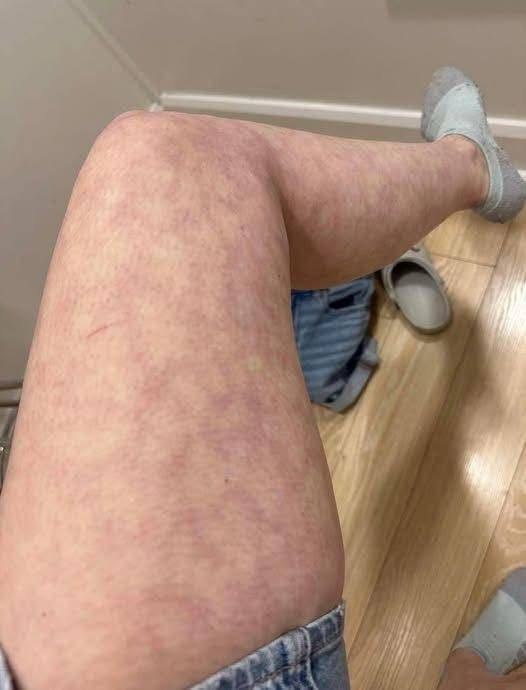
At first glance, it can look like a typical skin irritation—something minor, perhaps even temporary. A faint discoloration, a blotchy or net-like pattern across the skin, often appearing on the legs or lower body. Many people assume it’s a rash, poor circulation, or even just dry skin. But in some cases, the cause is something far less obvious—and surprisingly common.
This unusual pattern is often linked to a condition known as Erythema ab igne, a term that comes from Latin and translates to “redness from fire.” Despite the dramatic name, the condition doesn’t result from burns in the traditional sense. Instead, it develops gradually, caused by repeated exposure to low levels of heat over extended periods of time.
What makes this condition particularly deceptive is that the heat involved doesn’t feel harmful. In fact, it usually feels comforting. People often encounter it during colder months when they rely on heat sources like space heaters, heating pads, or electric blankets to stay warm—especially at night. Over time, this repeated exposure can begin to affect the skin in subtle but lasting ways.
How It Happens
The skin is designed to handle a range of temperatures, but prolonged exposure to even moderate heat can have unintended effects. In the case of Erythema ab igne, the heat doesn’t burn the surface of the skin. Instead, it penetrates deeper, affecting the small blood vessels beneath.
With repeated exposure, these blood vessels can become damaged or altered. This leads to changes in blood flow and pigmentation, which eventually appear as a mottled, net-like pattern on the skin. The discoloration may start off faint but can become more pronounced over time if the heat exposure continues.
Because the process is gradual, many people don’t immediately connect the condition to its cause. It can take days or even weeks of repeated exposure before visible signs appear.
Common Sources of Heat Exposure
One of the reasons this condition is more common than people realize is that the sources of heat are often part of everyday routines. Some of the most frequent causes include:
- Sleeping with an electric blanket pressed directly against the skin
- Sitting close to a space heater for extended periods
- Using heating pads for pain relief without proper breaks
- Placing laptops on the lap for long durations (in some cases)
In many situations, the intention is comfort or relief. The warmth feels soothing, especially during cold weather or when dealing with muscle aches. But when that warmth is applied repeatedly to the same area, it can begin to affect the skin over time.
Why It Often Goes Unnoticed
One of the challenges with Erythema ab igne is that it doesn’t cause immediate pain or discomfort. Unlike burns, there’s no sharp sensation signaling that something is wrong. The skin may feel warm, but not dangerously so.
As a result, people continue their habits without realizing the cumulative effect. By the time the discoloration becomes visible, the damage has already occurred.
In some cases, individuals may even mistake the pattern for another condition, delaying proper identification and prevention.
Potential Risks and Complications
While the condition is often considered mild, it’s not something that should be ignored. In its early stages, the discoloration may fade once the heat source is removed. However, with continued exposure, the changes can become long-lasting or even permanent.
Doctors also note that chronic cases can lead to additional concerns. Persistent inflammation in the affected area may cause discomfort or sensitivity. In rare situations, prolonged damage to the skin has been associated with more serious changes, including pre-cancerous developments.
Although such cases are uncommon, they highlight the importance of recognizing the condition early and taking steps to prevent further exposure.
Prevention Is Simple—but Important
The good news is that preventing Erythema ab igne is relatively straightforward once you understand the cause.
The key is to limit direct, prolonged contact with heat sources. This doesn’t mean avoiding warmth altogether, but rather using it more carefully.
Simple precautions include:
- Keeping heaters at a safe distance from the body
- Avoiding direct skin contact with heating pads or electric blankets
- Using lower heat settings when possible
- Taking regular breaks from continuous heat exposure
For those who rely on warmth for comfort or medical reasons, using a barrier—such as clothing or a blanket—between the heat source and the skin can help reduce risk.
What to Do If You Notice Symptoms
If you begin to notice a persistent, net-like discoloration on your skin, especially in areas frequently exposed to heat, it’s important to take action.
The first step is to remove or reduce the source of heat. In many cases, this alone can prevent the condition from worsening and may allow the skin to gradually recover.
If the discoloration persists or becomes more pronounced, consulting a healthcare professional is recommended. They can evaluate the condition, confirm the cause, and provide guidance on treatment if needed.
Early awareness is key. The sooner the pattern is recognized and the exposure is addressed, the better the chances of avoiding long-term effects.
A Reminder About Everyday Habits
What makes this condition particularly noteworthy is how easily it can develop from everyday habits. Something as simple as sitting near a heater or using an electric blanket can, over time, lead to visible changes in the skin.
It’s a reminder that not all risks are immediate or obvious. Some develop quietly, building over time without clear warning signs.
By paying attention to how we use common sources of heat, we can avoid these unintended consequences while still enjoying their benefits.
Final Thoughts
The blotchy pattern associated with Erythema ab igne may look harmless at first, but it tells a deeper story about repeated exposure and its effects on the body. While the warmth that causes it often feels comforting, the long-term impact on the skin can be lasting.
Understanding the cause is the first step toward prevention. With a few simple adjustments—maintaining distance, limiting exposure, and staying aware—you can protect your skin without giving up comfort.
In the end, it’s about balance. Warmth can be beneficial, even necessary, but like many things, it’s best used in moderation.