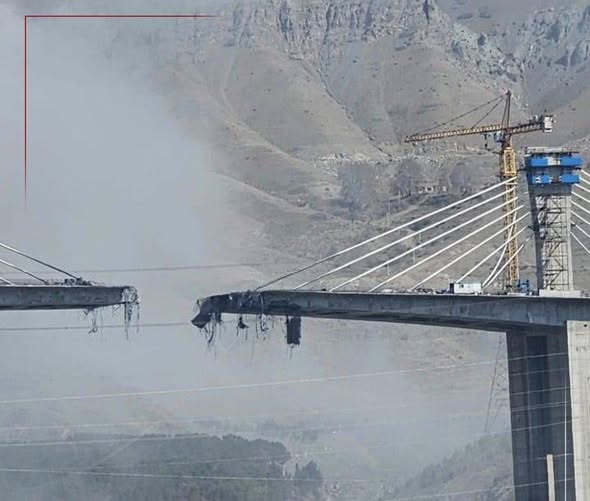
In a move that has drawn international attention, former President Donald Trump authorized a precision strike on a partially constructed bridge near Karaj, Iran. The bridge, linking Karaj to Tehran, was reportedly intended to facilitate military logistics, including troop movement and deployment of missiles and drones.
While some critics have labeled the strike a potential “war crime,” military analysts emphasize that targeting infrastructure used for active military operations falls within standard wartime strategy.
The Target and Its Strategic Significance
The bridge in question was not fully operational for civilian traffic at the time of the strike. Reports suggest it was being used as a logistical route by Iran’s military forces, specifically the Islamic Revolutionary Guard Corps (IRGC).
By disrupting the bridge, the strike aimed to:
Prevent the transport of military equipment, including missiles and drones
Limit the rapid deployment of troops to potential launch sites
Reduce the operational capacity of Iranian forces threatening U.S. and allied interests
Military strategists note that targeting supply lines and military infrastructure is a common tactic in armed conflicts worldwide and is considered a legitimate act under international law when civilian casualties are minimized.
Casualties and Damage
According to Iranian state media, the strike resulted in eight reported deaths and approximately 100 injuries. While any loss of life is tragic, experts argue that the bridge was a military target, not a civilian site, and the strike was designed to minimize collateral damage.
Footage released from the strike shows the bridge partially collapsing, effectively halting its intended use for military purposes. Analysts suggest that the strike may significantly slow Iranian operations in the region if left unrepaired.
Context: Iran’s Military Activities
The strike comes amid ongoing tensions over Iran’s military programs, which have included:
Development and deployment of ballistic missiles
Drone operations targeting regional adversaries
Use of infrastructure in civilian areas to hide military assets
Over the years, these activities have led to international concern over Iran’s ability to launch attacks against U.S. forces and allied nations in the Middle East. By targeting military logistics rather than established civilian routes, the strike is consistent with strategies designed to degrade operational capabilities without targeting non-combatants.
International Reactions
The strike sparked debate online and among foreign policy commentators. Some critics argue that any action inside Iran could escalate tensions and risk civilian harm. Others note that the targeted nature of the strike demonstrates a calculated approach to military objectives, rather than indiscriminate bombing.
Experts emphasize that such operations are aimed at reducing long-term threats and compelling negotiations rather than provoking broader conflict.
Strategic Implications
Analysts suggest the strike may serve multiple strategic goals:
Deterrence: Demonstrating the capacity to strike key military infrastructure can discourage future aggressive actions.
Pressure for Diplomacy: By limiting Iran’s ability to move equipment and troops, the strike creates leverage for potential diplomatic negotiations.
Military Readiness: Testing precision strike capabilities on strategic targets allows U.S. forces to maintain readiness for potential regional conflicts.
Looking Ahead
While the situation remains tense, the strike highlights the complexity of modern military strategy in contested regions. Precision targeting of enemy supply lines is a widely recognized method to degrade capabilities while minimizing civilian exposure, and analysts expect monitoring and diplomatic engagement to continue in the coming weeks.
Summary:
The strike targeted a bridge under construction used for military logistics, not a civilian route.
Casualties were reported, but experts consider the target a legitimate military objective.
The action reflects a broader strategy of limiting enemy operational capabilities while maintaining leverage for diplomacy.
This event underscores the challenges of modern warfare: balancing military objectives, international law, and minimizing civilian impact in high-stakes geopolitical conflicts.