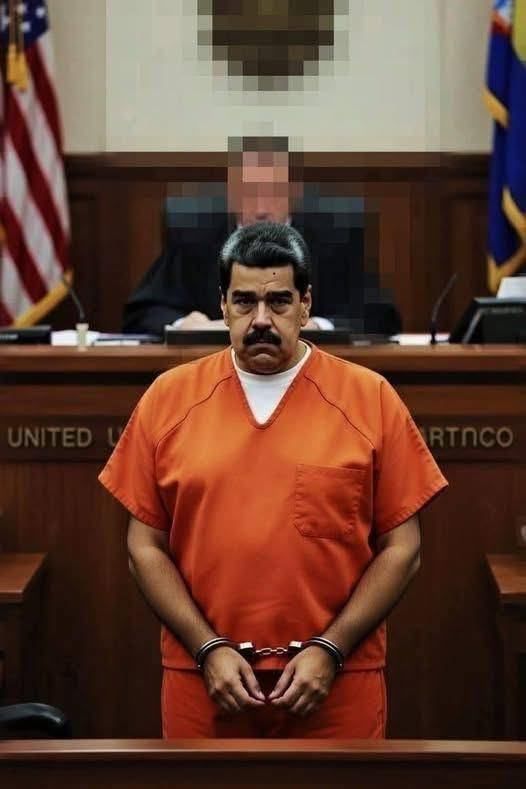
The United States Senate has become the stage for a tense constitutional confrontation, sparked by a high-stakes military operation in Venezuela that has tested the limits of executive authority. After U.S. forces executed a daring overnight raid to capture Nicolás Maduro, the nation now grapples with the legal, ethical, and geopolitical consequences of the mission. Initially framed by the Trump administration as a precise law-enforcement action, the operation has evolved into a profound debate over presidential war powers, congressional oversight, and what constitutes “hostilities” in an era defined by rapid global interventions and precision strikes.
While the operation itself demonstrated remarkable military sophistication, the political and constitutional fallout has been equally dramatic, highlighting the enduring tension between the executive branch’s claim to unilateral authority and Congress’s constitutional prerogative to declare or authorize acts of war.
The raid, executed in early January, involved elite U.S. units striking in Caracas under the cover of darkness. Nicolás Maduro and his wife were detained and transferred to New York to face longstanding narcotics and corruption charges. On the surface, the administration framed this as the capture of a criminal. Yet, critics quickly pointed out that the scale of the operation—with advanced aircraft, special operations forces, and a clear violation of Venezuelan sovereignty—resembled a military campaign more than a law-enforcement action.
Experts in international law noted that removing a sitting head of state without the approval of the UN Security Council or regional allies sets a controversial precedent. By labeling it a criminal apprehension, the administration navigated legal gray areas, but the political optics suggested an unprecedented exercise of executive power. Domestically, it quickly became a lightning rod for debate: was this an extraordinary measure to enforce justice, or an unauthorized act of war?
The operation also highlighted the capabilities of U.S. special forces, who executed the mission with surgical precision. Surveillance drones, stealth aircraft, and rapid extraction teams ensured minimal collateral damage and a swift outcome. No American troops remained in Venezuela following the raid, reinforcing the administration’s claim that it was limited in scope. Yet the very notion of unilateral intervention against a sovereign nation, no matter the target’s criminal status, drew sharp criticism from Congress and legal scholars alike.
The Senate Confrontation
Tensions came to a head in the Senate with the introduction of a War Powers Resolution, spearheaded by a bipartisan coalition of lawmakers including Senators Tim Kaine and Rand Paul. The resolution sought to require explicit congressional approval for any further U.S. military engagement in Venezuela, reflecting concerns that the Maduro raid may have crossed the line from law enforcement into armed conflict.
Debate on the Senate floor was intense. Senator Paul argued that forcibly removing a foreign head of state, regardless of criminal charges, inherently constitutes an act of war. Senator Kaine echoed this sentiment, noting that calling the raid “law enforcement” ignored the geopolitical stakes and the violation of international norms. Other senators countered that the president retains broad discretion to act against threats to U.S. security and that Maduro’s indictment for narcotics trafficking justified swift action.
The confrontation reached its apex on January 14, when the Senate voted on the resolution. Initially, a slim majority seemed poised to support congressional oversight, but under significant White House pressure, several Republican senators switched their positions. The vote ended in a 50-50 tie, allowing Vice President J.D. Vance to cast the deciding vote to block the resolution. While this preserved the administration’s ability to act unilaterally, the narrow margin revealed deep fractures between the executive branch and Congress.
Legal and Constitutional Debate
At the heart of the controversy is the question of presidential authority under the Constitution. The War Powers Clause grants Congress the exclusive power to declare war, but successive presidents have argued for inherent authority to conduct military operations in the interest of national security. The Maduro raid epitomizes this tension.
Supporters of the operation argue that it does not constitute an act of war. They point out that no U.S. troops remain deployed in Venezuela, and that the War Powers Resolution applies only to sustained hostilities, not discrete law-enforcement operations. According to this view, Maduro’s status as a narcotics trafficker and threat to regional stability warranted immediate action. Delaying for congressional approval could have compromised operational success and allowed the target to evade capture.
Critics, however, see the raid as part of a troubling trend toward executive overreach. By unilaterally apprehending a sitting head of state on foreign soil, the administration bypassed the traditional checks and balances envisioned by the framers of the Constitution. Legal experts warn that precedent-setting operations like this could erode congressional authority and undermine the delicate balance of power between the legislative and executive branches.
The debate also touches on the interpretation of the War Powers Resolution itself. Passed in 1973 in response to the Vietnam War, the law requires the president to seek congressional authorization for armed conflicts lasting longer than 60 days. However, successive administrations have challenged its applicability, arguing that the law infringes on the president’s constitutional role as commander-in-chief. The Maduro operation tests these limits in an era of precision raids and short-duration interventions, forcing lawmakers and legal scholars to reconsider the resolution’s relevance.
International Ramifications
The Maduro operation reverberated well beyond U.S. borders. Legal scholars warned that seizing a sitting head of state without UN approval risks destabilizing global norms on the use of force. Diplomats expressed concern that the “New York extraction” model could inspire other countries to conduct similar cross-border operations under the guise of justice, eroding international stability.
In Latin America, reactions were polarized. Protests erupted outside U.S. embassies, reflecting public disapproval and fears of American interventionism. Regional allies expressed unease over the precedent of unilateral action, particularly in countries with fragile political institutions. Within Venezuela, the political landscape is shifting rapidly. CIA Director John Ratcliffe’s visit to Caracas to meet acting President Delcy Rodríguez indicated U.S. efforts to stabilize the interim government and prevent chaos following Maduro’s removal.