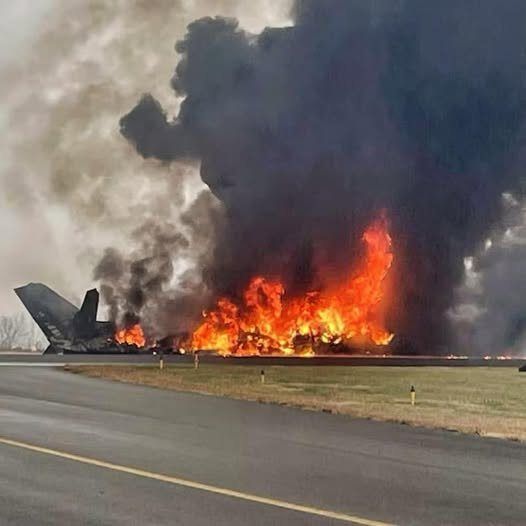
Louisville, Kentucky — Federal investigators and local authorities are continuing to examine the cause of a tragic UPS cargo plane crash at Louisville Muhammad Ali International Airport, an incident that has left at least 14 people confirmed dead and several others injured. As the situation develops, officials have formally transitioned from rescue efforts to recovery operations, marking a somber shift as the investigation enters its second full day.
The crash has sent shockwaves through the local community and the broader aviation industry, raising urgent questions about what led to such a catastrophic failure. Authorities from the Federal Aviation Administration (FAA) and the National Transportation Safety Board (NTSB) are working closely with local agencies to piece together the sequence of events that unfolded in the moments before impact.
The Crash and Immediate Response
The incident occurred at approximately 5:15 p.m. on Tuesday, during what was expected to be a routine cargo flight. The aircraft involved was a UPS MD-11, a wide-body cargo plane commonly used for long-haul freight operations. According to aviation officials, the plane was en route to Honolulu, Hawaii, carrying standard cargo along with an estimated 38,000 gallons of jet fuel.
Witnesses near the airport described a distressing scene. Several reported that the aircraft appeared to struggle during takeoff, failing to gain proper altitude. Some observed unusual engine sounds, while others noted that the plane seemed unstable as it climbed. Within moments, the situation worsened, and the aircraft descended rapidly near the runway area, ultimately crashing and causing a massive fire fueled by the large quantity of jet fuel onboard.
The impact zone extended beyond airport grounds, affecting nearby commercial properties. Two businesses—Kentucky Petroleum Recycling and Grade A Auto Parts—sustained significant structural damage. Debris was scattered across a wide area, complicating the initial emergency response and raising concerns about hazardous materials.
Emergency crews acted swiftly. Teams from Louisville Metro Fire, airport emergency services, and the Kentucky National Guard were dispatched within minutes of the crash. Firefighters worked aggressively to contain the blaze, which was intensified by the burning fuel, while medical teams triaged and transported the injured to nearby hospitals. The scale of the response underscored the severity of the incident, with dozens of personnel involved in firefighting, rescue, and perimeter control.
State and Federal Action
In response to the disaster, Kentucky Governor Andy Beshear declared a state of emergency Tuesday evening. The declaration allowed for the rapid mobilization of state resources, including additional emergency personnel, equipment, and logistical support. The governor also announced the opening of the Kentucky Emergency Relief Fund, aimed at assisting affected families with funeral expenses, supporting first responders, and aiding in the rebuilding of damaged infrastructure.
Federal agencies quickly joined the effort. The NTSB has taken the lead in the investigation, deploying a team of experts specializing in aviation safety, mechanical systems, and accident reconstruction. Investigators are expected to analyze flight data recorders, cockpit voice recordings, maintenance logs, and air traffic control communications to determine what caused the aircraft to fail during takeoff.
Ongoing Investigation and Community Impact
As recovery operations continue, authorities are carefully documenting the crash site to preserve evidence. The process is meticulous and time-consuming, as even small details could prove critical in understanding the cause of the حادث. Officials have urged the public to avoid speculation, emphasizing that it may take weeks or even months before definitive conclusions are reached.
Meanwhile, the local community is grappling with grief and uncertainty. Families of the victims are seeking answers, while residents and business owners in the affected area are dealing with the aftermath of the destruction. Counseling services and community support initiatives have been made available to help those impacted cope with the emotional toll.
The aviation community is also watching closely, as incidents involving cargo aircraft of this scale are relatively rare but carry significant implications for safety protocols and operational standards. Depending on the findings, the investigation could lead to changes in maintenance procedures, training requirements, or aircraft design considerations.
For now, Louisville remains focused on recovery, remembrance, and resilience. As investigators continue their work, the hope is that answers will emerge—answers that not only explain what happened, but also help prevent such tragedies in the future.