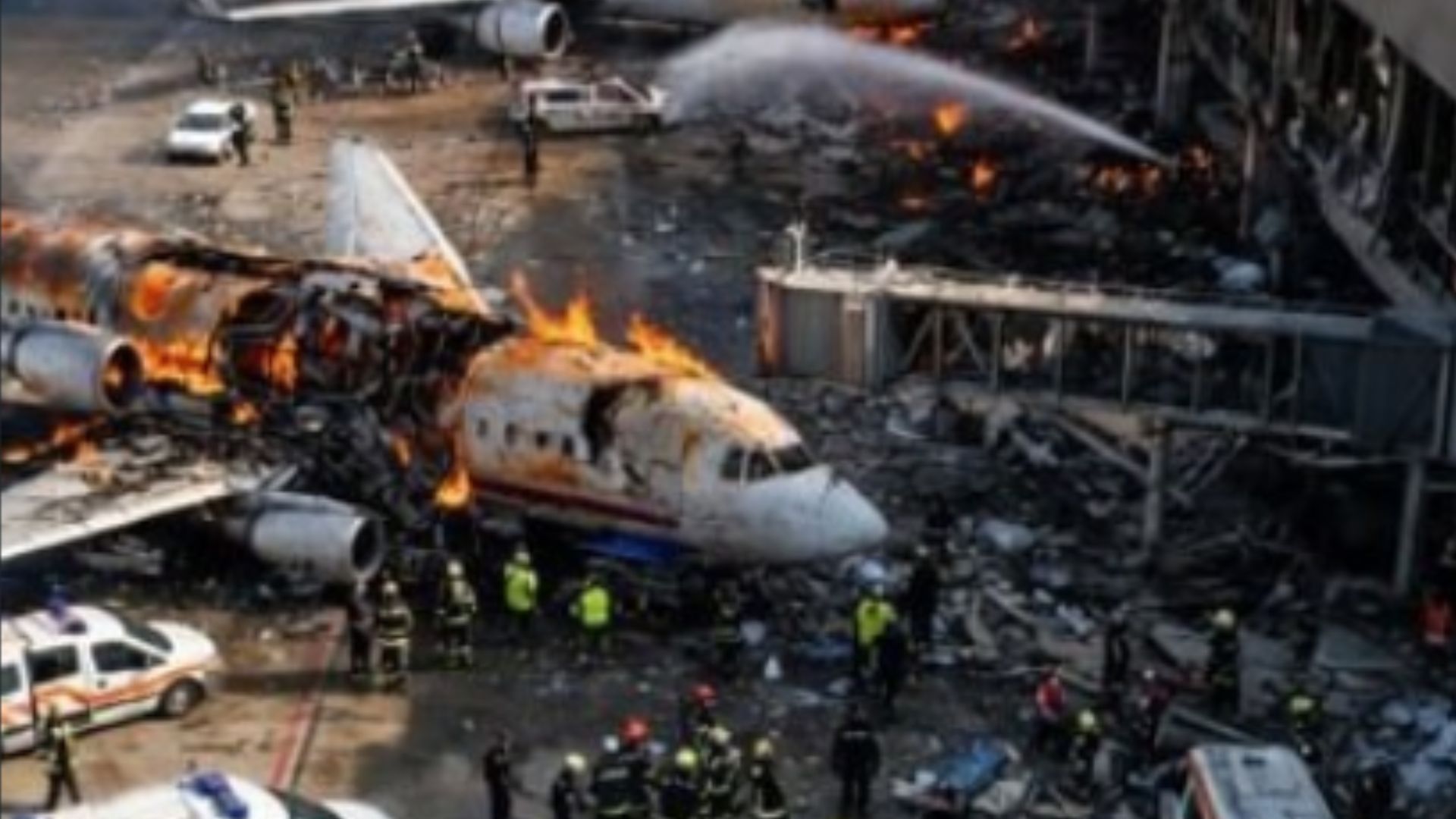
The Middle East has entered a new and deeply volatile phase as tensions between Iran and Israel continue to escalate, raising fears of a broader regional conflict with global consequences. In one of the most dramatic developments so far, Iran launched a series of ballistic missiles toward Tel Aviv, reportedly equipped with cluster warheads. Iranian officials framed the attack as a direct act of retaliation following the assassination of a senior Iranian security figure, an incident widely attributed to Israeli operations. The strike marked a significant shift not only in intensity but also in the types of weapons reportedly used, signaling a willingness by Tehran to escalate both militarily and symbolically.
Witnesses across central Israel described flashes lighting up the night sky as missile defense systems activated in rapid succession. Despite the deployment of advanced interception systems such as Iron Dome and Arrow-3, some projectiles managed to evade defenses, causing damage to infrastructure and resulting in civilian casualties. At least two people were confirmed dead, with additional injuries reported, underscoring the persistent vulnerability of civilian populations even in heavily defended urban areas. Emergency responders worked through the aftermath, navigating debris and assessing the impact zones as sirens and alerts continued intermittently.
Particularly concerning is the reported use of cluster munitions, a type of weapon that disperses multiple smaller explosive submunitions over a wide area. While militarily designed to maximize area impact, these weapons have long been criticized for their humanitarian consequences. Unexploded submunitions can remain scattered across affected zones, effectively turning neighborhoods into hazardous environments long after the initial strike. This increases the risk not only for immediate victims but also for rescue teams and civilians returning to damaged areas. International organizations have repeatedly called for restrictions or outright bans on such weapons due to their indiscriminate nature.
This latest strike is not an isolated event but part of a broader and rapidly intensifying pattern of confrontation that has been unfolding since early 2026. Iran has conducted multiple operations targeting Israeli territory as well as U.S. military installations and allied sites across the Gulf region. Locations in Kuwait, Bahrain, the United Arab Emirates, and Saudi Arabia have all reportedly been affected to varying degrees, illustrating how the conflict is no longer confined to a single geographic front. These actions have been framed by Tehran as a coordinated response to what it describes as a series of provocations, particularly the targeted killings of Iranian officials and operatives.
In turn, Israel, often in coordination with the United States, has launched airstrikes inside Iranian territory. These operations have reportedly focused on military installations and elements of Iran’s nuclear infrastructure, further deepening the stakes. The divergence in strategic objectives between the actors involved has become increasingly apparent. While Israel appears intent on degrading Iran’s military and nuclear capabilities, Iran is demonstrating its capacity to retaliate across multiple domains and regions, creating a cycle of action and response that shows little sign of slowing.
Missile defense systems have played a crucial role in mitigating damage, but they are not infallible. The sheer volume of incoming projectiles, combined with evolving technologies such as cluster warheads, complicates interception efforts. Even a high success rate can still result in dangerous breakthroughs when multiple missiles are launched simultaneously. This reality has placed immense psychological and physical strain on civilian populations, who must contend with frequent alerts, disruptions, and the constant possibility of escalation.
Beyond the immediate battlefield, the global implications of this conflict are becoming increasingly evident. Energy markets have reacted sharply to the instability, particularly due to the vulnerability of critical infrastructure in the Gulf. Attacks or threats to oil production and transport routes have driven price volatility, affecting economies far beyond the region. Governments and international organizations are closely monitoring the situation, aware that prolonged instability could disrupt global supply chains and economic stability.
Diplomatic efforts to de-escalate the situation have so far struggled to gain traction. Both Iran and Israel have signaled firm positions, with rhetoric suggesting that neither side is prepared to back down under current conditions. This has left the region in a precarious state, where miscalculation or further provocation could trigger an even wider confrontation involving additional state and non-state actors.
As the situation continues to unfold, the human cost remains at the forefront. Civilians across multiple countries are bearing the brunt of the violence, while the risk of further escalation looms large. The coming weeks may prove critical in determining whether diplomatic channels can regain influence or whether the conflict will deepen into a broader and more destructive regional war.