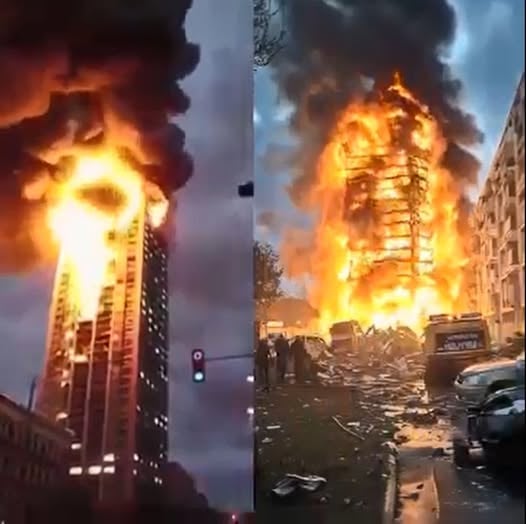
The Morning After: When a City Refused to Break
By dawn, the fire’s fury had begun to loosen its grip, retreating from towering flames to a stubborn, smoldering wound that refused to fully die. Smoke still curled into the pale morning sky, drifting above rooftops that no longer looked the same. What remained was not silence, but something heavier—an atmosphere caught between shock and survival.
The city felt unfamiliar, as if it had been quietly replaced overnight with a version of itself no one recognized.
Sirens, once relentless and urgent, faded into the background, now a distant echo instead of a piercing alarm. In their place came softer, more human sounds—the crunch of glass underfoot, the murmur of voices searching, calling, hoping. People moved slowly through the streets, not out of hesitation, but out of necessity. Every step required care. Every glance carried weight.
Some searched for loved ones. Others searched for what remained of their homes. Many searched simply for answers.
Walking Through the Aftermath
The streets told the story before anyone could speak it.
Burned walls stood like hollow outlines of what used to be homes. Windows, once filled with light and life, were now shattered or blackened. The air carried a lingering scent of smoke and something deeper—loss that could not yet be measured.
People walked through this landscape with quiet determination. They checked doorways, scanned handwritten lists, called out names they feared might not be answered. There was no panic now, only a steady, controlled urgency.
It was the kind of movement that comes when the worst has already happened, but the consequences are still unfolding.
Searching for What Matters Most
In moments like these, priorities become painfully clear.
Material things—furniture, walls, belongings—fade into the background. What matters most are people. Faces. Voices. The reassurance that someone made it through the night.
Outside temporary shelters, small groups gathered around posted lists, reading carefully, sometimes more than once, as if the words might change. Some names brought relief. Others brought silence.
Conversations were brief but meaningful:
“Have you seen them?”
“Are they safe?”
“Where were they last night?”
Each answer carried weight. Each uncertainty lingered.
The First Signs of Something Unbroken
And yet, even in the midst of destruction, something else began to appear—quietly at first, almost unnoticed.
A power cord stretched from one building to another, offering a place for someone to charge a phone. A small gesture, but one that connected people in more ways than one.
Then came folding tables set up along sidewalks. They weren’t planned or organized in any official sense. They simply appeared, brought by residents who had something to give.
Water bottles. Blankets. Warm food. Coffee poured into mismatched cups.
No one asked who deserved help. No one checked where someone came from. If you needed something, it was yours.
Acts of Kindness Without Permission
The most powerful moments didn’t come from grand gestures, but from small, immediate acts of care.
A stranger offering a jacket to someone shivering.
A volunteer writing down names to help reunite families.
Someone sharing a phone so another could make a call.
These were not organized efforts. They were instinctive.
In the absence of normal structure, people created their own.
Honoring Those Who Faced the Flames
As firefighters moved through the streets—exhausted, covered in soot, but still working—the reaction from the community was immediate and emotional.
Applause broke out, not loud or celebratory, but steady and sincere.
These were the individuals who had stood between destruction and survival. Who had run toward danger while others fled from it.
They didn’t stop for recognition. They nodded, kept moving, continued their work.
But the gratitude followed them.
A Fragile Beginning of Hope
No one rushed to call it hope.
It was too early for that. Too much was still uncertain. Too many questions remained unanswered.
But something was there.
You could see it in the way people stayed instead of leaving.
In the way they helped instead of turning away.
In the way they spoke to one another—not as strangers, but as neighbors.
It wasn’t loud. It didn’t demand attention. But it was real.
Rebuilding More Than Structures
As families reunited in crowded shelters, relief mixed with exhaustion. Hugs lasted longer. Words came slower.
Volunteers moved through the spaces, calling out needs and matching them with offers. It wasn’t perfect. It wasn’t organized in the traditional sense. But it worked.
Because it came from a shared understanding: no one was going through this alone.
The process of rebuilding had already begun—not with bricks or blueprints, but with connection.
The Story That Will Be Remembered
In time, people will talk about the fire—the intensity, the damage, the night everything changed.
But that won’t be the whole story.
The real story will be this morning.
The morning when people stepped into uncertainty and chose to help anyway.
The morning when strangers became support systems.
The morning when a city, shaken but not broken, refused to walk away from itself.
Final Reflection
Disasters often reveal what is fragile. But they also reveal what is strong.
And in this city, beneath the ash and smoke, something strong remained.
Not untouched. Not unchanged. But unbroken.
Because even after everything burned, people stayed.
And together, they began again.