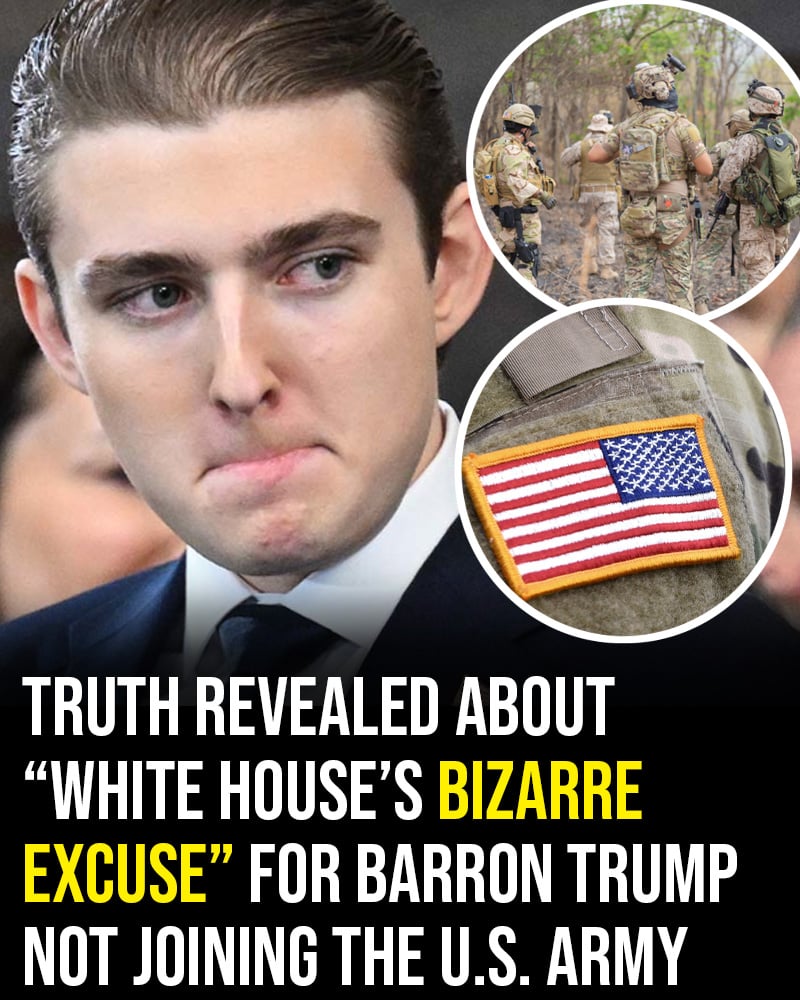
The rumor exploded like a bomb. Within hours, social media feeds filled with outrage, sarcasm, and demands for proof. Did the White House really shield Barron Trump from a future draft because he was “too tall”? As tensions with Iran rose, so did the anger – and the lies. What no one seemed willing to admit was painfully simple: the story spreading across the internet had little to do with reality and everything to do with how quickly misinformation can spiral in a moment of fear and political tension. 🌍
The claim sounded dramatic enough to grab attention. According to viral posts, Barron Trump — the youngest son of former U.S. President Donald Trump — had supposedly been declared ineligible for military service because of his height, which is widely reported to be well over six feet. Some versions of the rumor even suggested the government had created special exemptions to protect him from a potential draft if conflict with Iran escalated. Screenshots, fabricated headlines, and emotional commentary flooded platforms like X, Facebook, and TikTok.
But the reality of the U.S. military draft system is far less sensational.
First, the United States does not currently have an active military draft. Since 1973, the U.S. military has operated as an all-volunteer force. Young men between the ages of 18 and 25 are still required to register with the Selective Service System, which maintains a list of potential recruits in case Congress and the president ever authorize a draft in the future. However, unless such a law is passed, no one is being drafted.
Second, height alone is not an automatic exemption from military service. The U.S. military does have general physical guidelines for recruits, including minimum and maximum height ranges. These ranges vary slightly by branch, but they are typically broad enough to accommodate most people. Individuals who fall outside those ranges can sometimes still receive waivers depending on other qualifications. In short, being tall does not automatically disqualify someone, and it certainly would not require a special political intervention.
So where did the rumor come from?
Experts who study misinformation say stories like this often emerge during periods of geopolitical anxiety. When tensions rise — whether involving Iran, Russia, China, or another global power — public concern about war and military service grows. Social media algorithms tend to amplify emotionally charged content, especially posts that combine politics, celebrity, and perceived unfairness. A story suggesting that the child of a powerful political figure might avoid the risks faced by ordinary citizens is almost guaranteed to spark anger and debate.
The Barron Trump rumor fit that formula perfectly. It mixed a recognizable name with a provocative accusation and a simple narrative: that political elites protect their own while ordinary people pay the price. Whether true or not almost becomes secondary once the story begins circulating widely.
Another factor is the speed of modern information. In previous decades, rumors might have taken days or weeks to spread. Today they can travel worldwide in minutes. A single misleading post can be reshared thousands of times before fact-checkers or journalists have the chance to respond.
Barron Trump himself has rarely been a public political figure. Born in 2006, he spent much of his childhood away from the spotlight despite his father’s presidency. In recent years, he has drawn public curiosity mainly because of his striking height and his appearances at major political events. But like many children of public figures, he often becomes the subject of speculation that has little connection to verified facts.
The episode serves as a reminder of how quickly narratives can form online. In times of political tension, people naturally search for explanations, villains, and symbols of injustice. Rumors fill that space when reliable information is scarce or complicated. 📱
In the end, the “too tall for the draft” claim reveals less about Barron Trump and more about the digital age itself — an era where outrage travels faster than truth, and where a single rumor can ignite a global argument before anyone stops to ask the most basic question: Is it actually real?