
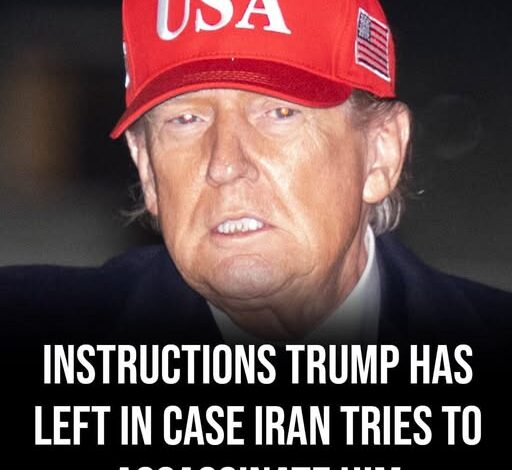
In the theater of modern geopolitics, few statements have carried the apocalyptic weight of the declarations made by Donald Trump regarding the security of his person and the sovereignty of the United States. During a series of high-stakes remarks delivered throughout 2025, the political landscape was marked by rhetoric that blended promises of peace with warnings of overwhelming retaliation. Trump repeatedly insisted that while he preferred stability and diplomacy, any threat against him or the United States would be met with consequences so severe that they would reshape the global order.
At the center of those comments were revelations that he had left clear instructions to U.S. military and intelligence officials in the event Iran attempted to assassinate him. Trump stated publicly that contingency plans had been discussed and documented, designed to ensure that any attack on a former or current American president would trigger an immediate and decisive response.
While many of the details remain classified for obvious national security reasons, Trump’s own description of those directives was strikingly blunt. In interviews and speeches, he suggested that if an assassination attempt traced back to Iran were ever confirmed, the United States would respond with overwhelming force targeting critical components of the Iranian state apparatus. His statements were framed as a deterrent, intended to make it unmistakably clear that such an act would not be treated as an isolated crime but as an act of war.
According to Trump, the instructions were meant to eliminate any hesitation within the chain of command. He emphasized that the U.S. government maintains numerous contingency plans for scenarios ranging from cyberattacks to large-scale military aggression. The measures he described, however, were specifically tailored to the possibility of a state-sponsored assassination plot.
The origin of these tensions traces back several years, particularly following the 2020 U.S. drone strike that killed Iranian General Qassem Soleimani in Baghdad. That operation dramatically escalated hostility between Washington and Tehran. Iranian leaders vowed revenge at the time, and U.S. intelligence agencies later reported uncovering alleged plots targeting former American officials involved in the decision.
Trump has frequently referenced those threats when explaining why he believes extraordinary precautions are necessary. In his view, the existence of such threats justified leaving behind explicit instructions that would automatically trigger a severe response should any attack occur.
Supporters of Trump argue that this approach reflects a classic strategy of deterrence: by making the potential consequences overwhelmingly clear, adversaries are less likely to attempt the act in the first place. They see the warnings as an extension of the broader “peace through strength” philosophy often invoked in American foreign policy.
Critics, however, view the rhetoric differently. Some foreign policy analysts warn that publicly discussing retaliatory plans—especially in such stark language—could inflame tensions rather than reduce them. They argue that diplomatic channels and quiet intelligence cooperation are typically more effective at preventing escalation than dramatic public declarations.
Regardless of perspective, the statements illustrate the enduring fragility of relations between the United States and Iran. Decades of mistrust, sanctions, proxy conflicts, and diplomatic breakdowns have created a relationship defined as much by suspicion as by strategic calculation.
For many observers, Trump’s remarks highlight how personal security, national policy, and global politics can become deeply intertwined. In an era where threats can originate from cyber networks, covert operations, or non-state actors, leaders often rely on deterrence messages designed to signal strength to potential adversaries.
Whether those warnings ultimately prevent violence or contribute to further geopolitical tension remains a matter of debate. What is clear is that Trump’s comments added another dramatic chapter to an already volatile relationship between Washington and Tehran—one where every statement, strategy, and contingency plan is closely watched by allies and adversaries alike.
In the complex chessboard of international politics, even words can carry the weight of weapons. And in this case, Trump’s message was unmistakable: any attempt on his life, if tied to a foreign government, would not be viewed as a personal attack alone, but as a direct challenge to the power and resolve of the United States itself.