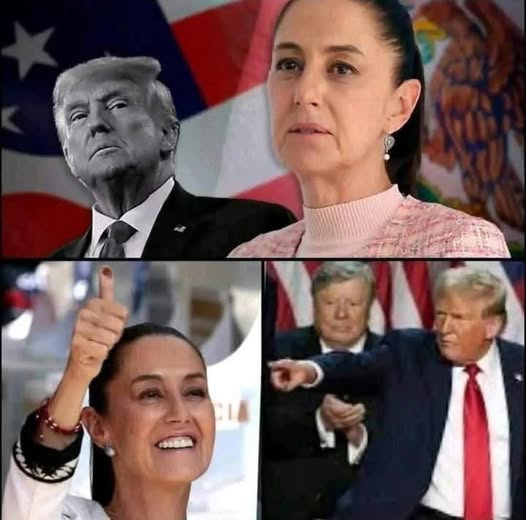
The diplomatic relationship between the United States and Mexico has entered a period of unprecedented friction as 2026 unfolds, marked by a sharp escalation in rhetoric regarding the control of transnational criminal organizations. At the center of this growing geopolitical tension is the decision by the Trump administration to formally designate eight major Mexican drug cartels—including the powerful Jalisco New Generation Cartel (CJNG) and the long-dominant Sinaloa Cartel—as Foreign Terrorist Organizations (FTOs). The move has immediately reshaped the tone of discussions between the two neighboring countries, raising questions about sovereignty, security cooperation, and the future of bilateral relations.
Washington argues that the designation is a necessary and urgent step to confront what it describes as an expanding national security threat. U.S. officials point to the continuing fentanyl crisis, which has claimed tens of thousands of lives in recent years, as a primary justification. According to the administration, labeling cartels as terrorist organizations provides American law enforcement and intelligence agencies with broader legal tools to track finances, disrupt international networks, and prosecute those who assist cartel operations.
Supporters of the policy in the United States say that drug trafficking groups have evolved into complex paramilitary organizations with global supply chains, advanced weapons, and the capacity to destabilize entire regions. From this perspective, treating them as terrorist entities is not only symbolic but also strategic. The designation allows for expanded sanctions, international cooperation to freeze assets, and potentially broader enforcement operations targeting individuals and businesses linked to cartel activity.
However, the decision has triggered immediate and forceful opposition from Mexican President Claudia Sheinbaum. Speaking during a press conference in Mexico City, Sheinbaum warned that such classifications could undermine Mexico’s sovereignty and complicate joint security efforts that have historically relied on mutual trust and coordinated law enforcement strategies. She emphasized that Mexico recognizes the threat posed by organized crime but insists that solutions must be developed through cooperation rather than unilateral decisions.
Mexican officials have also expressed concern about the legal implications of the terrorist designation. Under U.S. law, the FTO label can expand the circumstances under which American authorities may act against individuals or groups connected to those organizations, potentially extending beyond U.S. borders. In Mexico, this possibility has raised fears about unauthorized operations or pressure for more aggressive intervention within Mexican territory.
Sheinbaum’s administration has stressed that Mexico is already engaged in extensive efforts to combat cartel violence, including military deployments, intelligence operations, and reforms aimed at strengthening local law enforcement institutions. Government representatives argue that the crisis surrounding drug trafficking—especially the fentanyl trade—is deeply interconnected with international supply chains, financial systems, and cross-border demand. In their view, addressing the issue requires a shared strategy that focuses not only on enforcement but also on economic development, public health responses, and arms trafficking control.
The diplomatic tension is further complicated by the long and complex history of cooperation between the two countries. For decades, the United States and Mexico have worked together through joint initiatives such as intelligence sharing, extradition agreements, and cross-border policing frameworks. While these partnerships have produced some successes, they have also faced periodic strains, particularly when political pressure in either country intensifies.
Analysts warn that the current dispute could affect multiple areas of the relationship beyond security policy. Trade ties between the United States and Mexico are among the most significant in the world, with billions of dollars in goods crossing the border every day under the framework of the United States-Mexico-Canada Agreement (USMCA). Any escalation in diplomatic tensions risks spilling into economic cooperation, migration management, and border policy.
Public opinion in both countries is also playing a role in shaping the narrative. In the United States, concern about drug overdoses and border security has fueled calls for stronger action against cartels. In Mexico, however, many citizens remain wary of policies that could appear to invite external intervention or undermine national authority.
For now, both governments appear to be navigating a delicate balance between confrontation and cooperation. Diplomatic channels remain open, and officials from both sides have indicated that discussions will continue in the coming weeks. Behind the scenes, policy advisers are exploring ways to maintain joint anti-crime initiatives while addressing the political sensitivities surrounding the terrorist designation.
As the situation develops, the dispute has become one of the most closely watched international issues of the year. The outcome may shape not only how the United States and Mexico confront organized crime but also how the two nations define their partnership in an increasingly complex security environment. Whether the tension leads to deeper collaboration or prolonged diplomatic strain remains uncertain, but one thing is clear: the stakes for both countries—and for the stability of the region—are extraordinarily high. 🌎⚖️