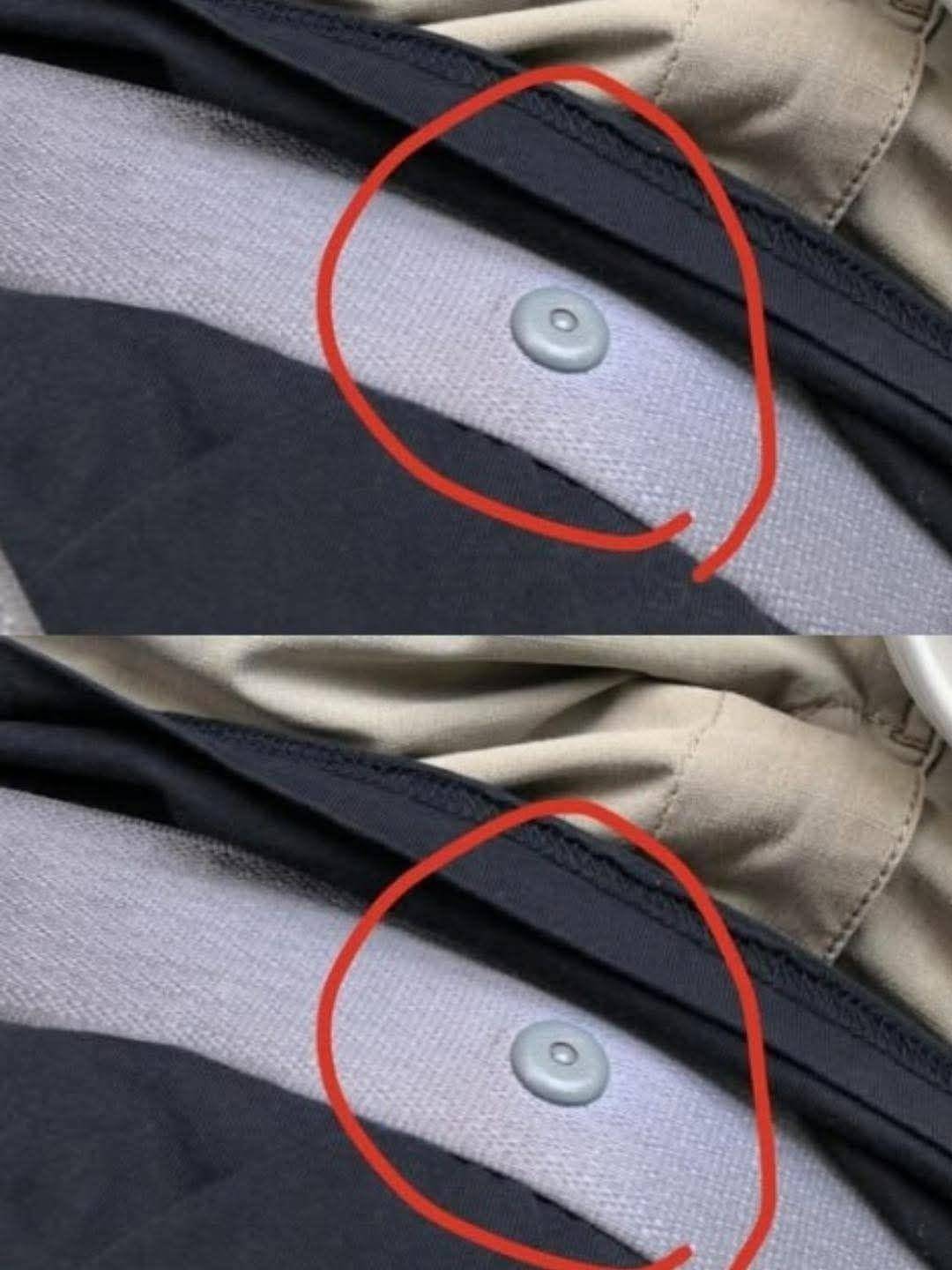
Most drivers fasten their seat belt without thinking about the small details built into the system. The strap slides smoothly across the seat, the metal latch clicks into place, and the car is ready to go.
Yet along the length of that belt, there is often a small round plastic button. Many people notice it but rarely consider its purpose. It is easy to assume the piece is decorative or simply part of the belt’s design.
In reality, that tiny component plays a practical role in keeping the seat belt system functioning smoothly.
Understanding what it does offers a glimpse into how even the smallest elements of vehicle safety equipment are carefully engineered.
What the Seat Belt Button Actually Does
The small plastic button attached to a seat belt is commonly known as a stop button.
Its main function is to prevent the metal latch plate—the part that clicks into the buckle—from sliding too far down the belt when it retracts.
Without this button, the latch plate could move all the way toward the floor when the belt retracts back into its housing. That would make it harder for passengers to grab the latch the next time they want to fasten the belt.
By stopping the latch plate at a convenient position along the belt, the button keeps the system easy to use.
Why Convenience Matters for Safety
At first glance, the stop button might seem like a minor convenience feature. But in safety design, convenience often directly influences behavior.
Vehicle safety engineers know that people are more likely to use safety equipment when it is simple and intuitive.
If the seat belt latch were constantly sliding down to the floor, passengers might find fastening the belt slightly more inconvenient. Over time, small inconveniences can reduce the likelihood that safety measures are used consistently.
By keeping the latch within easy reach, the button helps maintain the habit of fastening a seat belt quickly and reliably.
A Small Component in a Larger Safety System
Seat belts are among the most important safety features in modern vehicles. They are designed to work together with airbags, structural reinforcements, and advanced restraint systems.
When a vehicle stops suddenly or experiences a collision, the seat belt restrains the passenger, preventing excessive forward movement.
Even small components contribute to ensuring that the system functions properly every time a person enters the vehicle.
The stop button may not directly absorb impact forces, but it helps keep the belt positioned correctly for regular use.
How Seat Belt Design Has Evolved
Seat belts have undergone significant development over the decades.
Early cars often lacked restraint systems entirely, leaving passengers vulnerable during accidents. As research into vehicle safety expanded, engineers introduced lap belts, followed by the now-standard three-point belt system used in most vehicles today.
This three-point design—running across the shoulder and lap—was developed to distribute force more evenly across the body during sudden deceleration.
Over time, additional improvements were added, including:
- Automatic retractors
- Pretensioners that tighten belts during collisions
- Load limiters that reduce pressure on the chest
Each innovation has been aimed at improving both comfort and safety.
Why Small Details Are Carefully Engineered
Automotive engineers spend considerable time studying how people interact with safety equipment.
A seat belt system must work reliably across millions of uses throughout the lifetime of a vehicle. It also needs to accommodate different passenger heights, seating positions, and movement patterns.
Because of this, even small design elements—like the position of the stop button—are carefully considered.
The goal is to ensure the belt remains easy to access, simple to fasten, and comfortable to wear.
When safety features integrate seamlessly into everyday routines, they are more likely to be used consistently.
What Happens if the Button Breaks
In many vehicles, the stop button is made from durable plastic that is heat-sealed or clipped onto the seat belt.
Over time, it may occasionally wear out or detach. When that happens, the latch plate can slide down the belt more freely when it retracts.
Although the seat belt will still function in terms of restraining a passenger during an accident, the latch may become less convenient to reach.
Fortunately, replacement stop buttons are inexpensive and can often be installed easily without replacing the entire seat belt assembly.
Maintaining these small components helps preserve the usability of the system.
A Reminder of Everyday Engineering
Modern vehicles contain thousands of components working together to improve safety, comfort, and reliability.
Some elements—like airbags or anti-lock braking systems—are widely recognized. Others are small enough to go unnoticed despite their usefulness.
The seat belt stop button is one of those overlooked details.
Its presence reflects a broader principle of engineering: small improvements in usability can make safety systems more effective in everyday life.
The Value of Simple Design
Many of the best engineering solutions are simple. A small plastic button attached to a belt strap might seem insignificant, yet it solves a practical problem elegantly.
By preventing the latch plate from sliding too far down the belt, the stop button ensures that fastening a seat belt remains quick and effortless.
That convenience encourages consistent use—something that ultimately contributes to safer travel for drivers and passengers alike.
Sometimes the smallest components quietly perform some of the most helpful roles.