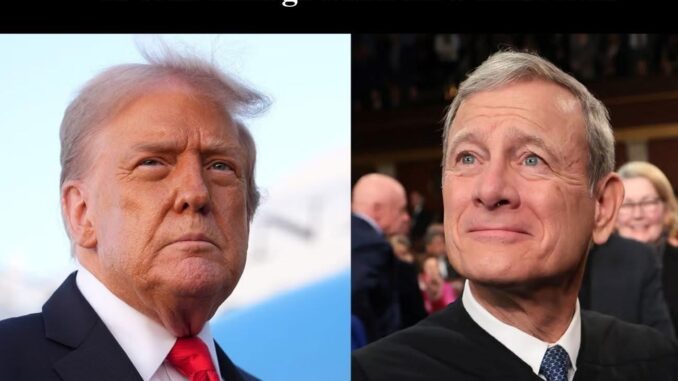
The United States Supreme Court has allowed President Donald Trump’s administration to move forward with revoking the temporary legal status of hundreds of thousands of migrants currently living in the country. The decision represents a significant moment in the ongoing debate over immigration policy and enforcement in the United States.
At the center of the ruling is a program that granted temporary legal entry, known as “parole,” to migrants from several countries experiencing political instability and economic hardship. Approximately 532,000 migrants from Venezuela, Cuba, Haiti, and Nicaragua had been allowed to enter and live temporarily in the United States under this policy, which was implemented during the administration of former President Joe Biden.
The Supreme Court’s decision allows the Trump administration to proceed with plans to terminate this parole status while legal challenges continue to move through lower courts. By staying an earlier order from a federal district judge, the court effectively cleared the way for the administration to begin reversing the protections that had shielded these migrants from deportation.
The previous order had been issued by U.S. District Judge Indira Talwani in Boston, who had temporarily blocked the government from ending the program. Judge Talwani’s ruling paused the administration’s efforts while the broader legal questions surrounding the policy were being examined. Her decision was seen by advocates for migrants as an important step in protecting families and individuals who had already built lives in the United States under the program.
However, the Supreme Court’s intervention changes the immediate situation for many of the affected migrants. By allowing the administration’s plan to move forward during the legal process, the ruling means that some individuals could face the possibility of losing their temporary legal protections sooner than expected. Without parole status, many could become subject to deportation proceedings while the case continues to be debated in lower courts.
Supporters of the administration’s policy argue that the parole program had expanded beyond its original intent. Immigration parole was historically designed to allow individuals into the country temporarily for urgent humanitarian reasons or significant public benefit. Critics of the Biden-era policy claim that the large number of migrants admitted under the program effectively created a pathway that bypassed normal immigration procedures.
On the other hand, immigration advocates and many humanitarian organizations argue that the program provided an important legal alternative for people fleeing difficult conditions in their home countries. Venezuela, Haiti, Nicaragua, and Cuba have all experienced periods of severe economic turmoil, political instability, and social unrest, leading many citizens to seek opportunities and safety abroad.
Advocates warn that removing the legal protections from such a large number of people could lead to major disruptions for families, workplaces, and communities across the United States. Many migrants who received parole had already found jobs, enrolled their children in schools, and begun integrating into local communities.
The Supreme Court’s decision does not represent a final ruling on the legality of ending the program. Instead, it allows the administration’s policy to proceed temporarily while the underlying legal dispute continues through the court system. The lower courts will still consider arguments about whether the government followed proper legal procedures in deciding to end the program and whether the policy change complies with federal immigration law.
As the case moves forward, it is expected to remain a major point of discussion in national political debates. Immigration policy has long been one of the most divisive issues in American politics, with different administrations pursuing very different approaches to border control, humanitarian protections, and deportation enforcement.
For the hundreds of thousands of migrants affected by the decision, the coming months will be filled with uncertainty as courts continue to evaluate the future of the program that once allowed them temporary legal status in the United States.