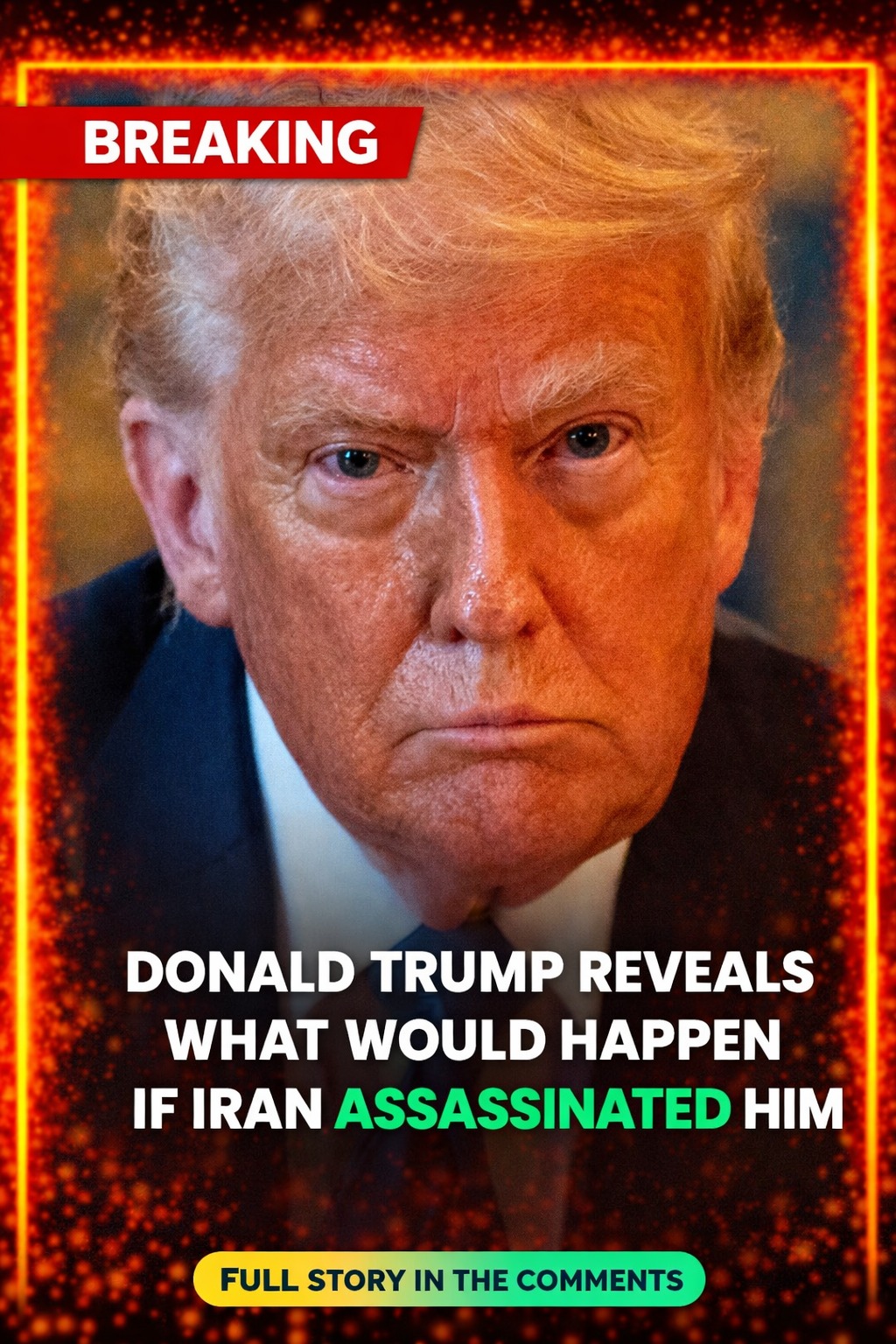
The warning was dismissed as bluster at the time, just another startling line in a political era filled with them. Now, amid rising tensions, bombings, and the deaths of powerful figures in the Middle East, the statement is being revisited with a sense of unease. A private threat once made by former U.S. President Donald Trump about Iran has resurfaced online and in political discussions, and what once sounded like dramatic rhetoric now feels, to some observers, like a glimpse into how dangerously personal geopolitics can become.
Trump’s vow was stark and unmistakable. Speaking about threats against his life from Iran, he once claimed that if the country ever succeeded in assassinating him, he had already left instructions for the United States to “obliterate” Iran. His wording was blunt: there would be nothing left. At the time, the statement circulated widely across media platforms, generating both outrage and dismissal. Critics called it reckless and inflammatory, while supporters argued it was simply a tough warning meant to deter adversaries.
Years later, however, the geopolitical landscape has shifted in ways that make the remark echo differently.
Tensions between Iran and the United States have simmered for decades, punctuated by moments of near-crisis. The killing of Iranian General Qassem Soleimani in 2020 marked one of the most dramatic turning points in recent memory. Ordered by the Trump administration, the strike intensified hostilities and fueled fears of a direct war between Washington and Tehran. Iran responded with missile strikes on U.S. bases in Iraq, and leaders in Tehran openly vowed revenge, placing several American officials — including Trump — under the shadow of potential retaliation.
Since then, the rhetoric on both sides has rarely cooled completely. Intelligence officials in the United States have periodically warned about ongoing Iranian threats targeting former American officials connected to the Soleimani operation. Security around those individuals has remained unusually tight, reflecting the seriousness with which authorities take such threats.
What makes Trump’s old comment particularly striking today is not simply the threat itself, but the way it framed the response: not as a conventional act of war or strategic retaliation, but as a predetermined, almost automatic consequence. According to his claim, the order had already been prepared — a catastrophic answer waiting to be triggered if the unthinkable occurred.
In normal diplomatic language, such a statement would be almost unimaginable. Nuclear-armed powers typically speak in careful ambiguity when discussing retaliation. The concept of deterrence relies on signaling strength without explicitly promising total destruction. Trump’s remark bypassed that tradition entirely, delivering a message that was both personal and apocalyptic.
Now, as conflicts and assassinations once again reshape the Middle East, the clip has resurfaced on social media, television panels, and political commentary. Analysts debate whether the statement was simply rhetorical bravado or part of a broader strategy of deterrence. Some argue that by making the threat public, Trump was attempting to raise the cost of any attack against him so dramatically that it would never be attempted. Others believe such language risks normalizing the idea of catastrophic escalation.
The context in which the remark is being discussed today only intensifies the debate. Regional instability, proxy conflicts, and high-profile killings have created an atmosphere where the unimaginable sometimes begins to feel plausible. Each strike, each retaliation, and each political assassination adds another layer of uncertainty to an already volatile situation.
For ordinary people watching from afar, the resurfacing of Trump’s warning highlights a troubling reality: in an age of powerful weapons and globalized conflict, the fate of entire nations can sometimes appear entangled with the lives and decisions of individual leaders.
Whether Trump’s statement was serious policy, exaggerated bravado, or simply a moment of political theater may never be fully clear. But as tensions rise and old words return to the spotlight, the remark serves as a reminder of how quickly rhetoric can transform when the world around it changes.
What once sounded like a shocking soundbite in the churn of daily news now lands differently — less like a headline designed to dominate a news cycle, and more like a glimpse into the frightening scale of modern geopolitical brinkmanship. 🌍⚠️