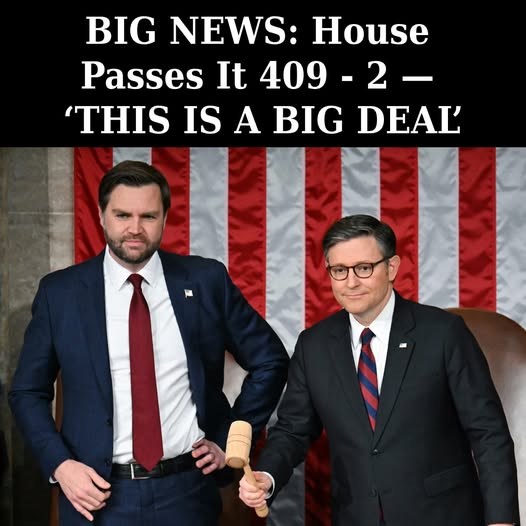
In a rare and striking display of bipartisan unity, the U.S. House of Representatives voted 409–2 to pass the Take It Down Act, a sweeping piece of legislation aimed at combating the rapidly growing threat of nonconsensual, sexually explicit deepfake content. The overwhelming margin highlights the broad concern among lawmakers about the misuse of artificial intelligence to create harmful and deceptive material. The bill now heads to President Trump’s desk, where it is widely expected to be signed into law.
The Take It Down Act represents one of the most significant federal efforts to address AI-driven digital abuse. At its core, the legislation makes it a federal crime to knowingly create or distribute sexually explicit deepfake content without the subject’s consent. Lawmakers from both parties emphasized that existing laws, including many state-level “revenge porn” statutes, were not designed to handle the unique challenges posed by AI-generated fabrications that can convincingly place a person’s likeness into explicit material they never participated in.
Supporters of the bill argue that the technology has advanced faster than legal protections, leaving victims — often women and minors — with limited recourse. By explicitly targeting synthetic media, the legislation closes what many policymakers described as a dangerous loophole in current privacy and exploitation laws.
The measure also imposes new responsibilities on online platforms. Under the bill, companies that host user-generated content will be required to remove qualifying nonconsensual deepfake material promptly after receiving valid notice. This takedown framework is designed to reduce the viral spread of harmful content, which victims say can cause lasting emotional, reputational, and professional damage even after removal.
In addition to criminal penalties, the Take It Down Act creates civil remedies, allowing victims to pursue damages in court. Advocates say this dual approach — combining criminal enforcement with private rights of action — gives victims more meaningful tools to protect themselves and seek accountability.
A particularly notable feature of the legislation is its strong emphasis on protecting minors. Lawmakers repeatedly pointed to cases involving teenage victims as a driving force behind the bill’s urgency. The act includes enhanced safeguards and penalties when the targeted individual is under 18, reflecting growing alarm about the use of AI tools in online harassment involving young people.
The bill’s bipartisan backing helped propel it through the House with unusual speed and consensus. It is supported in the Senate by lawmakers from across the political spectrum, including Senators Ted Cruz and Amy Klobuchar, while Representatives Elvira Salazar and Madeline Dean played key roles in advancing the measure in the House.
Importantly, the legislation was crafted with attention to First Amendment concerns. Sponsors emphasized that the law is narrowly focused on nonconsensual sexually explicit content and does not criminalize satire, parody, or clearly labeled synthetic media used for lawful purposes. Legal experts say this balance was critical in securing broad bipartisan support and reducing the risk of constitutional challenges.
Technology policy analysts view the Take It Down Act as a major milestone in the federal government’s evolving approach to artificial intelligence regulation. While the law targets a specific and particularly harmful use case, it signals growing willingness in Washington to step in when AI tools are used in ways that threaten privacy, safety, and personal dignity.
If signed into law as expected, the measure could also influence how other countries approach deepfake regulation. For now, its passage marks a significant step in modernizing U.S. digital protections for the AI era — and sends a clear message that the misuse of emerging technology for exploitation will face increasing legal consequences.