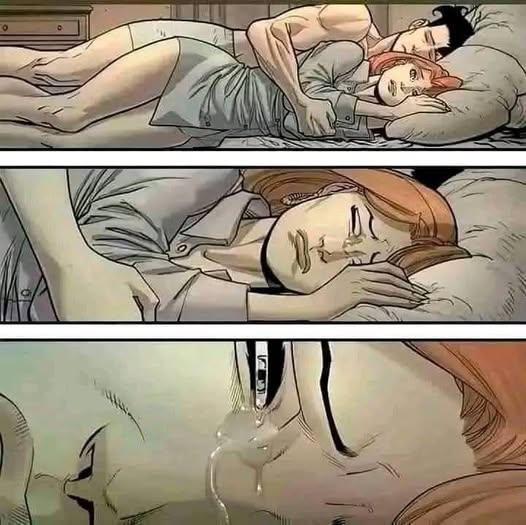
Why Some Men Cheat but Don’t Leave: Understanding the Psychological Contradiction
Few relationship dilemmas are as confusing and painful as this one: a man breaks his vows, betrays his partner’s trust, yet has no intention of ending the marriage. To the partner who has been hurt, the contradiction feels impossible to understand. If he was unhappy enough to be unfaithful, why didn’t he simply leave?
At first glance, it appears illogical. Infidelity seems like a clear sign that love has faded or that the relationship has run its course. But human behavior, especially within long-term partnerships, is rarely that simple. Beneath the surface of betrayal lies a complicated mix of emotional needs, personal insecurities, fear, attachment, and avoidance. In many cases, cheating is not about replacing a partner. Instead, it reflects internal struggles the person has failed to confront in healthier ways.
Studies over the years have suggested that a significant percentage of married men admit to being unfaithful at least once in their lifetime, yet the majority remain in their marriages. This gap between behavior and intention reveals something important: infidelity often exists alongside attachment rather than in opposition to it.
Understanding why this happens does not excuse the betrayal. But it can offer clarity about the emotional and psychological dynamics that allow such contradictions to exist.
Infidelity Is Often About “More,” Not “Instead”
One common misconception is that cheating automatically means someone wants out of their relationship. In reality, many men who engage in affairs describe their marriages as stable, even meaningful. What they seek outside the relationship is not necessarily a new life partner, but an additional emotional experience.
Some therapists explain that infidelity can stem from a desire for novelty, validation, excitement, or a renewed sense of control. Over time, long-term relationships naturally settle into routines. Responsibilities increase, stress accumulates, and the intensity of early romance evolves into familiarity. For some individuals, especially those who struggle with self-esteem or fear aging, this shift can feel unsettling.
Instead of addressing those insecurities directly, they may look outward for reassurance. Being desired by someone new can temporarily restore a sense of confidence. The attention feels energizing. The secrecy adds intensity. The interaction becomes less about love and more about how it makes them feel about themselves.
In this context, the affair is not meant to replace the marriage. It functions as an emotional supplement — a misguided attempt to regain something missing internally rather than something absent in the relationship.
The Stability of Marriage as an Anchor
Long-term partnerships are built on years of shared memories, mutual history, daily routines, and emotional familiarity. A marriage becomes more than romance; it becomes infrastructure. It holds together finances, family systems, friendships, traditions, and identity.
Over time, partners learn one another deeply — habits, fears, humor, strengths, and vulnerabilities. That kind of knowledge cannot be recreated quickly or easily. It represents investment.
Even when passion cools, stability often strengthens. Familiarity creates safety. The home becomes predictable, reliable, and grounding. For many men, especially those without wide emotional support networks, their spouse may be their primary source of emotional security.
Walking away from that stability means dismantling not only a relationship but an entire life structure. It may involve disrupting children’s lives, dividing finances, altering social circles, and confronting public or private shame. The cost feels enormous.
An affair, by contrast, can feel compartmentalized. It exists in a separate mental space — detached from the responsibilities and gravity of home life. In this mental framework, the marriage remains the foundation, while the affair becomes an escape hatch.
Compartmentalization: Living in Two Worlds
One of the most common psychological mechanisms involved in infidelity is compartmentalization. This process allows a person to mentally separate conflicting behaviors so they do not have to reconcile them at the same time.
In practice, this means a man can see himself as a devoted husband and father while simultaneously engaging in behavior that contradicts those roles. Rather than integrating both realities, he places them in separate “boxes” in his mind.
At home, he focuses on family life. During the affair, he focuses on excitement and validation. Because the two worlds rarely collide — until they do — he convinces himself that one does not threaten the other.
This mental division reduces immediate guilt. It creates the illusion that nothing is being lost. But it also prevents genuine self-reflection. By keeping the two identities separate, he avoids confronting the deeper dissatisfaction or insecurity driving his actions.
Eventually, however, these compartments collapse. Secrets surface. Trust fractures. And the psychological strain intensifies.
Security Versus Risk
Another reason many men cheat but do not leave relates to risk tolerance. Affairs often exist in a space of fantasy. They are shaped by limited exposure — curated interactions, private conversations, and moments removed from daily stress.
Marriage, on the other hand, is reality. It includes bills, responsibilities, disagreements, and long-term planning. Leaving a marriage requires confronting tangible consequences: legal processes, financial restructuring, changes in living arrangements, and emotional upheaval for children and extended family.
In comparison, the affair partner often represents possibility rather than reality. Without shared responsibilities, the connection can feel effortless. The unknown creates allure.
Choosing the affair would mean turning fantasy into daily life — something that may not withstand ordinary pressures. Many men recognize, consciously or not, that what feels thrilling in secrecy might not survive full exposure.
As a result, they attempt to preserve both worlds: the security of marriage and the excitement of novelty. It is a deeply flawed strategy, but one rooted in fear of loss and fear of uncertainty.
Emotional Needs and Unspoken Disconnection
Infidelity often begins not with anger, but with emotional drift. A man may feel unappreciated, overwhelmed, or disconnected, yet struggle to articulate those feelings. Instead of initiating vulnerable conversations, he suppresses discomfort.
Over time, emotional distance grows. Rather than confronting that distance, he may seek affirmation elsewhere. A new connection can feel easier than repairing an old one. There is no history of unresolved arguments, no accumulated disappointments.
However, avoiding communication at home does not resolve underlying issues. It simply redirects them. The unmet needs remain, only now layered with secrecy.
Repairing a relationship requires vulnerability — admitting dissatisfaction, acknowledging insecurity, and risking rejection. For some men, especially those raised to suppress emotional expression, this level of openness feels unfamiliar or threatening.
An affair can feel like the easier path because it does not require emotional accountability in the same way. But it also prevents growth.
Emotional Affairs Versus Physical Affairs
Not all betrayals involve physical intimacy. Emotional affairs — secretive messaging, private confessions, deep one-on-one connections — can be equally damaging.
Many individuals underestimate the impact of emotional infidelity, believing that if no physical boundary is crossed, no real harm has occurred. Yet emotional affairs often involve the same core elements: secrecy, exclusivity, and emotional redirection away from the primary partner.
When someone shares vulnerabilities, daily updates, or intimate thoughts with another person instead of their spouse, it shifts the emotional center of gravity. Trust erodes not because of physical contact, but because of hidden attachment.
Even in these situations, many men do not intend to leave their marriages. They seek emotional stimulation without fully acknowledging the boundary they have crossed. The desire is for added connection, not replacement — though the damage can be just as profound.
The Role of Guilt
Contrary to stereotypes, many men who cheat experience guilt — sometimes deeply. However, guilt does not automatically lead to confession or behavioral change.
Some respond by overcompensating at home, becoming more attentive or generous in an attempt to quiet internal discomfort. Others justify their actions, convincing themselves that revealing the truth would cause unnecessary pain.
This internal conflict creates psychological tension. Loving a partner while deceiving them requires mental gymnastics. The longer the secret continues, the heavier it becomes.
When discovered, the fallout can be overwhelming. Not only does the relationship suffer, but the person who cheated must confront the gap between how they see themselves and what they have done. That identity rupture can trigger shame, defensiveness, or genuine remorse.
Why Leaving Feels Harder Than Staying
Leaving a marriage requires decisive action. It demands ownership of consequences. For many, that step feels more daunting than ending an affair.
Divorce involves legal proceedings, financial division, changes in parental arrangements, and shifts in social identity. It may involve public acknowledgment of failure. It also forces self-examination: Why did this happen? What role did I play?
In contrast, staying — even after being unfaithful — can feel less disruptive in the short term. If the affair ends quietly and the marriage remains intact, life continues outwardly unchanged.
Additionally, some men genuinely love their spouses, even after betraying them. Love and poor decision-making can coexist. The presence of affection does not eliminate insecurity or temptation.
For others, the marriage is intertwined with their identity. They see themselves as a husband and father. Leaving would dismantle that self-image.
Thus, they attempt to repair the marriage while hoping the betrayal can be absorbed without permanently altering the foundation.
The Illusion of Control
Affairs often create a temporary sense of control. The secrecy, the scheduling, the dual life — all of it can make someone feel powerful. They control what is revealed and what remains hidden.
But that control is fragile. Exposure can happen unexpectedly. Once discovered, control shifts dramatically. The betrayed partner often sets new boundaries, asks questions, or redefines the terms of the relationship.
Ironically, the attempt to maintain control through secrecy often results in chaos. The very stability the man hoped to preserve becomes threatened by the behavior meant to protect his sense of self.
What This Means for Partners
Understanding the psychology behind why some men cheat but do not leave does not diminish the hurt experienced by their partners. Betrayal cuts deeply because it violates trust — the cornerstone of intimacy.
However, recognizing that infidelity is often driven by avoidance, insecurity, or emotional immaturity rather than simple lack of love can provide clarity.
Healing, if both partners choose it, requires several elements:
Accountability: The unfaithful partner must take full responsibility without shifting blame.
Transparency: Rebuilding trust demands openness and consistency over time.
Communication: Both individuals must address unmet needs and emotional disconnection.
Professional Support: Therapy can provide structured guidance for rebuilding.
Not all marriages survive infidelity. Some fractures are too deep. But others do recover, sometimes emerging stronger because underlying issues are finally confronted honestly.
The Core Contradiction
At the heart of this issue lies a human paradox: the desire for excitement alongside the need for security. Many men who cheat but do not leave are trying — unsuccessfully — to hold both.
They chase novelty while clinging to familiarity. They seek validation while fearing loss. They want to feel desired without sacrificing the stability they have built.
Affairs offer a temporary rush. Marriage offers continuity. One feels thrilling; the other feels grounding. The tragedy arises when the attempt to preserve both ends up endangering everything.
Moving Forward
Whether a relationship survives infidelity depends not on the betrayal itself, but on what follows. Honest confrontation can lead to growth. Continued denial guarantees erosion.
For the unfaithful partner, growth requires self-examination: Why did I seek validation elsewhere? What fears prevented me from speaking openly? What patterns must change?
For the betrayed partner, healing involves difficult choices about boundaries, forgiveness, and self-worth.
In the end, infidelity is rarely about finding someone better. More often, it reflects unresolved inner conflict. The external relationship becomes a mirror for internal dissatisfaction.
Final Thoughts
When a man cheats but does not leave, the behavior appears contradictory. Yet beneath that contradiction lies a complex interplay of desire, fear, attachment, and avoidance.
This reality does not justify betrayal. It does, however, reveal that human motivations are rarely one-dimensional. Love can coexist with selfishness. Attachment can coexist with poor judgment. Stability can coexist with temptation.
Affairs promise excitement. Marriage provides foundation.
Attempting to maintain both is unsustainable. Eventually, the truth surfaces — and when it does, the outcome depends on accountability, courage, and a willingness to confront what was avoided in the first place.
Sometimes, the very thing a person tried hardest to protect is the very thing placed at greatest risk.
And in that tension — between passion and comfort, secrecy and security — lies the true complexity of why some men cheat, yet never intended to walk away.