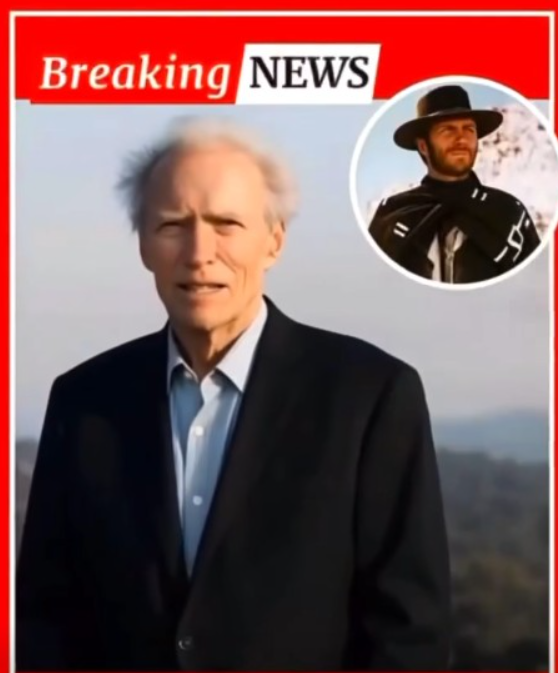
In the sweeping vista of American cinema, few figures cast a shadow as long or as enduring as Clint Eastwood. As of February 2026, the legendary filmmaker and actor remains a towering presence in cultural discourse, a living bridge between the gritty minimalism of mid-century Westerns and the introspective, morally complex storytelling of modern Hollywood. His career, spanning more than six decades, is not simply a chronology of films but a testament to reinvention, resilience, and an unwavering dedication to artistic independence. From dusty television sets to the grand stages of the Academy Awards, Eastwood’s evolution mirrors the changing face of American film itself.
Eastwood’s ascent began not with instant superstardom, but with patience and persistence. In the late 1950s, he found steady work on television, most notably as Rowdy Yates in the long-running Western series Rawhide. Week after week, audiences saw him ride across black-and-white landscapes, embodying a quiet toughness that hinted at deeper reserves of charisma. Yet even in those early years, there was a sense that Eastwood was more than a conventional TV cowboy. His screen presence—stoic, watchful, economical—suggested an actor who understood the power of restraint.
That restraint would become iconic when he made a bold decision that few American actors of the era would have considered: traveling to Europe to work with an unproven Italian director named Sergio Leone. The result was the Dollars Trilogy—A Fistful of Dollars, For a Few Dollars More, and The Good, the Bad and the Ugly. These films did more than elevate Eastwood to international stardom; they revolutionized the Western genre. Leone’s operatic style, combined with Ennio Morricone’s haunting scores, provided the backdrop for Eastwood’s “Man with No Name,” a character defined by ambiguity. Unlike the virtuous cowboys of earlier decades, this antihero operated in moral gray zones. He was not driven by noble ideals but by instinct, survival, and sometimes profit. The squint, the poncho, the slow draw of a cigarillo—these became cinematic shorthand for a new kind of hero.
Returning to the United States, Eastwood leveraged his newfound fame into another defining role: Inspector Harry Callahan in Dirty Harry (1971). If the Western had questioned frontier justice, Dirty Harry interrogated urban law and order in a turbulent America. The character’s blunt methods and infamous challenge—“Go ahead, make my day”—embedded themselves into popular culture. Yet even amid controversy over the film’s politics, Eastwood demonstrated an emerging awareness of complexity. Over time, he portrayed Callahan with shades of weariness and doubt, hinting at the moral costs of vigilantism.
What truly cemented Eastwood’s legacy, however, was his transition behind the camera. Establishing Malpaso Productions, he began directing films that revealed a thoughtful, disciplined storyteller. Early efforts like Play Misty for Me showed a willingness to experiment, but it was Unforgiven (1992) that marked a watershed moment. The film deconstructed the very myths Eastwood had once embodied, presenting aging gunfighters haunted by regret rather than glory. Winning multiple Academy Awards, including Best Picture and Best Director, Unforgiven signaled that Eastwood was not merely reflecting on his past roles—he was interrogating them.
In the decades that followed, he continued to surprise audiences with projects that spanned genres and emotional tones. Mystic River explored grief and trauma with Shakespearean intensity. Million Dollar Baby delivered a heartbreaking meditation on ambition and mercy, earning further Oscars. Even in films centered on American heroism, such as American Sniper or Sully, Eastwood favored human vulnerability over spectacle, focusing on the quiet burden of responsibility carried by ordinary individuals thrust into extraordinary circumstances.
Beyond cinema, Eastwood’s life included public service as the mayor of Carmel-by-the-Sea, California, reflecting his interest in civic engagement. Though his political views have sparked debate, they have also underscored his independence—a refusal to be neatly categorized or confined by Hollywood expectations.
As he advances in age, Eastwood’s work continues to reflect themes of mortality, accountability, and redemption. There is a contemplative quality to his later films, as though he is in dialogue not only with his audience but with his own legend. In an industry often driven by fleeting trends, Eastwood stands apart as a craftsman who values simplicity, efficiency, and authenticity.
Clint Eastwood’s legacy endures because it is built not on a single archetype but on evolution. He was the silent gunslinger, the hard-edged cop, the introspective director, and the reflective elder statesman of film. Each phase added dimension to the last, creating a body of work that continues to shape conversations about masculinity, morality, and the American myth. In the ever-shifting landscape of cinema, Eastwood remains a fixed point—an enduring figure whose shadow stretches across generations.