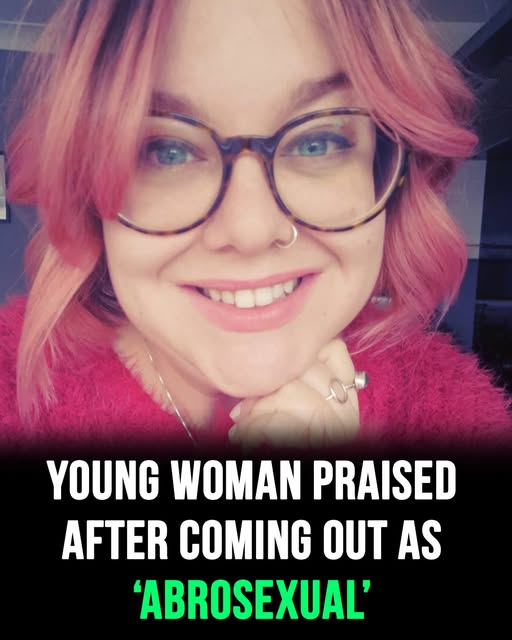
“I spent years thinking I had to pick one label and stick to it,” she explained. “Straight, gay, bisexual — none of them ever fully fit. So I stopped looking.”
It wasn’t until recently that she encountered the term abrosexual, a sexual orientation describing people whose attraction is fluid and can change over time. For her, the word felt like a revelation rather than a trend.
Abrosexuality is often misunderstood or dismissed because it challenges the idea that attraction must be fixed or permanent. While some critics mistakenly see it as indecision, experts and advocates emphasize that fluidity is a legitimate experience for many people. Just as emotions, interests, and identities can evolve, attraction can too.
“For the first time, I realized I wasn’t broken,” she said. “I just didn’t have the language.”
Growing up decades ago, conversations around sexuality were limited and often rigid. Labels were narrow, and deviation from norms came with social consequences. Without representation or education, many people like her learned to adapt outwardly while hiding inward uncertainty.
She married, raised children, and lived what appeared to be a conventional life. Yet internally, she carried unanswered questions. She loved deeply, but her attractions didn’t always align with expectations placed on her. Rather than risk judgment or confusion, she chose silence.
Coming out later in life comes with unique challenges. There is the fear of not being taken seriously, of being told it’s “too late,” or that identity exploration belongs only to younger generations. But her story challenges that assumption.
“Self-understanding doesn’t have an expiration date,” she said. “I didn’t change who I was. I finally understood who I had always been.”
Her decision to come forward has resonated with many, especially those who have spent years feeling unseen or mislabeled. Online, people shared similar experiences — decades of confusion, pressure to commit to one identity, and relief upon discovering a term that finally made sense.
Mental health professionals note that naming one’s experience can be profoundly validating. It reduces shame and allows people to reframe their past not as confusion, but as a natural journey.
Abrosexuality also highlights a broader cultural shift toward recognizing that identity can be complex and evolving. While society has made progress in acknowledging diverse orientations, there is still discomfort around fluidity. Stories like hers challenge that discomfort by humanizing it.
She doesn’t see her coming out as a rejection of her past. Instead, she views it as an extension of it.
“I loved genuinely. I lived honestly with the tools I had at the time,” she said. “Now I just have better words.”
By sharing her story, she hopes to encourage compassion — both for others and for oneself. Her message is simple but powerful: understanding yourself is not a race, and no one is obligated to fit neatly into a box.
After thirty years, she didn’t reinvent herself. She finally allowed herself to be seen.After more than thirty years of quietly questioning her identity, a woman has publicly come forward as abrosexual, shedding light on a lesser-known sexual orientation and sparking conversations about fluidity, self-acceptance, and the pressure to conform.
For decades, she struggled to understand why her attraction to others seemed to change over time. At certain points in her life, she felt strongly attracted to men; at other times, women. There were periods when she felt little to no sexual attraction at all, followed by moments when attraction returned in unexpected ways. Like many people, she assumed confusion meant something was “wrong” with her. Instead of finding clarity, she learned to silence herself.