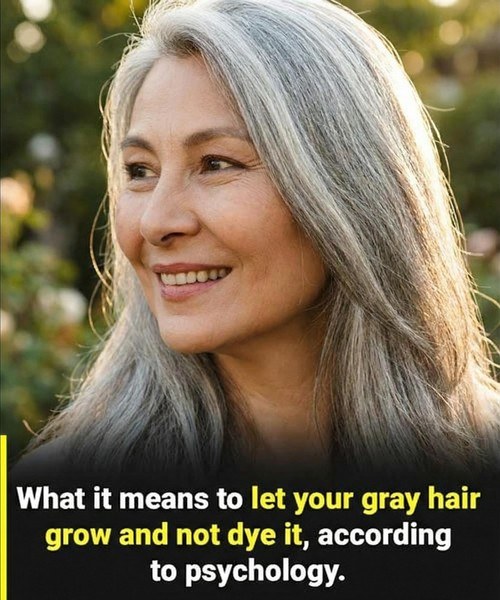
For decades, gray hair was treated as a problem to be fixed, a visible marker of time that society often urged people to conceal.
In the beauty industry, anti-aging products dominated shelves, hair dye companies marketed as if silver strands were a crisis, and magazines were filled with images of celebrities and influencers flaunting eternally youthful looks.
Gray hair was framed as an unwanted sign of aging—something that needed to be hidden, corrected, or erased. People of all genders felt the pressure: women were often told that natural gray could make them look “tired” or “less attractive,” while men, though sometimes celebrated for the “distinguished salt-and-pepper” look, still faced expectations to maintain a consistent and youthful appearance.
Yet, in recent years, a remarkable cultural shift has taken place. More and more people are choosing to embrace their natural gray, refusing to bow to outdated beauty norms.
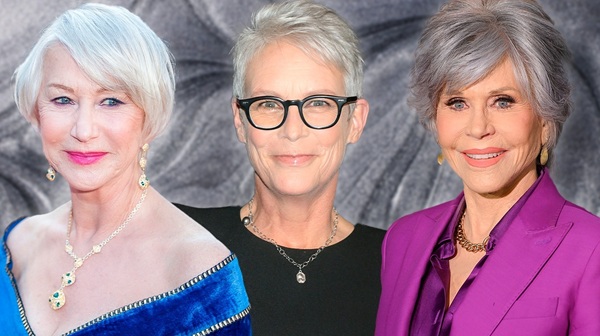
Social media has played a significant role in this movement, with hashtags like #GrayHairDontCare, #SilverSisters, and #GrayIsBeautiful highlighting individuals of all ages proudly showing off their silver, white, or salt-and-pepper hair.
Celebrities such as Helen Mirren, Jamie Lee Curtis, George Clooney, and Andie MacDowell have openly embraced their grays, setting a high-profile example for millions of people around the world.
Beauty brands have even adjusted their marketing, creating products designed to enhance natural silver tones rather than conceal them. What was once seen as a risk—letting gray grow out—has become a statement of confidence, self-respect, and authenticity.
The Psychology Behind Gray Hair Acceptance
The choice to embrace gray hair goes far beyond aesthetics. Hair, for many people, is a deeply personal expression of identity.
It is one of the first things people notice, and it plays a subtle yet significant role in how we perceive ourselves and how others perceive us. When someone chooses to stop dyeing their hair, they’re making a statement that is as much internal as it is external: “I am comfortable with who I am.”
Many people discover that their fear of gray hair is not actually about the hair itself but about the assumptions society might make. Gray hair has long been culturally associated with being “old,” less capable, or less desirable.
For women, in particular, this fear is amplified by decades of media messaging that equates youth with beauty and relevance. For men, although gray hair can sometimes signal wisdom, the pressure to maintain a certain image—lean, active, and competitive—remains strong.
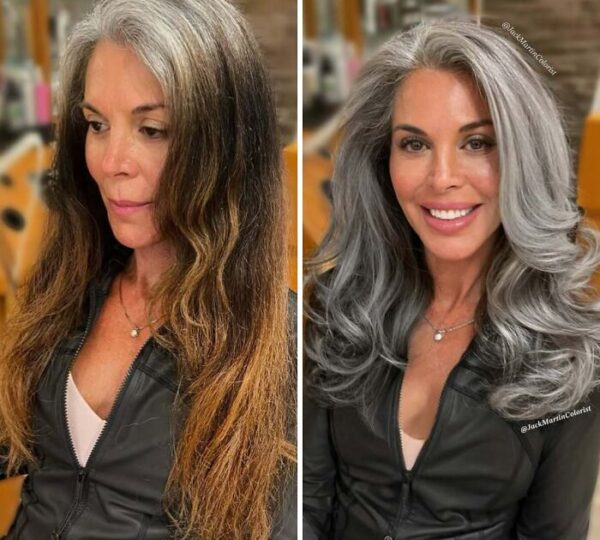
But when people stop coloring their hair, a surprising transformation often occurs. The fear that once drove countless dye jobs fades, replaced by relief and liberation.
No longer do they feel trapped in a cycle of upkeep, appointments, and chemicals. Instead, they begin to define beauty on their own terms, free from external expectations.
The act of allowing gray to grow out becomes a form of personal empowerment—a subtle yet profound declaration that self-worth is not dictated by appearance alone.
Gray Hair as a Symbol of Authenticity
Choosing to embrace gray hair is often described as a quiet act of rebellion. It is rebellion not in the loud, confrontational sense, but in its refusal to comply with narrow societal norms.
By choosing authenticity over social pressure, people are making a conscious decision to value honesty over perception. This is particularly meaningful for women, who have historically faced relentless scrutiny over their appearance.
In many cultures, women have been expected to maintain a youthful look long past what feels natural, often sacrificing time, money, and even hair health in the process. Embracing gray, therefore, can feel revolutionary.
Men also find significance in the decision to let gray hair show. For some, it signals experience, wisdom, and stability. It communicates that they are secure enough in themselves not to need external validation.
In workplaces where older employees are sometimes undervalued, showing gray hair can even be a subtle assertion of competence, credibility, and authority. In all cases, the overarching message is clear: “I am not hiding who I am to make others comfortable.”
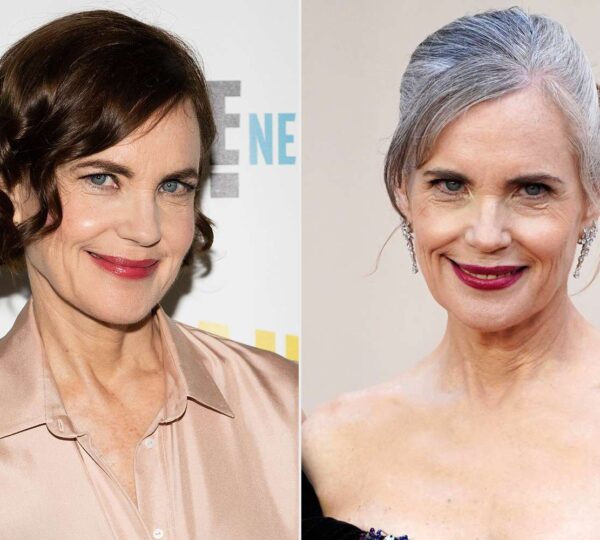
The Role of Media and Social Movements
The rise of the gray-hair movement has been aided by the visibility of influencers and social media campaigns. Instagram, TikTok, and YouTube are full of communities that celebrate silver hair at every age.
Women who dye their hair silver intentionally to mimic natural gray, alongside those letting their natural hair grow out, are reclaiming the narrative around aging.
These communities provide not only inspiration but also practical support, sharing tips for transitioning, hair care, and styling.
Beauty brands have taken notice. Rather than marketing products solely for concealing gray, companies now produce shampoos, conditioners, and styling products that enhance silver tones, reduce brassiness, and add shine.
This shift in industry messaging reinforces the idea that gray hair is not something to hide but something to celebrate and maintain. By acknowledging gray hair as beautiful, brands are helping to reshape societal perceptions of aging and attractiveness.
Gray Hair and Self-Perception
Psychologists note that embracing gray hair can have profound effects on self-esteem and mental health. The decision to stop dyeing hair is often accompanied by increased self-acceptance.
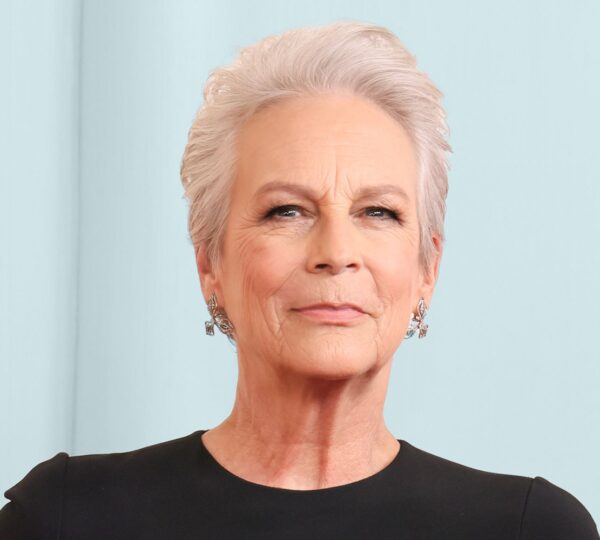
When individuals cease trying to control the aging process artificially, they may feel a sense of liberation from societal pressures. This psychological shift is sometimes described as “reclaiming personal power.”
For many, gray hair becomes a visible marker of lived experience, maturity, and resilience. It tells a story that no dye can replicate.
Each silver strand can signify personal growth, trials overcome, and wisdom gained. As people embrace this natural transformation, they often report feeling more confident, authentic, and self-assured—not despite their age but because of it.
The Social Impact of Embracing Gray Hair
The ripple effect of embracing natural gray hair extends beyond the individual. It challenges cultural norms and encourages broader conversations about ageism and beauty standards.
For younger generations observing older relatives, colleagues, or celebrities embracing gray hair, the message is powerful: aging is not something to fear or hide. Instead, it can be embraced with dignity, pride, and even style.
In workplaces and social settings, gray hair is gradually losing its stigma. Women in leadership roles who let their hair go gray are seen as strong and authentic rather than “letting themselves go.”
Men with silver hair are increasingly perceived as experienced and reliable, rather than past their prime. As a result, natural gray hair is becoming a quiet symbol of empowerment and self-confidence that transcends gender and age.

Practical Considerations for Transitioning to Gray
Transitioning to natural gray hair can be a gradual or dramatic process, depending on personal preference. Some people choose to “grow out” their gray over several months, blending their natural color with highlights or lowlights. Others embrace a more immediate transformation, cutting off dyed hair entirely to reveal their silver roots.
Hair care during this transition is important, as newly revealed gray hair can have a different texture, often being coarser or drier than pigmented strands. Conditioning treatments, gentle shampoos, and products designed to enhance silver tones can help maintain healthy, vibrant hair throughout the process.
Many people also experiment with styling, using gray as a base for creative haircuts, accessories, or complementary colors.
The Broader Meaning of Gray Hair
At its core, embracing gray hair is not just about beauty—it is about mindset. It reflects a shift in how individuals relate to themselves and to society. Rather than constantly striving to meet external expectations, people who embrace gray hair are prioritizing authenticity, self-respect, and personal growth.
Gray hair is a visible reminder that life is lived, experiences are accumulated, and wisdom is earned. It transforms the narrative around aging from one of loss or decline to one of richness, depth, and character.
In a culture obsessed with youth, silver strands challenge the notion that beauty is fleeting or defined solely by age. Instead, they assert that confidence, dignity, and authenticity are the truest markers of attractiveness.
Cultural Significance and Changing Beauty Standards
Historically, gray hair has been both stigmatized and romanticized. In certain cultures, silver hair has been associated with wisdom and respect, while in others, it has been seen as a sign of weakness or diminished value. Today, Western societies are slowly reevaluating these biases.
Social media, celebrity influence, and the gray-hair movement have contributed to a new standard where aging naturally is celebrated rather than shamed.
The movement is particularly significant for women. For generations, women were pressured to maintain a youthful appearance at all costs.
Gray hair represented the unavoidable passage of time—a visual reminder of societal limitations on beauty and relevance. Choosing to embrace gray is, therefore, a reclaiming of agency, a subtle yet powerful statement that women define their own worth.
Real Stories of Transformation
Countless people have shared stories about the moment they decided to embrace their gray. For some, the first visible silver strands were terrifying—a reminder of time passing and societal judgment. Yet, after deciding to stop coloring, many describe feelings of liberation and self-acceptance.
One woman recounted: “I had spent years hiding my gray hair. I was worried my coworkers would judge me, that friends would think I was ‘old.’ The day I let it grow out, I felt lighter.
I didn’t feel like I had to keep up an image anymore. For the first time in years, I felt proud of myself.”
Men, too, report similar experiences. A man in his 50s explained: “When I stopped dyeing my hair, I was nervous at first.
But people noticed a change in me—not just my hair, but my confidence. I wasn’t trying to look younger; I was just being me. And that was enough.”
Conclusion: Gray Hair as a Statement of Confidence
Gray hair is no longer a secret to hide or a flaw to correct. It has become a symbol of authenticity, confidence, and self-respect. Embracing gray is an act of courage, particularly in a culture that equates youth with value.
It challenges societal expectations, redefines beauty, and celebrates the depth that comes with experience. More than just a style choice, gray hair reflects a mindset: one of acceptance, self-compassion, and pride in life’s journey.
It sends a message that beauty is not static, that aging is natural, and that confidence shines brighter than conformity. As the world continues to evolve, gray hair will remain a timeless emblem of courage, authenticity, and empowerment—a visible testament to the power of embracing who you truly are.
In the end, letting gray hair show is not about giving up; it is about stepping into one’s truth, redefining beauty on personal terms, and showing the world that authenticity will always outshine perfection.