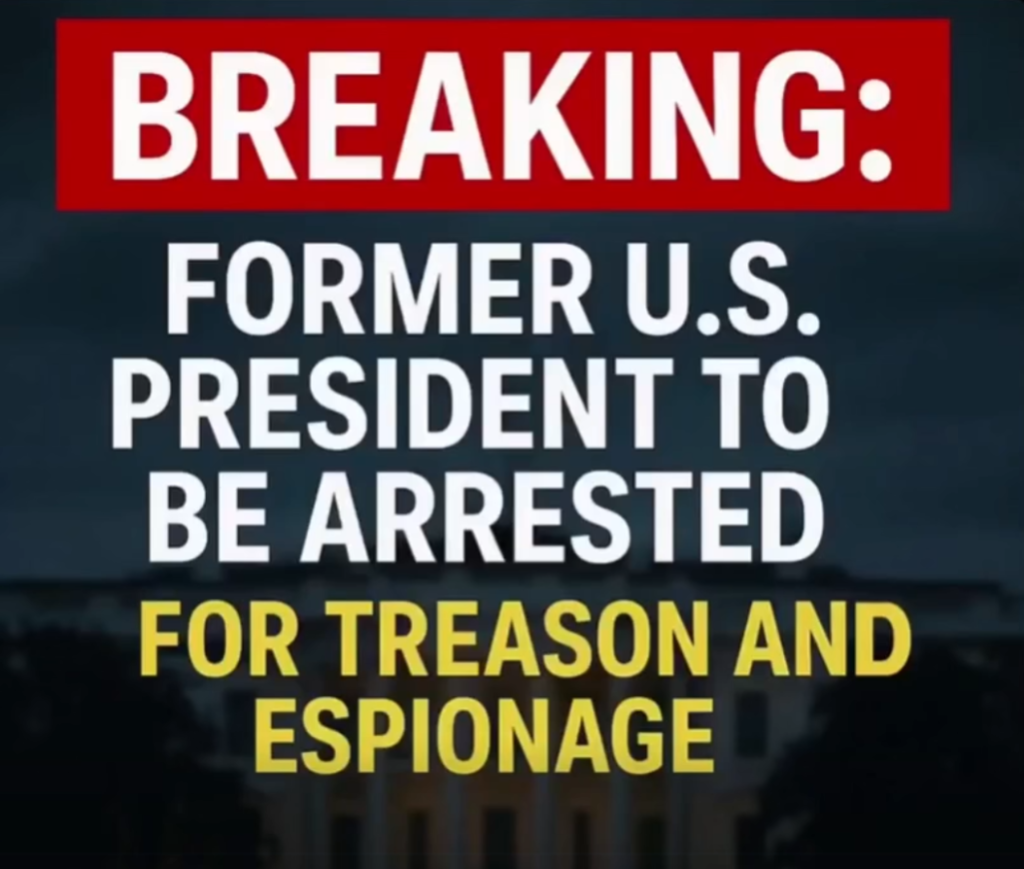
Claims circulating online about the imminent indictment and arrest of former President Barack Obama have generated intense attention, but a closer examination shows that these allegations are not supported by verified facts. Despite dramatic language and assertions of unnamed “insiders,” there is currently no credible evidence that the Department of Justice is pursuing criminal charges against Obama, nor has any official confirmation emerged from federal authorities.
Stories like this often spread rapidly because they rely on powerful emotional triggers. Accusations involving treason, espionage, and seditious conspiracy are among the most serious crimes in U.S. law, and attaching them to a former president creates instant shock value. The use of phrases such as “sources say,” “inside briefings,” or “coordination with the Secret Service” is designed to imply legitimacy, even when no documentation or on-the-record confirmation exists.
In reality, any criminal investigation of a former president would be nearly impossible to conceal. Such a process would involve multiple agencies, court filings, grand jury proceedings, and extensive legal activity that would almost certainly surface through reputable media outlets. Major news organizations, court records, and official DOJ statements are typically the first indicators of action at this level. At present, none of those indicators exist.
It is also important to understand how the Department of Justice operates. The DOJ does not announce indictments in advance, speculate publicly about arrests, or leak details of alleged charges through anonymous online sources. When high-profile cases do occur, information becomes public through formal filings or press conferences, not viral posts or speculative commentary.
Another red flag in these claims is the lack of specific evidence. Allegations referencing “sensitive intelligence leaks,” “foreign collaborations,” or “covert operations” are vague by design. They provide just enough detail to sound plausible while avoiding verifiable facts that could be challenged. This ambiguity makes the narrative difficult to disprove quickly, allowing it to spread before corrections can catch up.
The rapid circulation of such stories highlights a broader issue in today’s media environment: the speed at which misinformation can travel. Social platforms reward sensational content with visibility, especially when it aligns with political emotions or existing distrust. As a result, false or misleading claims can gain traction long before accurate information reaches the same audience.
Media literacy plays a critical role in navigating these situations. Readers are encouraged to ask basic questions: Who is making the claim? Is the source named and accountable? Has any reputable outlet confirmed the story? Are there official documents or statements? If the answer to these questions is no, skepticism is warranted.
As of now, there has been no announcement from the Department of Justice, no court filings, and no statement from Barack Obama or his legal representatives indicating any criminal action. The absence of corroboration from credible sources strongly suggests that the claims are unfounded.
In moments like this, restraint matters. Sharing unverified allegations about real individuals—especially ones as serious as treason—can distort public understanding and erode trust. Until substantiated evidence emerges from reliable, official channels, these claims should be treated not as breaking news, but as an example of how misinformation can masquerade as insider reporting in a highly polarized climate.