In the evolving and often turbulent narrative of early twenty-first-century American political history, few episodes garnered as much heated discussion, speculation, and media intensity as the rhetorical battles surrounding the 2016 election and the years that followed. One particularly notable moment occurred when former President Donald J. Trump delivered remarks from the Oval Office on July 22, offering dramatic assertions about the actions of his predecessor, Barack Obama, and the broader question of foreign interference in American electoral processes. These statements, which characterized the events as deeply consequential and historically significant, immediately drew national attention, sparked debate, and fueled a wave of commentary—political, academic, journalistic, and public.
However, to understand why these remarks resonated so widely, one must step back and examine the broader historical context in which they occurred. Political accusations in the United States are not new; they are part of a long tradition of intense political rivalry, deeply held ideological differences, and the evolving mechanisms by which information is created, shared, challenged, and interpreted.
The moment Trump spoke from the Oval Office, cameras rolling, reporters gathered, and millions waiting for the next headline, he framed his comments with certainty: “It’s there, he’s guilty. This was treason.” Though strong and dramatic in tone, these words were part of a broader pattern of rhetorical escalation that characterized his public communication style. His remarks included the allegation that former President Obama had attempted to manipulate the outcome of the 2016 election and distort intelligence assessments related to Russian activity. According to Trump, the actions taken during Obama’s tenure were “an attempt to obscure the election” in ways he described as unprecedented.
It is essential to clarify that these statements represented Trump’s personal claims and interpretations, not substantiated legal findings. As with many of his previous assertions, he did not provide specific evidence. In democratic institutions governed by documentation, courts, and congressional oversight, evidence—not rhetoric—is the determining factor in evaluating claims. Nevertheless, the statement itself became breaking news across major platforms, not because the content was verified, but because of its potential implications and the authority of the office from which it was spoken.
Trump’s remarks arrived shortly after comments by then-Director of National Intelligence Tulsi Gabbard, who had publicly asserted that actions by the Obama administration amounted to what she described as a “conspiracy” connected to Russia’s alleged activities during the election cycle. Gabbard’s interpretation added another layer of controversy and further elevated the public discourse, though her claims also lacked direct evidence. The convergence of statements—first from Gabbard, then from Trump—created a moment of intense political theater, in which allegations and counter-allegations circulated rapidly across news cycles, social media discussions, and academic analysis.
To gain a balanced historical view, it is crucial to examine not just the accusations but the documented positions of the Obama administration. While in office, Obama and his intelligence officials acknowledged that attempts at foreign interference had occurred, primarily through digital and informational channels, but consistently maintained that such attempts did not alter the final outcome of the election. Their public position emphasized the need for future safeguards, cybersecurity measures, and bipartisan cooperation to protect electoral systems.
At the same time, the Russian government repeatedly denied any involvement in the 2016 U.S. election, a denial that became part of its diplomatic messaging. These official statements from Russia added another layer of complexity to an already multifaceted geopolitical landscape.
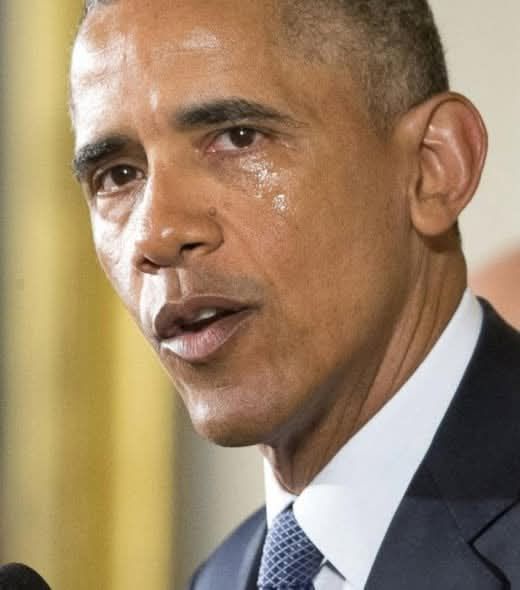
The most immediate and firm rebuttal to Trump’s remarks came from Obama’s spokesperson, Katie Hill Rodenbush, who stated, “Out of respect for the presidency, our office usually ignores the nonstop misinformation from this White House. But these claims are outrageous enough to merit a response.” This direct rebuttal highlighted the unusual nature of Trump’s remarks and underscored the tension between past and present administrations.
When examining this moment historically, it is important to recognize that American politics has been deeply shaped by periods of rhetorical confrontation and claims of wrongdoing between rival factions. From the heated rivalry between John Adams and Thomas Jefferson to the Civil War era’s fierce partisan divisions, accusations of misconduct, conspiracy, and undermining national interests have long been part of the national political conversation. What has changed in recent decades is the speed at which such statements spread, the platforms through which they are delivered, and the immediacy of the public response.
Trump’s comments did not emerge in isolation. They were embedded in a broader narrative of competing interpretations of the 2016 election—an event that became a point of constant scrutiny by intelligence agencies, congressional committees, independent journalists, academic researchers, and political operatives. Across these institutions, a mixture of facts, theories, speculation, and misinformation circulated, sometimes overlapping and sometimes contradicting each other.
Important to the historical context is the fact that the U.S. intelligence community—including agencies such as the CIA, FBI, and NSA—concluded in 2017 that Russian operatives attempted to influence public opinion through digital channels. These conclusions did not assert that votes were changed or ballot systems were manipulated but rather that the goal was to influence public perception, alter narratives, and deepen internal divisions.
Into this environment came Trump’s forceful claim, delivered from one of the most symbolically powerful rooms in American government. His use of legal terminology—words like “treason”—carried serious implications. Historically, treason has been defined narrowly in U.S. law, requiring clear evidence of aiding an enemy or waging war against the nation. Legal scholars quickly noted that the term was being used rhetorically, not legally, and that no formal charges or legal processes supported such an accusation.
Yet, rhetoric—especially presidential rhetoric—has influence. Trump’s position as a former president and political figure meant that his statements reverberated through media networks, political commentary programs, and public discourse. Supporters interpreted his remarks as authoritative, while critics viewed them as unfounded or dangerous. The polarized environment shaped how the comments were received, repeated, and analyzed.