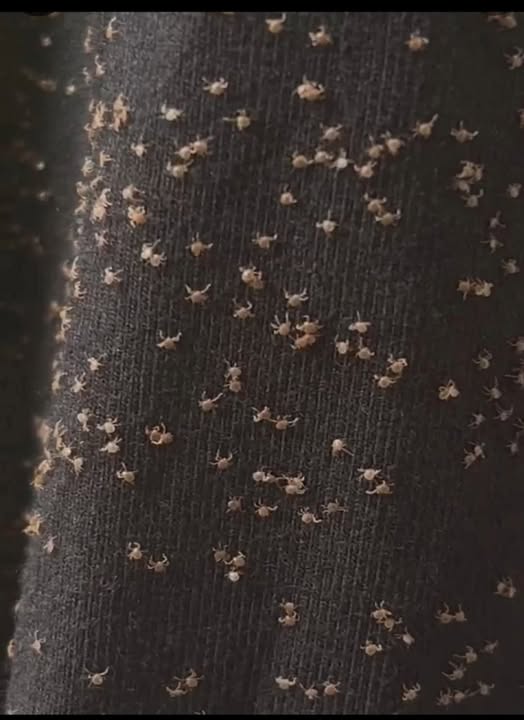
The primary reason these seeds are so difficult to remove from fabric or pet fur is their physical structure. Long before humans invented synthetic hook-and-loop fasteners (Velcro), plants were using the same principles.
The Hook-and-Barb System
Most “sticky” seeds are equipped with microscopic hooks or stiff, backward-pointing barbs. These structures are often so fine that they are invisible to the naked eye, yet they are strong enough to anchor into the weave of denim, the loops of wool, or the dense undercoat of a dog.
- Burdock (Arctium): These large, round seed heads are covered in hundreds of tiny hooks. It was famously a burdock burr that inspired Swiss engineer George de Mestral to invent Velcro in the 1940s after noticing how they clung to his dog during a hike.
- Beggar’s Lice (Hackelia virginiana): These tiny, flattened seeds are covered in stiff hairs with “barbed” tips that make them particularly difficult to brush off.
- Cleavers (Galium aparine): Often called “sticky willy,” this plant uses hooked hairs on both its stems and its seeds to climb other plants and latch onto passing animals.
The Biological Necessity: Why Plants Travel
For a plant, staying put is a recipe for extinction. If every seed dropped directly beneath the parent plant, the resulting seedlings would face “conspecific competition.” They would fight for the same sunlight, the same nutrients in the soil, and the same water. Furthermore, a localized population is highly vulnerable to pests and diseases that can quickly wipe out an entire generation.
Escaping the Shadow
By hitching a ride on a passing human or animal, the seed achieves several goals:
- Colonization: It finds new, potentially more fertile territory far from its origin.
- Genetic Diversity: It allows different populations of the same species to mix, strengthening the gene pool.
- Survival of the Fittest: The journey itself filters out weaker seeds; only those with the strongest “grip” survive the ride to a distant location.