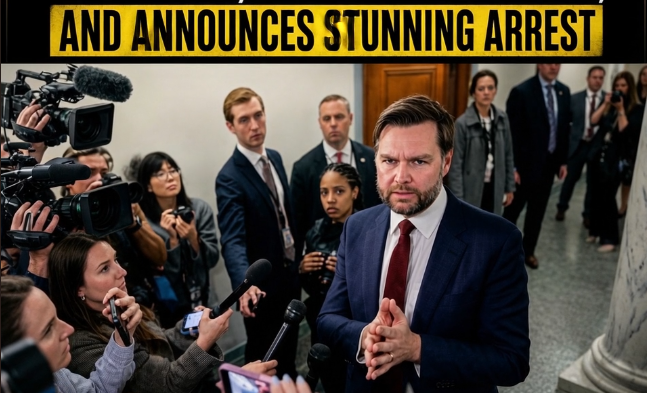
Vice President JD Vance has been entrusted with another high-profile responsibility by President Donald Trump, signaling that the administration intends to continue placing immigration enforcement and workforce protection at the center of its agenda. According to administration officials, Vance is now taking a leading role in a new federal effort aimed at investigating alleged fraud involving U.S. work visa programs, an initiative they say is designed to protect American workers and restore confidence in the nation’s immigration system.
The announcement marks another step in the Trump administration’s broader campaign to tighten oversight of employment-based immigration while emphasizing that businesses should prioritize hiring qualified American citizens whenever possible. Officials argue that legitimate visa programs serve an important purpose, but they also insist that any abuse of those programs undermines both the economy and public trust.
Speaking at an anti-fraud event in Milwaukee, Wisconsin, Vice President Vance described the new initiative as a critical part of the administration’s commitment to enforcing existing laws rather than allowing loopholes to persist. According to Vance, investigators within the Department of Labor have already begun issuing dozens of subpoenas as they examine allegations that some foreign nationals and employers may have improperly used work visa programs.
“This is about making sure American jobs go to American workers and not foreign fraudsters,” Vance said during his remarks, emphasizing that the administration believes honest employers and law-abiding immigrants should not be disadvantaged by those who intentionally manipulate the system.
The investigation is being conducted alongside the Department of Labor’s Office of Inspector General, which is responsible for identifying waste, fraud, abuse, and misconduct within programs overseen by the department. Officials say investigators are examining whether certain employers, recruiters, staffing agencies, or applicants may have violated federal laws governing employment visas.
Labor Department Inspector General Anthony D’Esposito said investigators believe the alleged fraudulent practices could have had significant financial consequences across multiple industries. In comments reported by the New York Post, D’Esposito stated that investigators suspect the schemes have cost the U.S. medical industry hundreds of millions of dollars while also affecting other employment sectors that rely heavily on specialized workers.
Although officials have not yet released detailed findings or identified specific organizations involved, they indicated that the investigation remains active and could expand as additional evidence is gathered. The issuance of subpoenas suggests investigators are collecting employment records, financial documents, visa applications, and other materials necessary to determine whether federal laws were violated.
Administration officials argue that abuse of work visa programs can take many forms. Allegations may include submitting false information on visa applications, misrepresenting job qualifications, creating fake employment opportunities, underpaying foreign workers in violation of labor regulations, or using visa programs to replace American employees despite available domestic workers.
Supporters of the investigation contend that these practices not only violate immigration laws but also distort labor markets by allowing dishonest employers to gain unfair advantages over companies that comply with federal regulations. They argue that stricter enforcement ultimately benefits businesses that follow the rules while protecting wages and employment opportunities for American workers.
The healthcare industry has become a particular focus because hospitals, nursing facilities, and medical organizations frequently rely on employment-based visa programs to recruit physicians, nurses, therapists, and other specialized professionals. Administration officials emphasize that legitimate recruitment remains lawful, but they argue that any fraudulent manipulation of the process must be investigated thoroughly.
Beyond healthcare, investigators are reportedly examining additional industries where foreign labor plays an important role, including technology, engineering, manufacturing, hospitality, and seasonal employment. Officials have not indicated how many cases are currently under review but say the inquiry could continue for months.
For Vice President Vance, the assignment further highlights his growing role within the administration. Since taking office alongside President Trump, Vance has increasingly served as one of the administration’s leading voices on immigration policy, workforce development, and economic issues. His appearances at enforcement announcements reflect the White House’s effort to demonstrate that senior leadership remains directly involved in implementing campaign promises.
Throughout his political career, Vance has consistently argued that immigration policy should prioritize the economic interests of American citizens. He has frequently expressed concern that abuse of visa programs may suppress wages or reduce employment opportunities for domestic workers, particularly in industries experiencing significant labor competition.
President Trump has likewise made immigration enforcement one of the defining priorities of his administration. In addition to strengthening border security, the administration has emphasized interior enforcement, workplace compliance, and increased scrutiny of both legal and illegal immigration programs. Officials argue that enforcing existing laws helps preserve the integrity of programs intended for legitimate employers and qualified applicants.
Critics of tighter visa enforcement, however, caution that many industries continue to experience genuine labor shortages, particularly in healthcare and certain technical professions. They argue that legal work visa programs remain essential for filling specialized positions when qualified American workers are unavailable. Business organizations have also warned that excessive restrictions could create staffing challenges and slow economic growth if employers cannot recruit needed talent.
Supporters of the administration respond that the investigation is not aimed at lawful immigrants or employers who comply with federal regulations. Instead, they say the focus is specifically on individuals or organizations that intentionally misuse visa programs through fraud or deception. They argue that eliminating abuse actually strengthens legitimate immigration pathways by ensuring that visas are awarded fairly and according to the law.
Federal investigators have not announced any criminal charges related to the current investigation, and no conclusions have been reached regarding the allegations under review. As with any federal inquiry, individuals and organizations remain entitled to due process, and allegations alone do not establish wrongdoing.
Nevertheless, administration officials suggest the investigation could ultimately result in civil penalties, criminal prosecutions, administrative sanctions, or changes to federal oversight procedures if evidence of misconduct is uncovered. They also indicate that additional enforcement actions could follow if investigators identify broader patterns of abuse within employment-based immigration programs.
The initiative underscores the administration’s broader message that immigration enforcement extends beyond border security alone. By examining employment practices, visa applications, and workplace compliance, officials say they hope to ensure that legal immigration operates as Congress intended while protecting opportunities for American workers.
As investigators continue gathering evidence and reviewing documents, businesses that participate in employment-based visa programs may face increased scrutiny regarding their hiring practices and compliance procedures. Immigration attorneys and labor law experts expect many employers to review their internal documentation carefully to ensure full compliance with federal requirements.
For now, the investigation remains in its early stages, but it represents another significant chapter in the Trump administration’s effort to reshape immigration enforcement and labor policy. Whether the inquiry ultimately leads to major prosecutions or broader regulatory reforms, it signals that the administration intends to maintain a strong focus on combating alleged visa fraud while emphasizing its commitment to protecting the American workforce.